


Healthy soil is essential for productive farming. However, continuous cultivation and excessive use of chemical fertilizers have reduced soil fertility in many parts of Pakistan. To restore soil health and support sustainable agriculture, many farmers are turning to organic soil improvement solutions.
Hara Green Soil Organic Fertilizer is specially formulated to improve soil fertility by increasing organic matter, supporting beneficial microorganisms, enhancing nutrient availability, and improving soil structure. Instead of providing only short-term nutrition, it helps build healthier soil for stronger crop growth and long-term productivity.
Whether you grow vegetables, fruits, wheat, rice, cotton, sugarcane, or other crops, Hara Green Soil Organic Fertilizer can help improve soil quality and support better plant development. This guide explains how it works, its benefits, and why it is becoming a trusted choice for sustainable farming in Pakistan.
Quick Answer
Hara Green Soil Organic Fertilizer is an organic soil conditioner developed by Hara Organic Pakistan to improve soil fertility naturally. It increases organic matter, supports beneficial soil microorganisms, enhances nutrient availability, and improves soil structure, helping farmers grow healthier crops while promoting sustainable agriculture in Pakistan.
What Is Green Soil Organic Fertilizer?
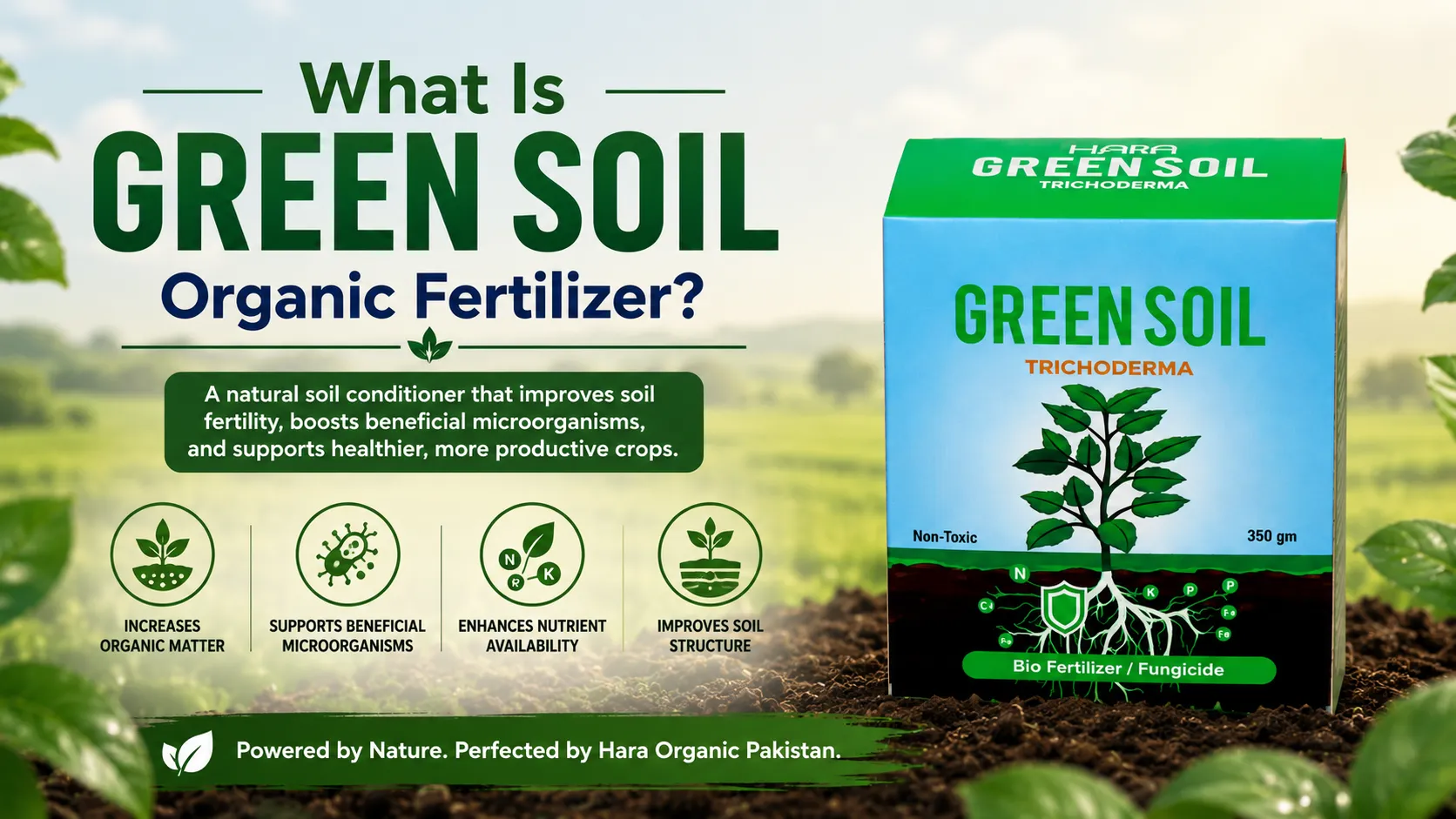
Green Soil Organic Fertilizer is an organic soil improvement product formulated to increase soil fertility through natural organic materials and beneficial biological activity. Unlike conventional fertilizers that mainly provide nutrients such as nitrogen, phosphorus, and potassium, organic fertilizers improve the overall condition of the soil, allowing crops to absorb nutrients more efficiently.
The primary purpose of an organic fertilizer is not only to feed plants but also to restore soil health. Healthy soil contains organic matter, microorganisms, proper moisture retention, balanced aeration, and stable nutrient availability. When these conditions improve, crops develop stronger root systems and become better equipped to withstand environmental stress.
For farmers in Pakistan, where many agricultural soils suffer from declining organic matter due to repeated cultivation, Green Soil Organic Fertilizer provides a sustainable way to rebuild soil productivity while supporting long-term agricultural success.
How Does Green Soil Organic Fertilizer Work?
Green Soil Organic Fertilizer works by improving the biological, physical, and chemical properties of the soil simultaneously. Instead of delivering nutrients in a rapid burst, it gradually enhances the soil ecosystem, creating conditions that allow plants to access nutrients naturally throughout their growth cycle.
One of its most important functions is increasing organic matter within the soil. Organic matter improves soil structure by creating spaces that allow water, oxygen, and roots to move more freely. Better soil structure encourages deeper root development, enabling plants to absorb nutrients from a larger volume of soil.
The fertilizer also supports beneficial soil microorganisms. These naturally occurring microbes help decompose organic materials, convert nutrients into plant-available forms, and contribute to healthy soil biology. A biologically active soil is generally more productive and resilient than soil with limited microbial activity.
Another significant advantage is improved nutrient retention. Sandy soils often lose nutrients quickly through leaching, while compact clay soils may restrict nutrient movement and root growth. Organic matter helps balance these conditions by improving both water-holding capacity and nutrient availability.
Over time, consistent application helps create a healthier soil environment where crops can grow more vigorously with improved nutrient efficiency.
Why Is Soil Health Becoming a Major Concern in Pakistan?
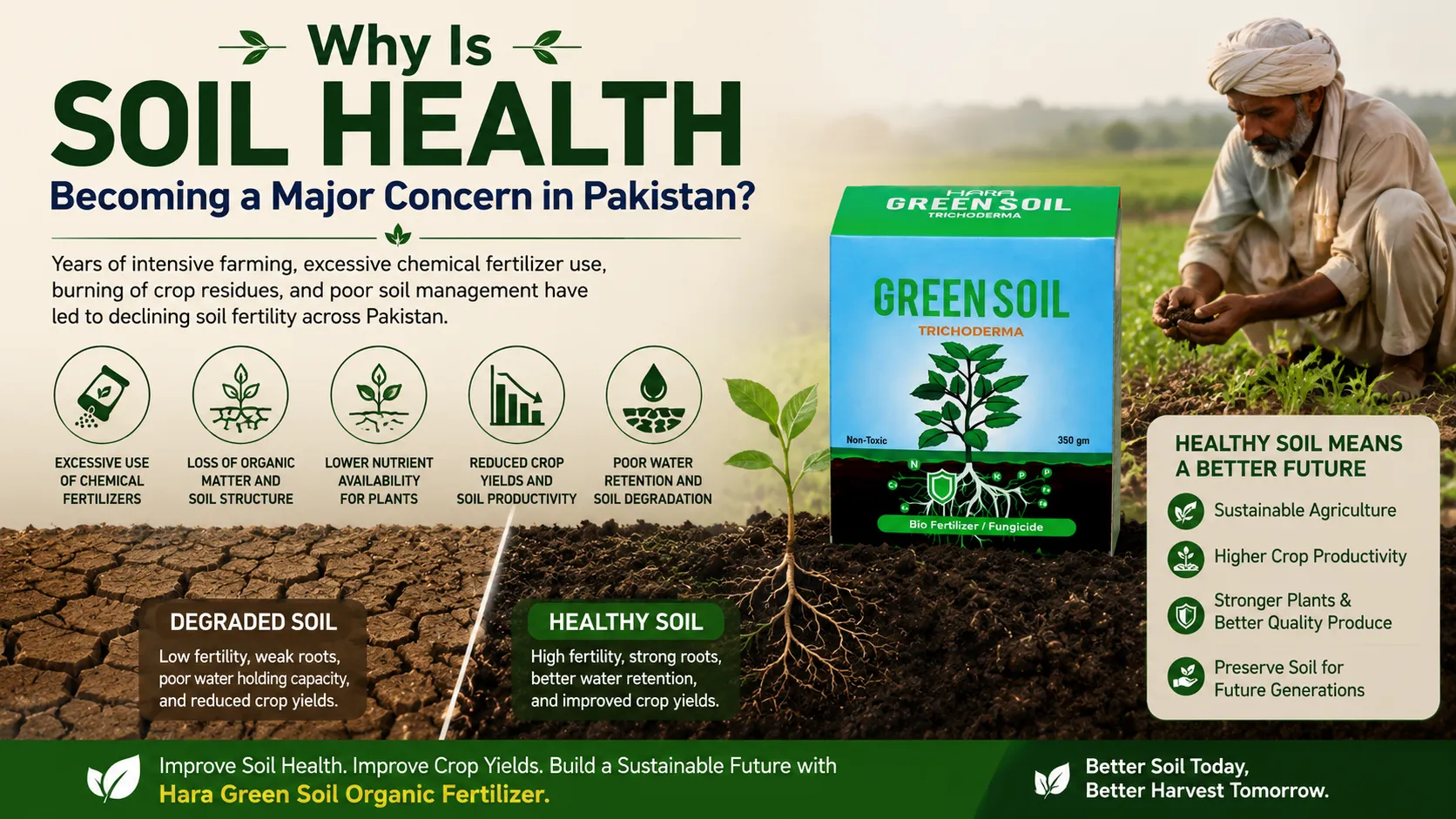
Pakistan’s agricultural sector depends heavily on productive farmland, yet many regions have experienced gradual soil degradation over the past several decades. Intensive farming, limited crop rotation, low organic matter, and excessive dependence on chemical fertilizers have contributed to declining soil quality.
As soil fertility decreases, farmers often apply larger quantities of synthetic fertilizers to maintain yields. While these fertilizers remain an important part of modern agriculture, relying on them alone may not restore the soil’s biological health. This can reduce nutrient use efficiency and increase production costs over time.
Green Soil Organic Fertilizer helps address these challenges by supporting the natural processes that maintain fertile soil. When combined with good farming practices such as balanced fertilization, efficient irrigation, and proper crop management, it contributes to more sustainable agricultural production.
Improving soil health also benefits future growing seasons because healthier soils generally retain moisture better, support stronger root systems, and provide a more stable environment for crop development.
Which Crops Can Benefit from Green Soil Organic Fertilizer?
Green Soil Organic Fertilizer can be incorporated into a wide variety of farming systems across Pakistan because healthy soil is essential for nearly every crop. It is commonly suitable for field crops, vegetables, fruit orchards, kitchen gardens, nurseries, and ornamental plants.
In cereal production, healthier soil encourages stronger root development and supports improved nutrient uptake during important growth stages. Vegetable growers often benefit from improved soil texture and moisture retention, while fruit orchards can gain from enhanced long-term soil fertility that supports consistent tree growth.
Cotton, sugarcane, rice, wheat, maize, and other commercial crops may also benefit when organic soil improvement is integrated into a balanced nutrient management program. The exact application rate and timing should always be adjusted according to crop requirements, soil conditions, and agronomic recommendations.
Rather than replacing responsible fertilizer management, Green Soil Organic Fertilizer strengthens the soil environment that allows crops to utilize nutrients more effectively.
Green Soil Organic Fertilizer vs Conventional Chemical Fertilizer
Feature | Green Soil Organic Fertilizer | Conventional Chemical Fertilizer |
Primary Purpose | Improves long-term soil health | Supplies nutrients quickly |
Organic Matter | Increases soil organic content | Does not significantly improve organic matter |
Soil Microbial Activity | Encourages beneficial microorganisms | Limited direct effect on soil biology |
Nutrient Release | Gradual and sustained | Rapid nutrient availability |
Soil Structure | Improves aeration and water retention | Minimal improvement to soil structure |
Long-Term Sustainability | Supports sustainable farming practices | Best used as part of balanced nutrient management |
Why Are More Farmers Choosing Organic Soil Improvement?
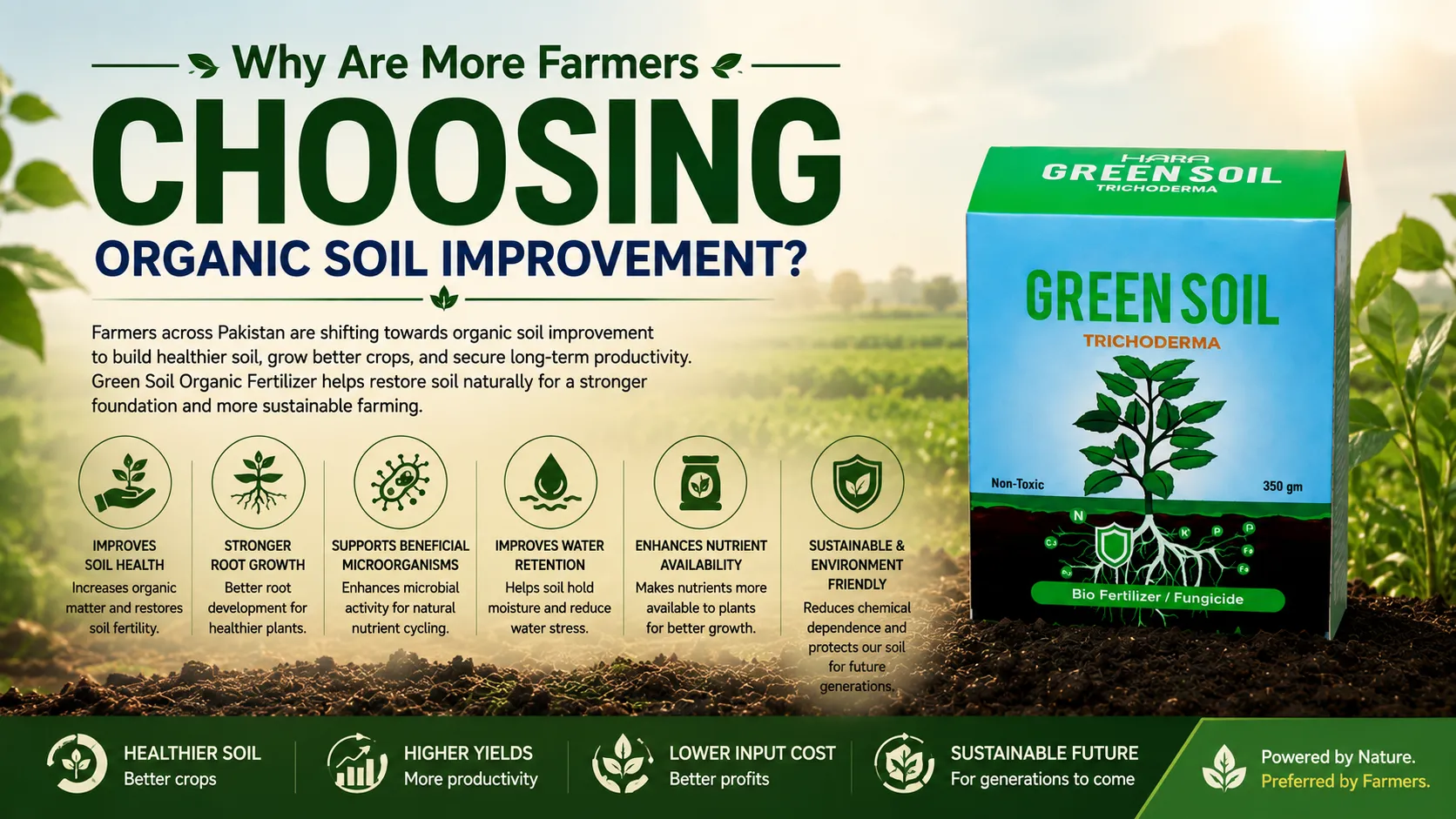
Agriculture is increasingly shifting toward practices that protect soil productivity for future generations while maintaining profitable crop production today. Many farmers now recognize that improving soil quality is just as important as supplying nutrients to the crop.
Green Soil Organic Fertilizer supports this approach by helping create fertile, biologically active soil capable of sustaining healthy plant growth over multiple growing seasons. Rather than focusing only on immediate crop nutrition, it contributes to the long-term productivity of agricultural land, making it an important component of integrated soil management.
What Are the Main Benefits of Green Soil Organic Fertilizer?
Green Soil Organic Fertilizer offers advantages that go beyond supplying nutrients to plants. Its greatest strength lies in improving the overall condition of the soil, allowing crops to grow in a healthier and more balanced environment.
As soil quality improves over time, plants are generally able to absorb water and nutrients more efficiently, resulting in stronger growth and better crop performance.
Unlike products that provide only short-term nutrition, organic fertilizers contribute to long-term soil productivity. This makes them particularly valuable for farmers who want to maintain fertile land while reducing the negative effects of continuous cultivation.
One of the most noticeable improvements is stronger root development. Healthy roots explore a larger volume of soil, enabling plants to access moisture and nutrients more effectively during different growth stages. Strong roots also help crops tolerate temporary drought conditions and environmental stress more successfully.
Another important benefit is improved soil structure. Organic matter loosens compacted soils while helping sandy soils retain moisture more efficiently. Better soil structure improves air circulation around plant roots, encourages beneficial microbial activity, and creates favorable conditions for continuous crop growth.
Green Soil Organic Fertilizer also supports balanced nutrient availability. Instead of releasing nutrients all at once, it gradually improves the soil’s ability to supply essential nutrients throughout the growing season. This steady nutrient availability promotes healthier plant development and reduces the risk of nutrient losses caused by heavy irrigation or rainfall.
Why Is Organic Matter Important for Healthy Soil?
Organic matter is often considered one of the most valuable components of productive agricultural land. It acts as the foundation of healthy soil by improving its physical, biological, and chemical characteristics simultaneously.
When organic matter increases, soil becomes easier to cultivate and better able to support healthy plant growth. Water infiltration improves, soil erosion decreases, and beneficial microorganisms become more active. These natural biological processes help convert nutrients into forms that plants can absorb more efficiently.
In Pakistan, many cultivated fields contain relatively low levels of organic matter because crop residues are frequently removed, burned, or rapidly decomposed under hot climatic conditions. Regular application of organic soil conditioners helps replenish this lost organic material and gradually restores soil fertility.
Improving organic matter is not an overnight process. It requires consistent management over multiple growing seasons, but the long-term benefits often include healthier crops, improved soil resilience, and better nutrient efficiency.
How Does Green Soil Organic Fertilizer Improve Soil Biology?
Healthy soil is alive with millions of beneficial microorganisms. These microscopic organisms perform essential functions that directly influence plant growth. They decompose organic materials, recycle nutrients, improve soil structure, and help maintain a balanced soil ecosystem.
Green Soil Organic Fertilizer provides an environment that supports these naturally occurring beneficial microbes. As microbial activity increases, nutrients locked within organic materials become more available to plant roots through natural biological processes.
A biologically active soil also promotes stronger root interactions. Healthy roots and beneficial microorganisms work together to improve nutrient uptake, resulting in more vigorous plant growth throughout the cropping season.
Instead of viewing soil as simply a medium that holds plants upright, modern agriculture recognizes it as a living ecosystem where biological activity plays a major role in crop productivity.
Can Green Soil Organic Fertilizer Improve Water Retention?
Water management is one of the biggest challenges facing agriculture in Pakistan. Rising temperatures, irregular rainfall patterns, and increasing irrigation costs make efficient water use more important than ever.
Organic matter functions like a natural sponge within the soil. It absorbs water during irrigation or rainfall and gradually releases moisture as plants need it. This process helps maintain more stable soil moisture levels between irrigation cycles.
Improved water retention is particularly valuable in sandy soils where water drains quickly. At the same time, organic matter helps heavy clay soils become more porous, allowing excess water to drain while still maintaining adequate moisture for plant roots.
Better water retention also contributes to improved nutrient availability because nutrients remain within the root zone for longer periods instead of being washed away through leaching.
How Should Green Soil Organic Fertilizer Be Applied?
Proper application plays an important role in achieving the best results from any organic fertilizer. While application methods may vary depending on the crop and soil condition, the general objective is to distribute the fertilizer evenly within the root zone where plant roots can benefit from improved soil conditions.
For field crops, the fertilizer is commonly incorporated into the soil before sowing or transplanting. Mixing it into the top layer of soil allows organic matter to interact with soil microorganisms and gradually improve fertility as the crop develops.
In orchards, the fertilizer is typically applied around the drip line of each tree, where active feeder roots are concentrated. Light incorporation followed by irrigation helps activate biological processes within the soil.
Vegetable growers often mix the fertilizer into raised beds before planting or apply it around established plants during the growing season, depending on crop requirements.
Regardless of the cropping system, maintaining proper soil moisture after application helps beneficial microorganisms become active more quickly.
When Is the Best Time to Apply Green Soil Organic Fertilizer?
Timing can significantly influence the effectiveness of organic soil improvement. Applying Green Soil Organic Fertilizer before planting allows sufficient time for organic materials to begin interacting with soil microorganisms before rapid crop growth starts.
For annual field crops such as wheat, maize, rice, cotton, and vegetables, pre-plant incorporation is generally considered the most effective approach because it prepares the soil before seed germination or transplant establishment.
Fruit orchards often benefit from seasonal applications that coincide with active root growth. Applying organic fertilizer before new vegetative growth begins supports nutrient availability throughout important growth stages.
Kitchen gardens and ornamental plants may receive periodic applications throughout the growing season as part of a regular soil improvement program.
Since every farm has different soil conditions, farmers should adjust application timing according to local climate, irrigation practices, crop requirements, and soil test recommendations whenever available.
Best Practices for Using Green Soil Organic Fertilizer
To maximize long-term soil improvement, consider these practical recommendations:
- Apply the fertilizer evenly across the root zone rather than concentrating it in one area.
- Incorporate it lightly into the soil whenever possible to improve contact with beneficial microorganisms.
- Maintain adequate soil moisture after application to support biological activity.
- Combine organic fertilizers with balanced nutrient management based on crop requirements.
- Follow recommended application rates instead of assuming that higher quantities always produce better results.
- Monitor crop performance and soil condition over multiple growing seasons to evaluate long-term improvements.
Can Green Soil Organic Fertilizer Be Used with Chemical Fertilizers?
Yes. In many farming systems, Green Soil Organic Fertilizer performs best as part of an integrated nutrient management program rather than replacing all mineral fertilizers immediately.
Organic fertilizers improve soil quality, microbial activity, and nutrient efficiency, while chemical fertilizers provide readily available nutrients needed during periods of rapid crop growth. When these approaches are balanced properly, farmers can support both immediate crop nutrition and long-term soil health.
The appropriate balance depends on crop type, existing soil fertility, irrigation practices, and local agricultural recommendations. Soil testing remains one of the most reliable methods for determining nutrient requirements and developing an efficient fertilizer program.
What Common Mistakes Should Farmers Avoid When Using Green Soil Organic Fertilizer?
Green Soil Organic Fertilizer delivers the best results when applied correctly. Unlike chemical fertilizers that provide quick nutrients, organic fertilizers improve soil health gradually through increased organic matter and beneficial microbial activity.
For this reason, farmers should focus on long-term soil improvement rather than expecting immediate results after a single application. Another common mistake is applying the fertilizer without considering soil conditions or crop requirements.
Soil testing, proper irrigation, and balanced nutrient management help maximize its effectiveness. Combining Green Soil Organic Fertilizer with recommended fertilization practices creates healthier soil, improves nutrient availability, and supports better crop growth over the long term.
Is Green Soil Organic Fertilizer Suitable for Different Crops in Pakistan?
Yes. Green Soil Organic Fertilizer is suitable for many agricultural and horticultural crops because its primary role is to improve soil quality rather than target a single crop. Healthy soil provides a stronger foundation for root development, nutrient uptake, and water management across a wide range of farming systems.
Field crops such as wheat, rice, maize, cotton, and sugarcane can benefit from improved soil structure and increased organic matter. Better soil conditions support stronger root growth and improve the efficiency of applied nutrients throughout the growing season.
Vegetable growers may observe healthier soil that supports vigorous plant establishment and more consistent crop development. Crops such as tomatoes, chilies, onions, potatoes, cucumbers, okra, spinach, and leafy vegetables often perform better when grown in fertile, biologically active soil.
Fruit orchards also benefit from long-term soil improvement. Mango, citrus, guava, banana, pomegranate, papaya, and other fruit trees depend on healthy root systems that require well-structured soil with good moisture retention and balanced nutrient availability.
Kitchen gardens, nurseries, ornamental plants, and landscaping projects can also use organic soil conditioners to improve plant health while maintaining sustainable growing practices.
Which Farming Practices Work Best with Green Soil Organic Fertilizer?
Green Soil Organic Fertilizer delivers the greatest long-term value when combined with good agricultural management rather than being used as a standalone solution. Modern sustainable farming focuses on improving the entire soil ecosystem while maintaining balanced crop nutrition.
The following practices complement organic soil improvement particularly well.
Farming Practice | Why It Supports Better Results |
Soil testing | Helps determine actual nutrient requirements before fertilizer application. |
Balanced fertilization | Combines organic matter with crop-specific nutrient recommendations. |
Proper irrigation | Maintains soil moisture needed for beneficial microbial activity. |
Crop rotation | Improves soil diversity and helps reduce long-term pest and disease pressure. |
Residue management | Returns valuable organic material to the soil instead of removing or burning it. |
Regular organic matter application | Supports gradual improvement in soil fertility over multiple seasons. |
When these practices are followed consistently, farmers create healthier soils that remain productive for many years while supporting sustainable agricultural production.
How Does Green Soil Organic Fertilizer Support Sustainable Agriculture?
Sustainable agriculture focuses on producing healthy crops while protecting natural resources for future generations. Instead of maximizing short-term production at the expense of soil quality, sustainable farming aims to maintain productive land through responsible management.
Green Soil Organic Fertilizer supports this approach by increasing soil organic matter, improving biological activity, and enhancing soil structure. These improvements help reduce soil degradation while encouraging more efficient nutrient and water use.
Healthy soils are generally more resistant to erosion, compaction, and moisture loss. They also provide a better environment for beneficial microorganisms that naturally support nutrient cycling and plant growth.
As climate conditions become more unpredictable, improving soil resilience has become increasingly important for farmers throughout Pakistan. Organic soil improvement contributes to farming systems that are better prepared to handle changing environmental conditions while maintaining long-term productivity.
Frequently Asked Questions
Does Green Soil Organic Fertilizer replace chemical fertilizers?
Not necessarily. It is generally used as part of an integrated nutrient management program. Organic fertilizers improve soil health, while mineral fertilizers may still be needed to meet specific crop nutrient requirements based on soil test recommendations.
How long does it take to see results?
Some improvements in soil condition may become noticeable during the first growing season, but the greatest benefits usually develop through consistent application over multiple seasons as soil organic matter and biological activity continue to improve.
Can it be used in kitchen gardens?
Yes. Green Soil Organic Fertilizer is suitable for kitchen gardens, home landscapes, vegetable beds, fruit plants, ornamental plants, and commercial farming when applied according to recommended guidelines.
Is it suitable for all soil types?
Most soil types can benefit from increased organic matter. Sandy soils often improve their water-holding capacity, while clay soils generally experience better structure, aeration, and drainage.
Why is soil testing still important?
Soil testing provides accurate information about nutrient levels, pH, salinity, and organic matter content. These results help farmers develop efficient fertilizer programs that match crop requirements while avoiding unnecessary input costs.
Conclusion
Healthy soil is the key to sustainable farming and consistent crop production. Hara Green Soil Organic Fertilizer is developed by Hara Organic Pakistan to naturally improve soil fertility by increasing organic matter, supporting beneficial microorganisms, improving soil structure, and enhancing nutrient and water efficiency.
Instead of delivering only short-term results, it helps build healthier, more productive soils that support strong crop growth season after season.
Whether you are growing field crops, vegetables, fruit orchards, or managing a kitchen garden, Hara Green Soil Organic Fertilizer can become an important part of your soil management program.
When used alongside proper irrigation, balanced fertilization, crop rotation, and regular soil testing, it helps create healthier soils and supports long-term agricultural productivity. By investing in soil health today, farmers can improve crop performance while contributing to a more sustainable future for agriculture in Pakistan.
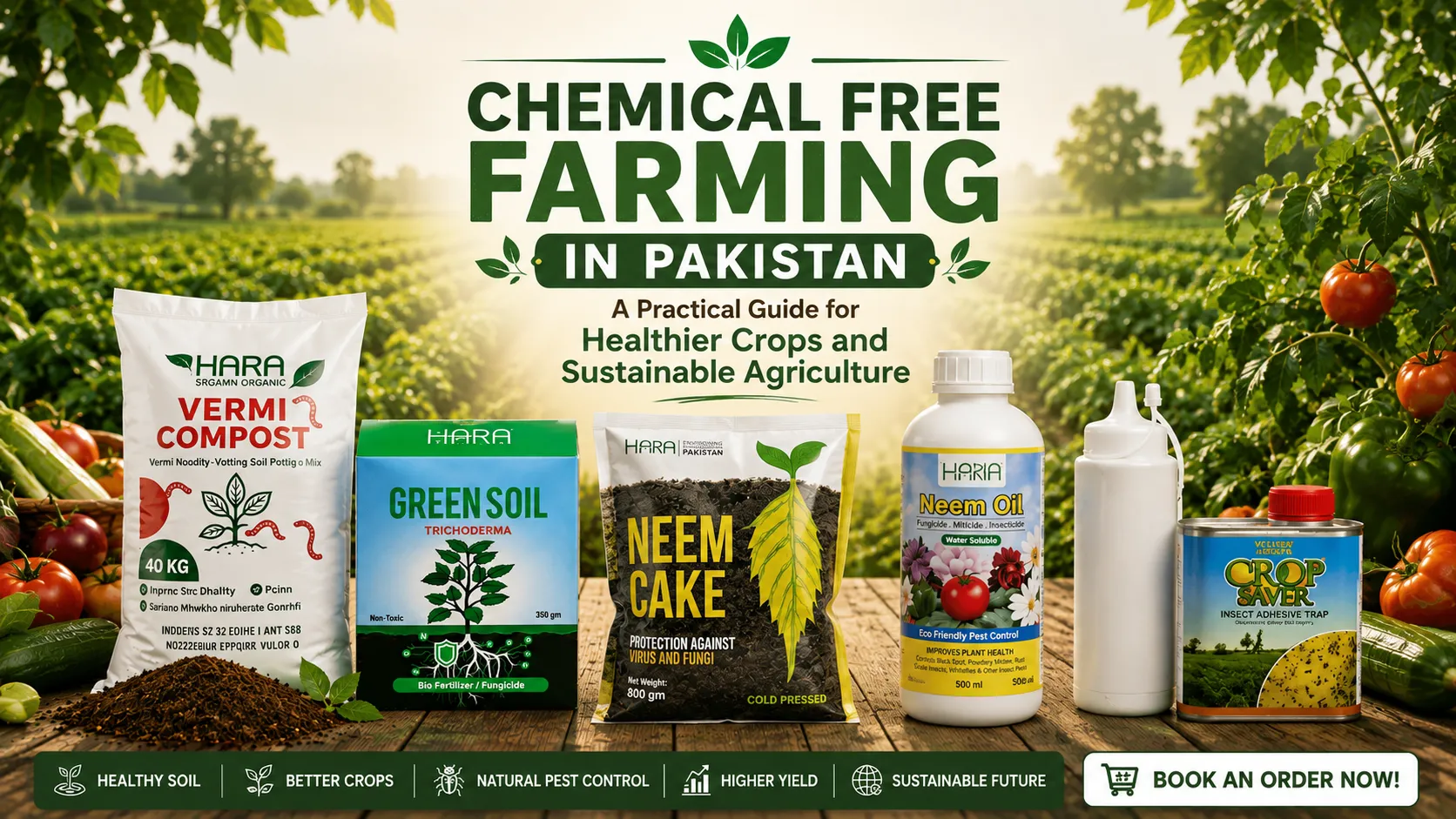
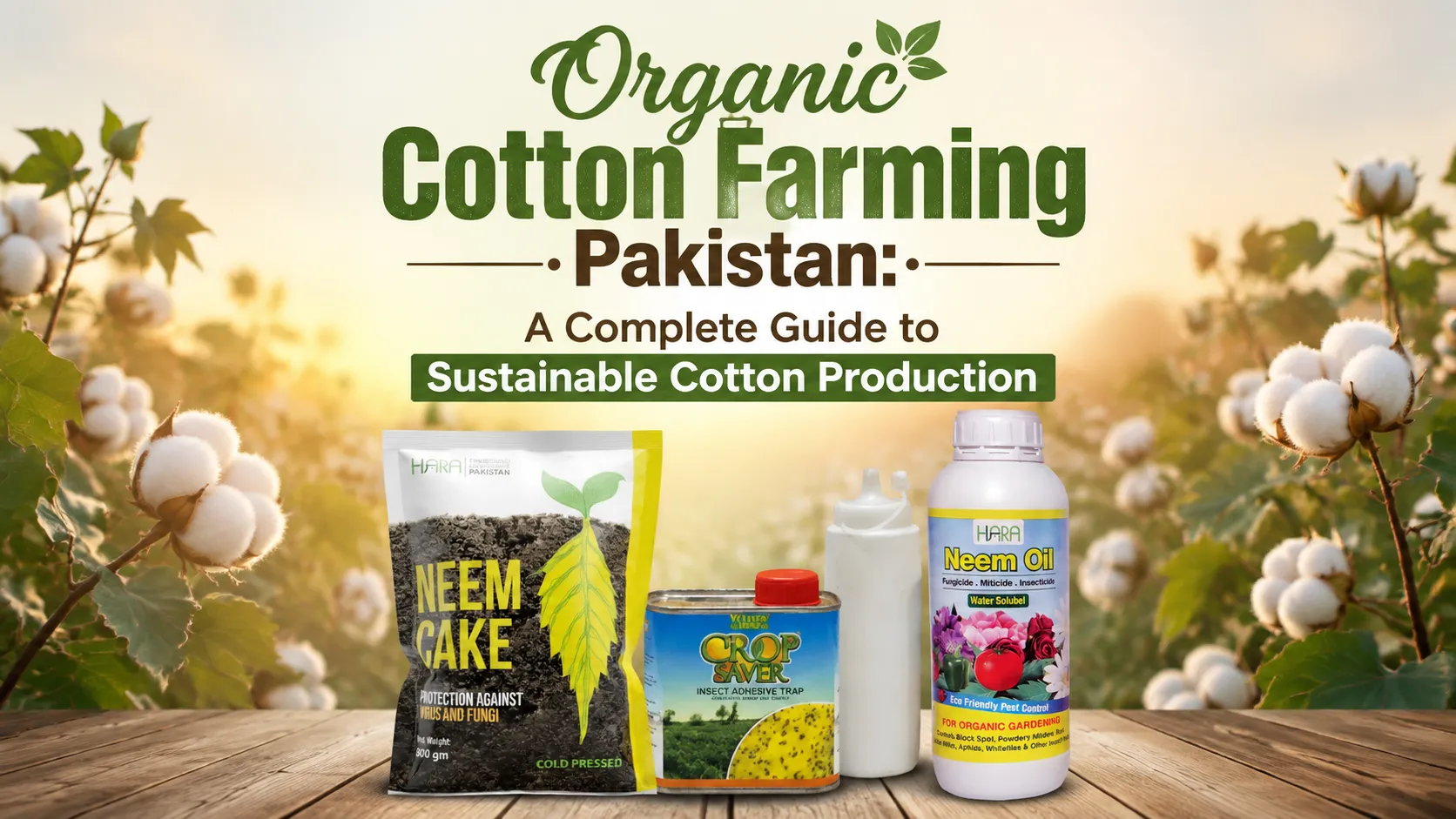
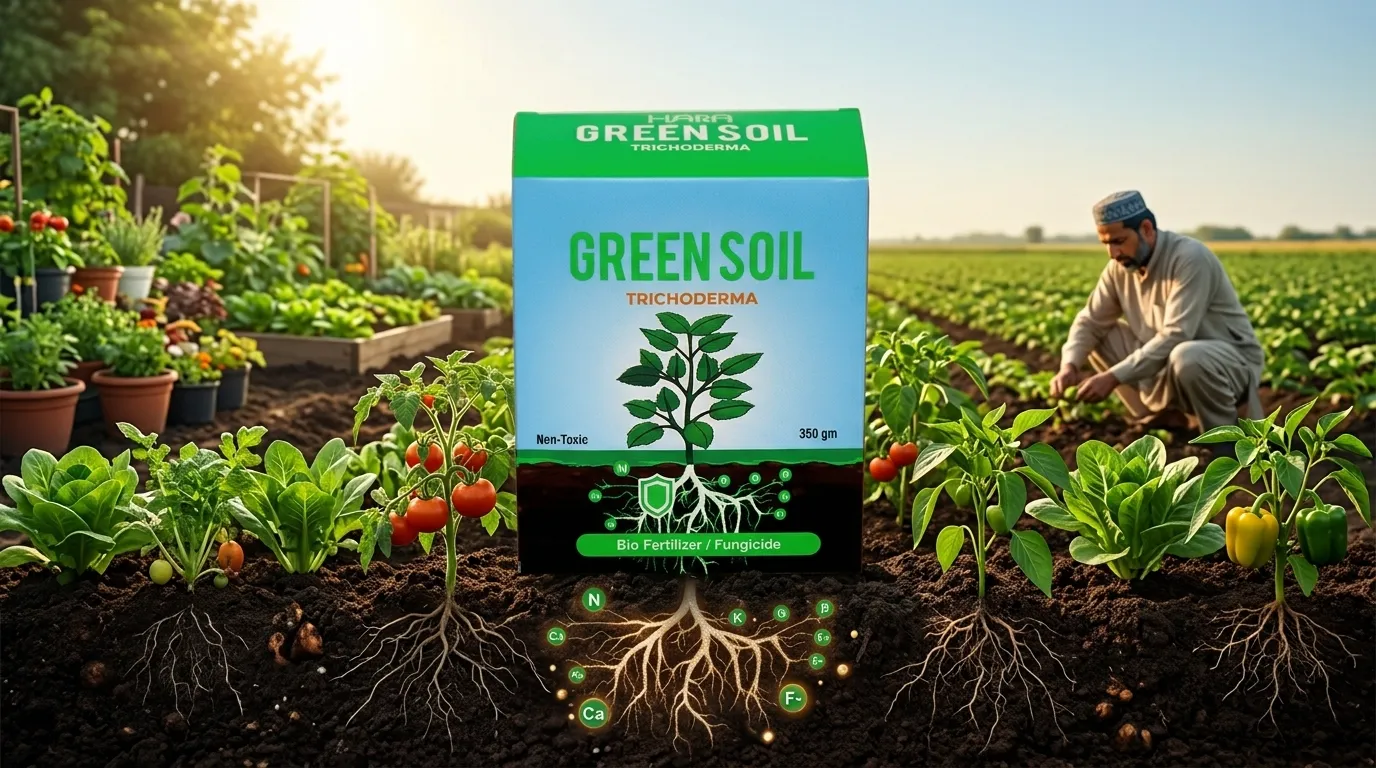
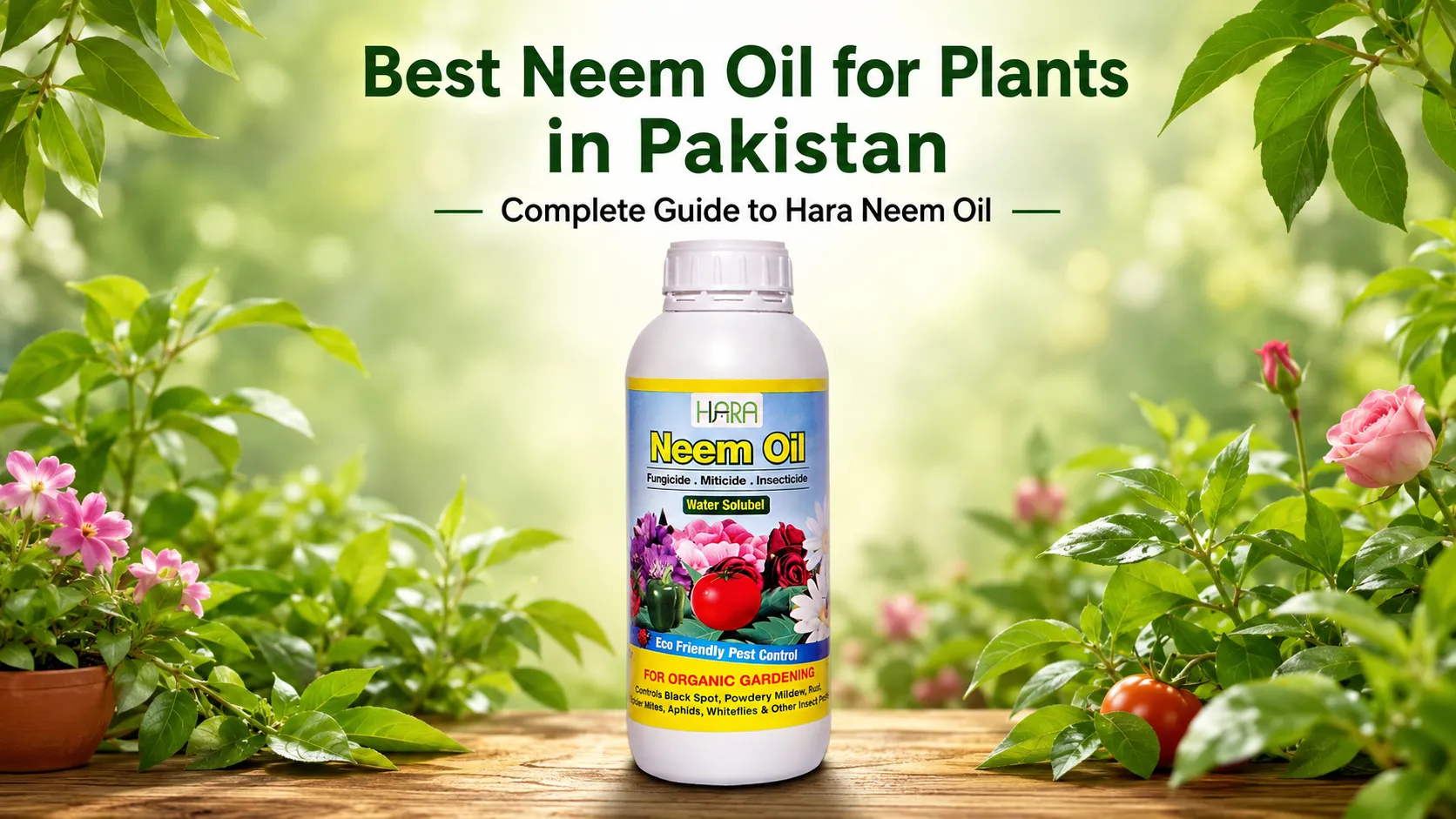

Chemical Free Farming Pakistan: A Practical Guide for Healthier Crops and Sustainable Agriculture
Jump To Chemical Free Farming Pakistan: A Practical Guide for
Organic Cotton Farming Pakistan: A Complete Guide to Sustainable Cotton Production
Jump To Organic Cotton Farming Pakistan: A Complete Guide to
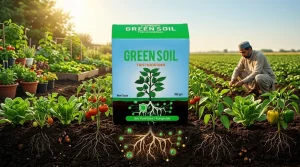
Green Soil Plant Growth: A Complete Guide to Better Soil Health and Stronger Plant Growth
Jump To Green Soil Plant Growth: A Complete Guide to
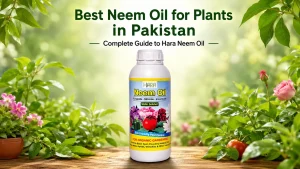
Best Neem Oil for Plants in Pakistan – Complete Guide to Hara Neem Oil
Jump To Best Neem Oil for Plants in Pakistan –

Comments (1)
Comments are closed.
[…] term Green Soil Bio Fertilizer may be used by people searching for beneficial microbial products because Trichoderma can […]