


Agriculture is a vital part of Pakistan’s economy, but excessive use of chemical fertilizers and pesticides has affected soil health and long-term crop productivity. As a result, more farmers and home gardeners are adopting chemical free farming Pakistan to grow healthier crops while protecting the environment.
Chemical-free farming focuses on improving soil fertility, strengthening plant health, and managing pests naturally through organic inputs rather than synthetic chemicals. Products like Hara Neem Oil, Hara Yellow Sticky, Hara Neem Cake Organic Fertilizer, Hara Vermicompost, and Hara Green Soil help support sustainable farming by enhancing soil quality and promoting natural pest management.
Quick Answer
Chemical free farming Pakistan is a sustainable farming approach that reduces the use of synthetic fertilizers and pesticides by using organic fertilizers, neem-based pest control, sticky traps, and healthy soil management practices. It helps improve soil fertility, supports healthier crops, and is suitable for both commercial farming and home gardening.
What is Chemical-Free Farming?
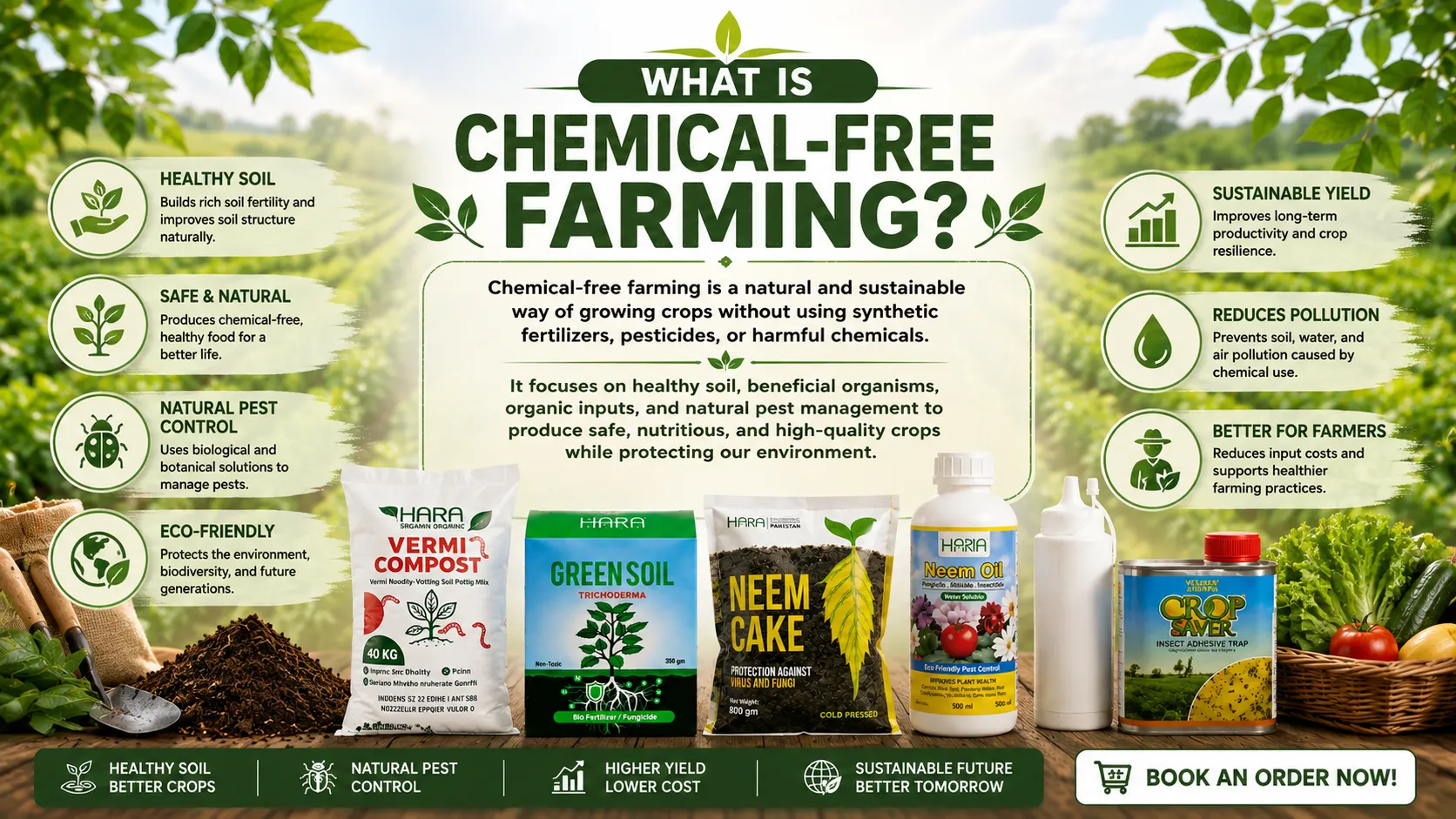
Chemical-free farming is a farming system that prioritizes natural soil fertility, biological pest control, compost-based nutrition, and environmentally friendly crop management instead of relying heavily on synthetic agricultural chemicals.
Rather than treating individual problems with chemical sprays, chemical-free farming aims to create healthy plants that naturally resist pests and diseases through improved soil health and balanced nutrition.
Healthy soil contains beneficial bacteria, fungi, earthworms, and microorganisms that help plants absorb nutrients efficiently. By protecting this natural ecosystem, farmers can achieve more sustainable crop production over time.
Why Chemical-Free Farming is Becoming Popular in Pakistan
Pakistani agriculture is facing several long-term challenges, including declining soil fertility, increasing pest resistance, rising fertilizer prices, and changing weather patterns. These issues have encouraged many growers to reconsider traditional farming practices.
Chemical-free farming offers a practical solution by improving soil quality and reducing dependence on expensive synthetic inputs. While complete organic farming may not be immediately practical for every commercial farmer, gradually replacing chemical inputs with organic alternatives can significantly improve farm sustainability.
Home gardeners are also increasingly adopting chemical-free methods because they want safer vegetables, herbs, and fruits for their families. Terrace gardens, balcony gardens, and kitchen gardens across Pakistan are now using compost, neem products, and biological pest management instead of conventional pesticides.
Core Principles of Chemical-Free Farming
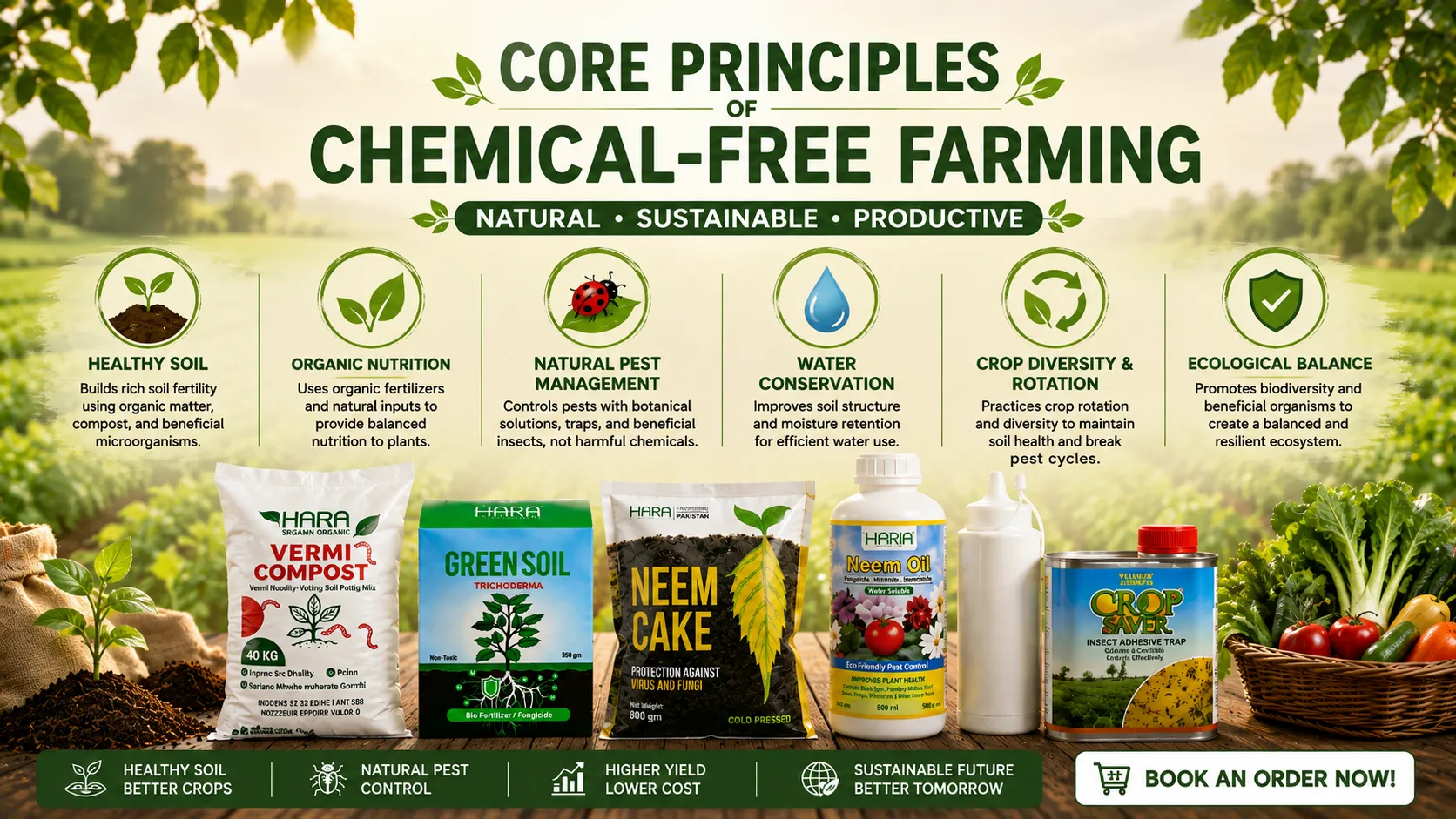
Successful chemical-free farming is based on maintaining a healthy agricultural ecosystem rather than treating individual crop problems after they occur. The key principles include:
- Building healthy soil through organic matter and natural fertilizers.
- Managing pests using biological and botanical solutions instead of routine chemical spraying.
- Preserving beneficial insects such as ladybirds, bees, and pollinators.
- Improving biodiversity by encouraging healthy microorganisms in the soil.
- Using preventive crop management practices instead of reactive chemical treatments.
These principles work together to create stronger plants that require fewer external inputs throughout the growing season.
Benefits of Chemical-Free Farming for Pakistani Growers
One of the biggest advantages of chemical-free farming is its ability to improve soil health over time. Organic matter increases microbial activity, improves soil texture, and enhances water-holding capacity, which is especially valuable in areas experiencing irregular rainfall.
Farmers often notice gradual improvements in root development, crop resilience, and overall plant vigor after incorporating organic inputs into their farming practices. Stronger root systems allow plants to absorb nutrients more efficiently and tolerate environmental stress better.
For commercial growers, healthier soil can contribute to more stable yields in the long term while reducing dependency on repeated chemical applications. Although the transition requires patience, improved soil fertility can lower production costs over several growing seasons.
Home gardeners benefit in different ways. Vegetables, herbs, and fruits grown using organic methods are suitable for households seeking naturally produced food. Chemical-free gardening also creates a safer environment for children, pets, and beneficial insects that help maintain ecological balance.
Another important benefit is environmental sustainability. Reduced chemical runoff helps protect groundwater, nearby water bodies, and surrounding wildlife. Maintaining biodiversity also supports pollinators that are essential for many fruit and vegetable crops grown in Pakistan.
Essential Organic Products for Chemical-Free Farming
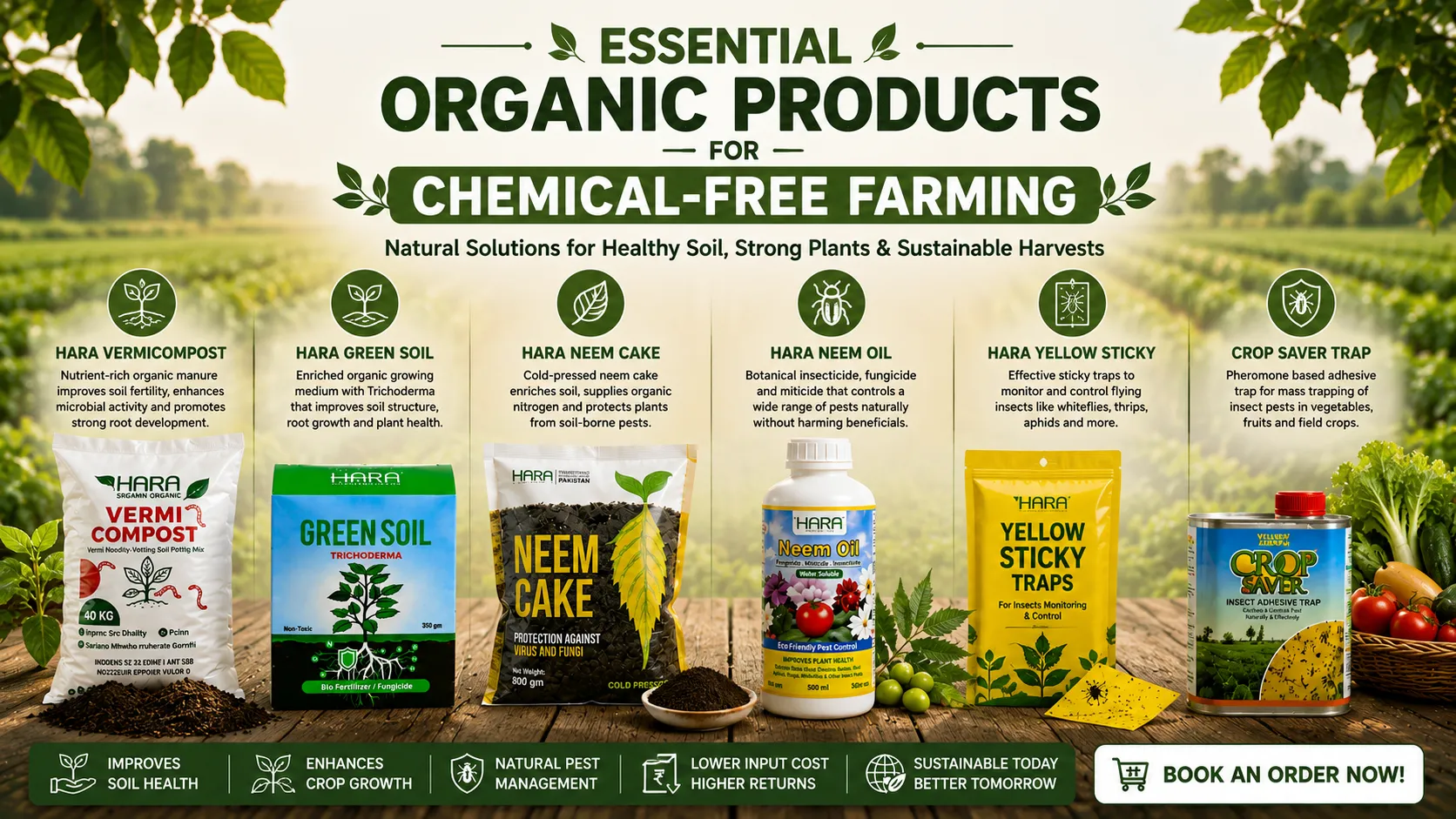
Chemical-free farming is most successful when different organic inputs work together. Instead of depending on one product, growers combine soil improvement, pest management, and natural nutrition to create a balanced farming system.
Hara Neem Oil
Neem oil is a botanical pest management product extracted from neem seeds. It helps reduce populations of soft-bodied insects while having less impact on beneficial organisms when used correctly.
It is commonly used on vegetables, fruit trees, flowering plants, herbs, ornamental plants, and kitchen gardens. Neem oil works best as part of an integrated pest management program where pest populations are monitored regularly instead of spraying on a fixed schedule.
Hara Yellow Sticky
Yellow sticky traps provide a non-chemical way of monitoring and reducing flying insect populations. Many common agricultural pests are naturally attracted to the bright yellow surface and become trapped.
These traps are widely used in vegetable fields, greenhouses, nurseries, poly tunnels, orchards, and home gardens. Besides helping control insect populations, they also allow growers to detect pest infestations early before they become severe.
Hara Neem Cake Organic Fertilizer
Neem cake is produced after oil extraction from neem seeds and serves as an excellent organic soil amendment.
It gradually releases nutrients while improving soil structure and supporting beneficial microbial activity. Farmers also value neem cake because it contributes to healthier root development and helps create favorable soil conditions for crop growth.
Hara Vermicompost
Vermicompost is produced by earthworms that naturally convert organic waste into nutrient-rich compost.
Unlike synthetic fertilizers that provide quick nutrients, vermicompost improves soil biology, increases organic matter, and supports long-term fertility. It can be used for vegetables, fruit crops, flowers, nurseries, lawns, and ornamental plants.
Regular application improves soil texture, encourages root growth, and enhances moisture retention, making it especially useful in Pakistan’s warm climate.
Hara Green Soil
Hara Green Soil is designed as a ready-to-use growing medium suitable for home gardening, kitchen gardens, terrace gardens, potted plants, and nursery production.
A quality growing medium provides proper drainage while retaining sufficient moisture for healthy root development. It also creates an ideal environment for beneficial microorganisms that support plant growth.
For new gardeners, using a balanced growing medium often produces healthier plants compared to ordinary garden soil alone.
Which Pakistani Crops Benefit Most from Chemical-Free Farming?
Chemical-free farming can be adapted to many crops grown across Pakistan. Vegetables such as tomatoes, chilies, cucumbers, okra, spinach, coriander, cabbage, cauliflower, and brinjal respond well to organic soil improvement and biological pest management.
Fruit crops including mango, citrus, guava, pomegranate, grapes, papaya, and banana also benefit from improved soil health and reduced chemical dependence, especially when organic fertilizers are integrated into annual orchard management.
Kitchen gardens, herbs, flowering plants, ornamental landscapes, and lawns are among the easiest places to adopt chemical-free practices because growers can monitor plants closely and apply organic inputs as needed.
Product Selection Guide
Farming Need | Recommended Hara Product | Primary Purpose |
Natural insect management | Hara Neem Oil | Botanical pest control |
Flying insect monitoring | Hara Yellow Sticky | Sticky insect traps |
Improve soil fertility | Hara Vermicompost | Organic nutrition |
Better root-zone health | Hara Neem Cake Organic Fertilizer | Soil amendment |
Potting and container gardening | Hara Green Soil | Premium growing medium |
How to Start Chemical-Free Farming
Transitioning to chemical-free farming should be gradual rather than sudden. Replacing all synthetic inputs immediately may not be practical for every farmer, especially on large commercial farms.
A better approach is to begin by improving soil organic matter, introducing biological pest management, and reducing unnecessary chemical applications. Monitoring pest populations, maintaining crop hygiene, rotating crops where possible, and applying organic fertilizers consistently all contribute to healthier crops over time.
For home gardeners, starting is even simpler. Using quality growing media, adding vermicompost regularly, installing sticky traps, and applying neem-based products only when needed can establish a productive chemical-free garden with relatively little effort.
How to Use Organic Products in Chemical-Free Farming
One of the biggest misconceptions about chemical-free farming is that simply replacing chemical fertilizers with compost is enough. In reality, successful chemical-free farming involves combining healthy soil management, natural pest control, regular crop monitoring, and balanced plant nutrition.
Different organic products serve different purposes. For example, vermicompost and neem cake improve soil fertility, while neem oil and yellow sticky traps help manage insect populations without relying on conventional pesticides. Using these products together creates a healthier growing environment for crops.
Before applying any organic product, farmers should identify the specific needs of the crop. A vegetable crop suffering from poor soil fertility requires a different approach than a fruit orchard experiencing insect pressure. Choosing the right product at the right time improves efficiency and avoids unnecessary applications.
Recommended Application Guide
The exact application rate may vary depending on crop type, soil condition, product formulation, and manufacturer instructions. Always read the product label before use.
Product | Suitable Application | Best Time |
Hara Neem Oil | Foliar spray for insect management | Early morning or late afternoon |
Hara Yellow Sticky | Install above crop canopy for monitoring and trapping flying insects | At the beginning of the crop season or when pest activity starts |
Hara Neem Cake Organic Fertilizer | Mix into soil before sowing or around established plants | Before planting or during soil preparation |
Hara Vermicompost | Incorporate into soil, beds, pots, or around plants | During planting and periodically throughout the growing season |
Hara Green Soil | Fill pots, containers, raised beds, or seed trays | During planting or transplanting |
Chemical Free Farming for Home Gardens
Chemical-free farming is not limited to large agricultural fields. In Pakistan, many families now grow vegetables, herbs, and flowers in small outdoor spaces. Kitchen gardens, balconies, rooftops, and terraces can all benefit from organic growing practices.
Healthy soil is the foundation of every successful home garden. Using a quality growing medium such as Hara Green Soil, enriched with Hara Vermicompost, creates a suitable environment for root development and water retention. This combination is especially useful for tomatoes, chilies, coriander, mint, spinach, lettuce, cucumbers, and seasonal vegetables grown in containers.
When insect activity appears, yellow sticky traps can help monitor flying pests, while neem oil may be used as part of an integrated pest management approach where appropriate. Since home gardens are smaller than commercial farms, gardeners can inspect plants regularly and take action before pest populations become severe.
Home gardeners should also avoid overwatering, overcrowding plants, and excessive fertilization. Proper spacing, regular pruning, and good air circulation naturally reduce many common plant problems.
Suitable Crops for Chemical Free Farming in Pakistan
Chemical-free farming can be adapted to a wide variety of crops grown across different regions of Pakistan. Vegetable growers often use organic inputs for tomatoes, chilies, okra, cucumbers, spinach, onions, garlic, cabbage, cauliflower, bitter gourd, bottle gourd, and eggplant because these crops respond well to improved soil health and biological pest management.
Fruit growers can also incorporate organic practices into orchards of mango, citrus, guava, pomegranate, banana, grapes, and papaya. Improving soil organic matter around fruit trees encourages stronger root systems and supports long-term tree health.
Nurseries producing ornamental plants, flowering species, indoor plants, and landscape shrubs also benefit from organic growing media and compost-based nutrition. Similarly, lawns maintained with organic soil amendments often develop stronger root systems and improved moisture retention.
Organic Alternatives Available in the Pakistani Market
Although Hara Organic offers a range of products suitable for chemical-free farming, growers in Pakistan may also encounter other organic inputs depending on their region and availability. Selecting an alternative should depend on the crop, soil condition, and farming objective rather than price alone.
Product | Best For | Possible Organic Alternative |
Hara Neem Oil | Botanical insect management | Other registered neem-based sprays, homemade neem seed extract (where appropriate) |
Hara Yellow Sticky | Flying insect monitoring | Generic yellow sticky traps available through agricultural suppliers |
Hara Neem Cake Organic Fertilizer | Soil improvement and root-zone health | Farmyard manure (well-decomposed), compost, poultry manure (properly composted) |
Hara Vermicompost | Organic plant nutrition | High-quality compost, earthworm compost from local producers |
Hara Green Soil | Potting mix and container gardening | Well-prepared organic potting mix containing compost, coco peat, and sand |
While locally prepared composts and manures can be economical, their quality often varies. Commercially prepared organic products generally provide more consistent composition and are easier to use for home gardeners and nursery owners.
Common Problems Chemical-Free Farming Can Help Address
Healthy crops begin with healthy soil. Many common agricultural challenges become less severe when farmers consistently improve soil biology and adopt preventive management practices.
Chemical-free farming can contribute to better soil structure, allowing roots to penetrate more deeply and access water efficiently during periods of limited rainfall. Organic matter also improves the soil’s ability to retain moisture, which is particularly valuable in areas experiencing water stress.
Botanical pest management and physical monitoring tools such as sticky traps may help reduce the pressure from certain insect pests while preserving beneficial insects that contribute to natural pest control. Organic fertilizers also support gradual nutrient availability, reducing the risk of excessive vegetative growth often associated with overuse of synthetic nitrogen fertilizers.
Although organic practices cannot eliminate every agricultural problem, they help build a more balanced production system that supports healthier crops over the long term.
Common Mistakes to Avoid
Many farmers begin chemical-free farming with high expectations but overlook some basic management practices. Gradual adoption and consistency usually produce better results than sudden changes.
Some common mistakes include:
- Replacing all conventional inputs overnight without improving soil health.
- Expecting immediate results from organic fertilizers.
- Applying neem oil during the hottest part of the day.
- Ignoring regular pest monitoring.
- Using poor-quality compost that has not fully decomposed.
- Overwatering container plants grown in organic media.
- Applying excessive quantities of organic fertilizers without considering crop requirements.
Avoiding these mistakes helps establish a stronger foundation for successful chemical-free farming.
Frequently Asked Questions
Is chemical-free farming the same as organic farming?
Not always. Chemical-free farming generally focuses on minimizing synthetic chemical use through natural methods, while certified organic farming follows specific production standards and certification requirements.
Can chemical-free farming be profitable in Pakistan?
It can be, particularly when growers improve soil health, reduce unnecessary chemical inputs, and target consumers interested in naturally produced food. Profitability depends on crop selection, management practices, and market demand.
Is neem oil safe for vegetable crops?
Neem-based products are widely used in integrated pest management programs for vegetables. Always follow the manufacturer’s instructions and observe recommended application intervals.
Can home gardeners use vermicompost?
Yes. Vermicompost is suitable for vegetables, herbs, flowering plants, ornamental plants, indoor plants, fruit plants, and container gardening.
Do yellow sticky traps eliminate all insects?
No. They mainly help monitor and reduce populations of certain flying insects. They work best when combined with good crop management practices.
How often should organic fertilizers be applied?
Application frequency depends on the crop, soil fertility, and product used. Following product-specific recommendations is the safest approach.
Which vegetables are easiest to grow using chemical-free methods?
Tomatoes, chilies, spinach, coriander, lettuce, cucumbers, okra, mint, and seasonal leafy vegetables are popular choices for home gardens in Pakistan.
Can chemical-free farming improve soil fertility?
Yes. Regular addition of compost, vermicompost, neem cake, and other organic matter supports beneficial microorganisms and gradually improves soil quality.
Is chemical-free farming suitable for orchards?
Yes. Mango, citrus, guava, pomegranate, banana, and other fruit orchards can benefit from improved soil health and integrated pest management.
Can I combine multiple organic products?
Many organic products complement each other because they serve different purposes. However, always check the manufacturer’s recommendations before mixing or applying multiple products together.
Conclusion
Chemical-free farming is becoming increasingly popular in Pakistan as farmers and home gardeners look for sustainable ways to improve soil health and grow healthier crops.
Organic solutions like Hara Neem Oil, Hara Yellow Sticky, Hara Neem Cake Organic Fertilizer, Hara Vermicompost, and Hara Green Soil help support natural pest management, enrich soil fertility, and promote healthier plant growth.
Whether you manage a farm, nursery, or home garden, adopting chemical-free farming is a smart step toward long-term sustainability. Book your order today and start building healthier soil and stronger crops with Hara Organic’s trusted solutions.
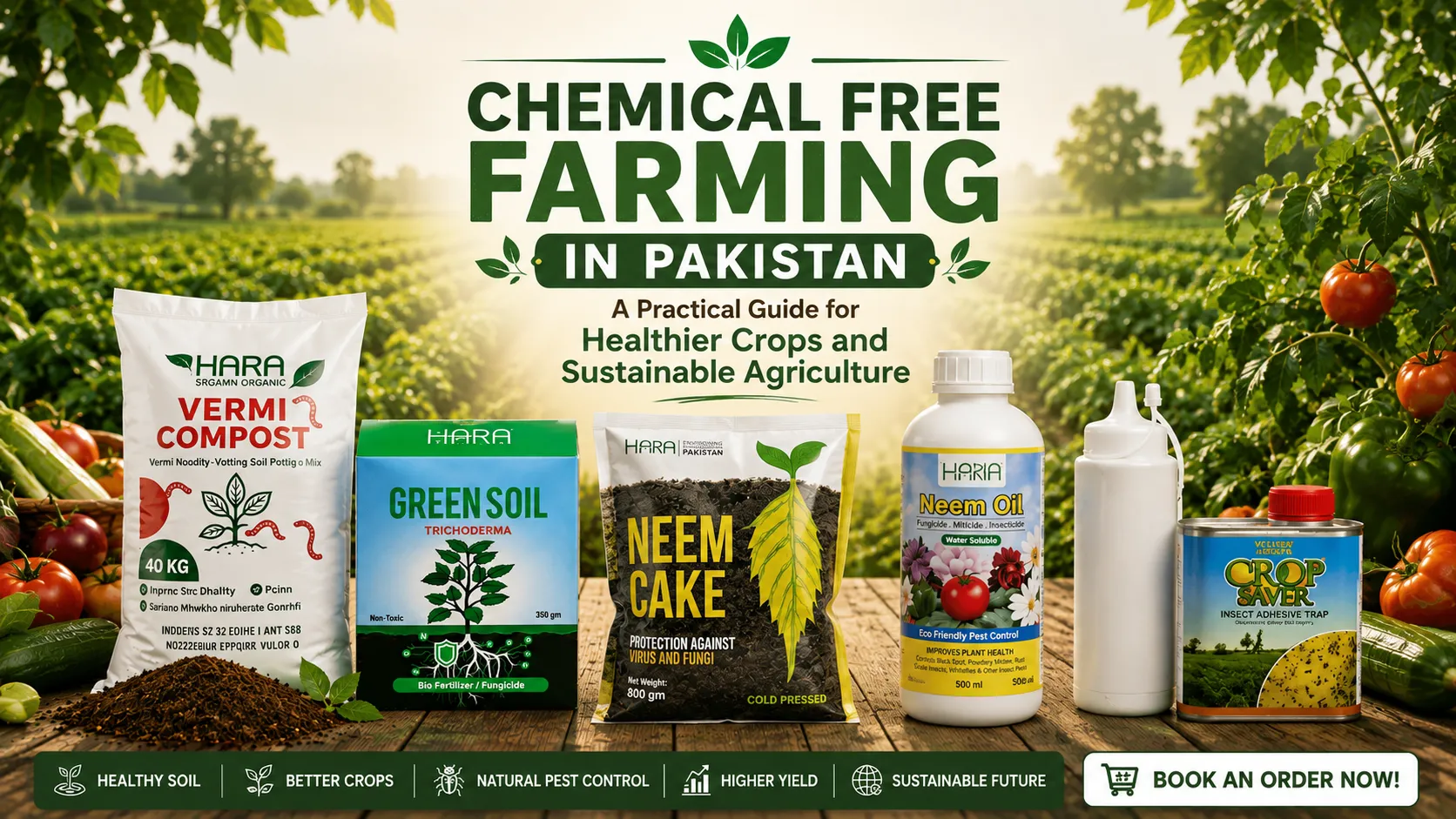
Chemical Free Farming Pakistan: A Practical Guide for Healthier Crops and Sustainable Agriculture
Jump To Chemical Free Farming Pakistan: A Practical Guide for
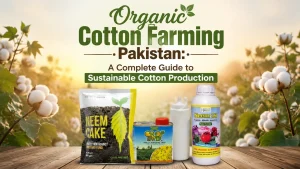
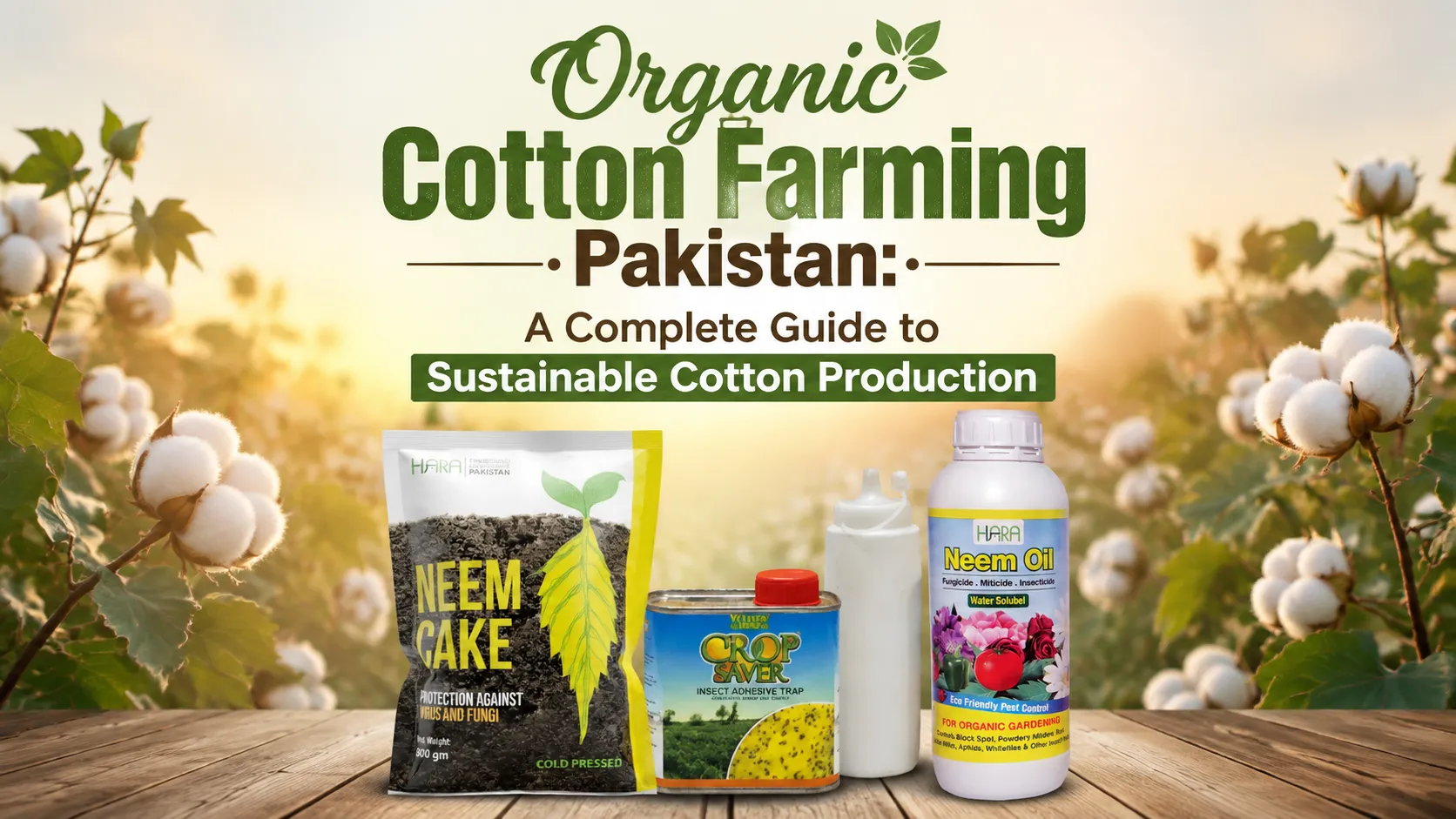
Organic Cotton Farming Pakistan: A Complete Guide to Sustainable Cotton Production
Jump To Organic Cotton Farming Pakistan: A Complete Guide to
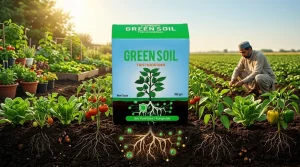
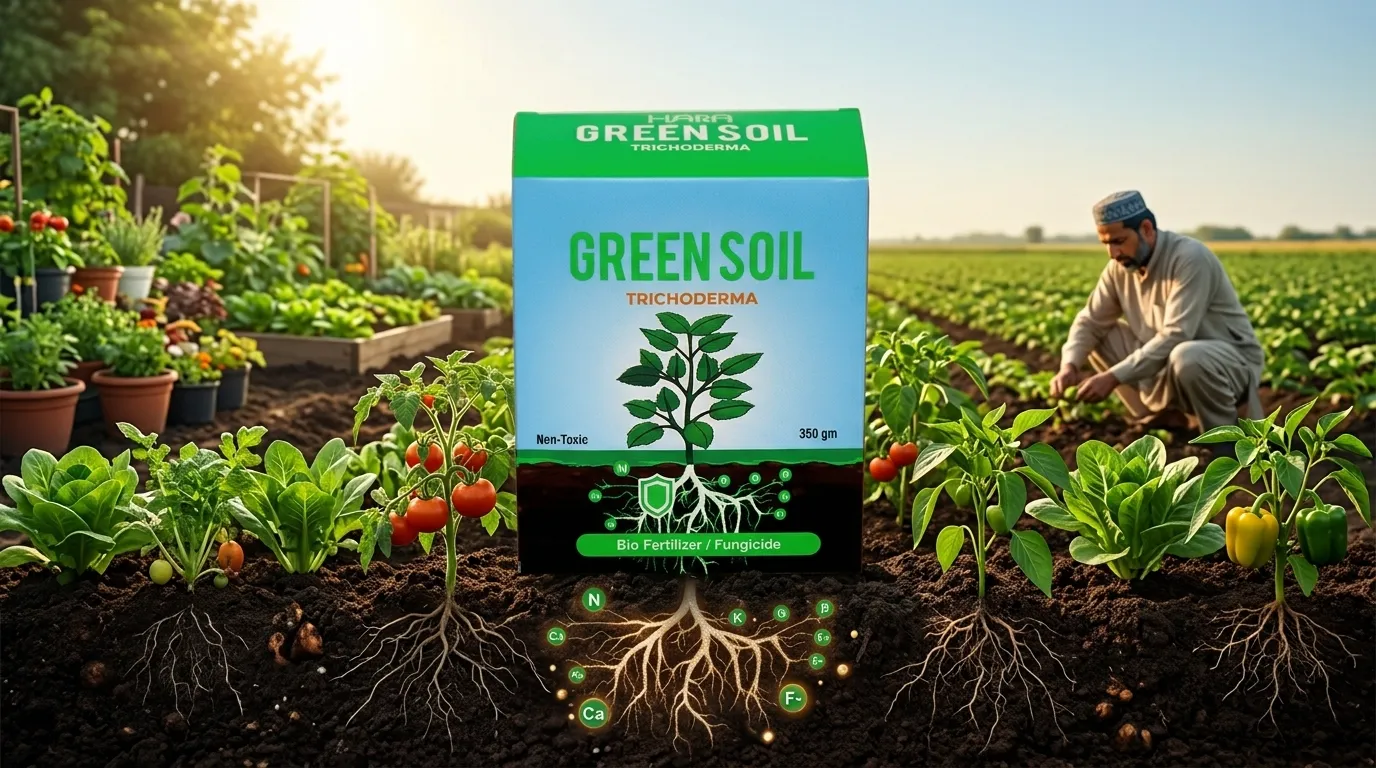
Green Soil Plant Growth: A Complete Guide to Better Soil Health and Stronger Plant Growth
Jump To Green Soil Plant Growth: A Complete Guide to
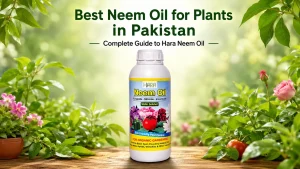
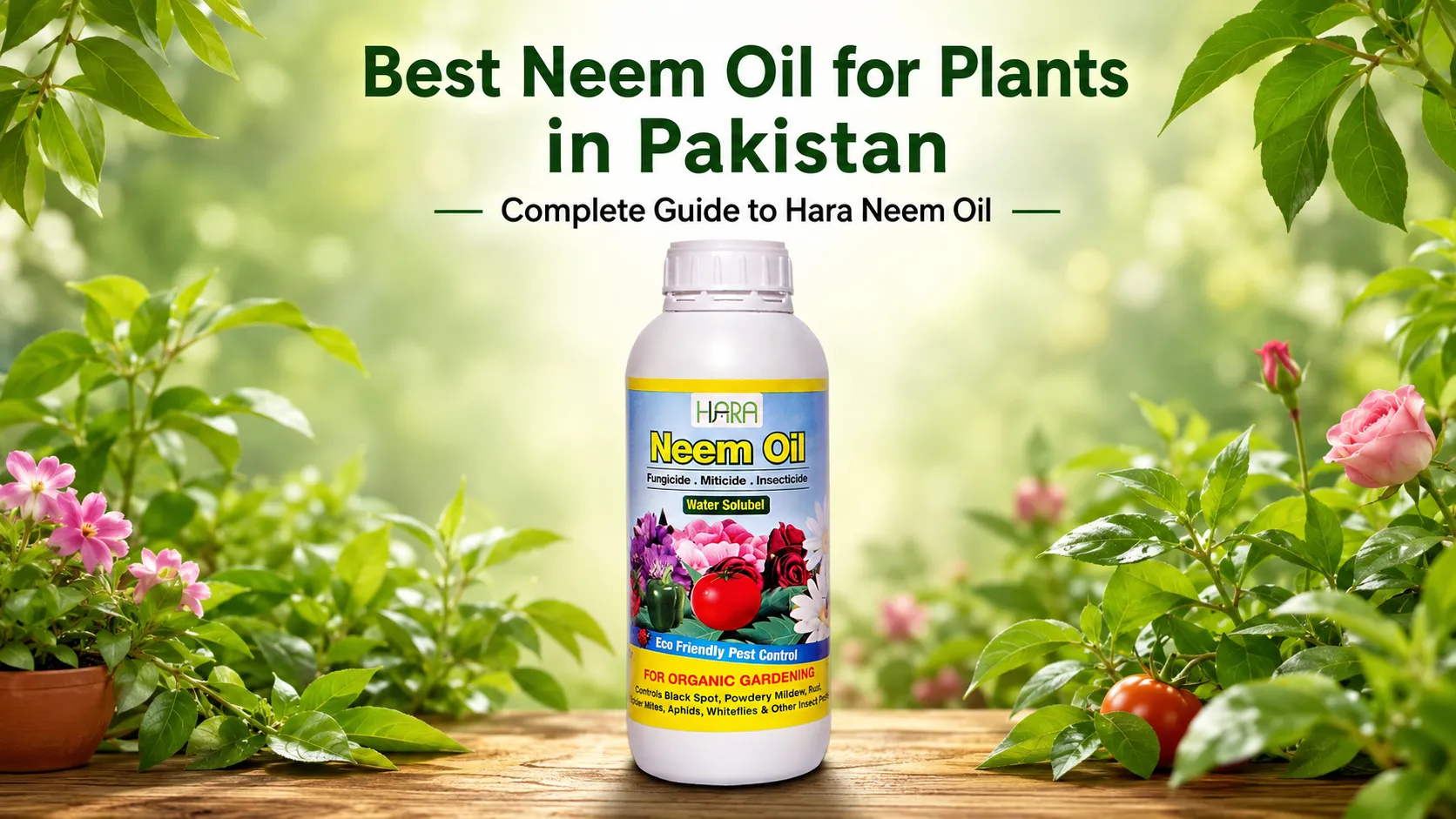
Best Neem Oil for Plants in Pakistan – Complete Guide to Hara Neem Oil
Jump To Best Neem Oil for Plants in Pakistan –
