

Jump To
Natural Fertilizer for Crops in Pakistan Benefits, Types, and Sustainable Farming Guide

Soil degradation, rising fertilizer costs, water shortages, and declining organic matter are becoming major agricultural challenges in Pakistan. Because of these problems, natural fertilizer for crops is gaining attention as a sustainable solution for improving soil fertility, crop productivity, and long-term agricultural health.
Natural fertilizers improve soil structure, support beneficial microorganisms, and help crops grow more naturally compared to excessive dependence on synthetic chemicals. Farmers across Pakistan are increasingly using organic soil amendments, compost, and eco-friendly farming inputs to improve sustainable crop production.
What Is Natural Fertilizer for Crops?
Natural fertilizer for crops refers to organic or naturally available materials that provide nutrients to plants while improving soil health. These fertilizers come from plant waste, animal manure, compost, biofertilizers, and naturally occurring minerals.
Unlike synthetic fertilizers that mainly focus on rapid nutrient supply, natural fertilizers improve the biological activity of soil. They increase organic matter, support microbial life, and help maintain long-term soil productivity.
Natural fertilizers usually contain important nutrients such as nitrogen, phosphorus, potassium, calcium, magnesium, and trace minerals that support healthy crop growth.
Why Is Natural Fertilizer Becoming Important in Pakistan?
Pakistan’s agriculture sector depends heavily on fertile soil and irrigation systems. However, many farming regions now face serious agricultural problems, including declining soil fertility, salinity, water scarcity, and reduced organic matter.
According to the Food and Agriculture Organization (FAO), improving soil organic matter is essential for sustainable crop productivity and water conservation. Agricultural experts also emphasize that healthy soil plays a major role in maintaining long-term food security.
Pakistan Agricultural Research Council (PARC) has repeatedly highlighted declining soil organic matter as a major agricultural challenge in Pakistan. In several areas of Punjab and Sindh, excessive chemical fertilizer use and poor soil management have reduced soil quality over time.
Because of these issues, farmers are increasingly adopting sustainable nutrient sources and soil-friendly fertilizers to restore agricultural productivity.
Natural Fertilizer for Crops in Pakistan
Natural fertilizer use is growing in Pakistan because farmers are searching for affordable and sustainable farming solutions.
In Punjab, declining organic matter in agricultural land has become a serious concern for wheat and rice farming. In Sindh, salinity and waterlogging affect soil productivity in many farming areas. Northern farming regions also face water shortages that reduce crop performance during dry seasons.
To address these problems, many farmers now use biological fertilizers, compost, farmyard manure, and organic soil amendments to improve soil fertility naturally. Organic farming awareness is also increasing because consumers prefer healthier food products with lower chemical exposure.
Types of Natural Fertilizers Used in Pakistan
Natural fertilizers are available in different forms depending on their source and nutrient composition. Some fertilizers improve soil structure, while others provide essential nutrients and support microbial activity for healthy crop growth.
1. Animal-Based Natural Fertilizers
Animal-based fertilizers are rich in organic matter and nutrients that improve soil fertility naturally.
- Gobar ki khaad (Farmyard Manure / FYM)
- Poultry manure
- Sheep & goat manure
- Horse manure
- Rabbit manure
- Bat guano
- Bone meal
- Blood meal
- Fish meal
- Fish emulsion / Fish hydrolysate
- Horn & hoof meal
- Feather meal
- Slurry manure
- Vermicompost (worm casting)
2. Plant-Based Natural Fertilizers
Plant-based fertilizers improve soil texture, moisture retention, and microbial activity.
- Compost
- Leaf compost / Leaf mold
- Green manure
- Neem cake
- Mustard cake
- Castor cake
- Soybean meal
- Alfalfa meal
- Seaweed / Kelp
- Compost tea
- Rice water
- Comfrey tea
- Sugarcane press mud
- Crop residue compost
- Biochar
- Coconut coir compost
3. Mineral-Based Natural Fertilizers
Mineral-based fertilizers provide naturally occurring nutrients that help improve soil quality and plant growth.
- Rock phosphate
- Gypsum
- Limestone
- Dolomite
- Wood ash
- Epsom salt
- Humic acid
- Fulvic acid
- Bentonite
- Zeolite
4. Bio Fertilizers (Microbial Fertilizers)
Bio fertilizers contain beneficial microorganisms that help crops absorb nutrients more efficiently.
- Rhizobium
- Azotobacter
- Azospirillum
- PSB (Phosphate Solubilizing Bacteria)
- Mycorrhiza
- Trichoderma
- Blue-green algae
- EM (Effective Microorganisms)
5. Liquid Organic Fertilizers
Liquid fertilizers are commonly used in foliar sprays and irrigation systems because plants absorb them quickly.
- Compost tea
- Fish amino acid
- Seaweed extract
- Jivamrit
- Banana peel tea
- Vermiwash
- Liquid humic acid
- Liquid fulvic acid
- Fermented plant extract (FPE)
6. Household Natural Fertilizers
Many household organic wastes can also be reused as eco-friendly fertilizers for home gardening and small farming.
- Eggshell powder
- Tea leaves compost
- Coffee grounds
- Rice water
- Onion peel extract
- Banana peel powder
- Aquarium water
- Kitchen waste compost
What Are the Best Natural Fertilizers for Crops?
Different crops and soil conditions require different nutrient management approaches. Some natural fertilizers improve soil structure, while others provide higher nutrient content for crop growth.
Compost
Compost is one of the most widely used eco-friendly farming inputs in sustainable agriculture. It is made from decomposed organic materials such as crop residue, dry leaves, fruit waste, and kitchen scraps.
Compost improves soil texture, increases water retention, and supports beneficial microbial activity. It is commonly used for vegetables, fruit orchards, wheat farming, and home gardening.
Farmyard Manure
Farmyard manure includes cow dung, buffalo waste, goat manure, and livestock bedding materials. This organic fertilizer slowly releases nutrients into the soil and increases organic matter content. It is widely used across rural Pakistan because livestock waste is easily available in farming communities.
Vermicompost
Vermicompost is produced using earthworms that convert organic waste into nutrient-rich compost.
This biological fertilizer contains beneficial microorganisms and natural growth stimulants that improve root development and crop quality. Vegetable growers often use vermicompost because it improves nutrient availability naturally.
Green Manure
Green manure is growing specific crops like sesbania, cowpea, or sun hemp and ploughing them into the soil before flowering. This method naturally improves nitrogen levels and supports soil restoration without heavy chemical dependence.
Organic Fertilizer in Pakistan
Organic fertilizer in Pakistan is becoming increasingly popular because of rising fertilizer prices and growing awareness about sustainable agriculture.
Organic fertilizers are produced from natural plant and animal materials without synthetic chemical processing. These fertilizers improve soil fertility gradually while supporting healthier farming systems.
Many local fertilizer companies now produce commercial organic fertilizers for crop farming, fruit orchards, and vegetable cultivation. Small farmers also prepare homemade compost using crop waste and livestock manure.
Farmers interested in sustainable agriculture often learn additional methods such as composting techniques, vermicompost preparation, and soil health management practices to improve long-term farm productivity.
How Does Natural Fertilizer Improve Soil Health?
Healthy soil contains organic matter, beneficial microbes, nutrients, air spaces, and proper moisture balance. Natural fertilizers improve all of these soil properties.
Organic matter helps soil retain water for longer periods, which is especially important in dry agricultural regions. Research studies indicate that soil rich in organic matter can hold significantly more moisture compared to degraded soil.
Natural fertilizers also support soil microorganisms that break down nutrients into forms easily absorbed by plants. This process improves nutrient management and crop productivity naturally. Another important advantage is improved soil structure. Loose and healthy soil allows roots to grow deeper and absorb nutrients more effectively.
Natural Fertilizer vs Inorganic Fertilizer
Natural fertilizer and inorganic fertilizer both support crop growth, but their long-term effects on soil health are different.
Feature | Natural Fertilizer | Inorganic Fertilizer |
Source | Organic materials | Manufactured chemicals |
Nutrient Release | Slow and balanced | Fast |
Soil Health | Improves soil structure | May reduce soil quality over time |
Environmental Impact | Eco-friendly | Can increase pollution |
Microbial Activity | Supports soil life | May reduce beneficial microbes |
Inorganic fertilizer provides a rapid nutrient supply and is important for modern large-scale farming. However, excessive chemical fertilizer use may damage soil fertility and reduce organic matter levels over time.
Agricultural experts often recommend balanced nutrient management using both organic and inorganic fertilizer sources for better long-term agricultural sustainability.
What is an inorganic fertilizer?
Inorganic fertilizer is a chemically manufactured fertilizer designed to provide nutrients quickly to crops. Common inorganic fertilizers include urea, DAP, NPK fertilizer, ammonium sulfate, and potash fertilizers. These products are widely used because they improve crop growth rapidly and support higher short-term yields.
However, continuous overuse may reduce soil microbial activity and increase environmental pollution through nutrient runoff into water systems.
Can Natural and Inorganic Fertilizers Be Used Together?
Yes, integrated nutrient management combines natural fertilizer with inorganic fertilizer for balanced farming. Natural fertilizers improve long-term soil health and organic matter restoration, while inorganic fertilizers provide rapid nutrients during important crop growth stages.
This combined approach helps improve crop productivity while maintaining soil fertility and reducing environmental stress.
Best Practices for Using Natural Fertilizer
Natural fertilizers provide better results when farmers follow proper soil management and application techniques.
Best Practices
- Apply compost before sowing crops
- Avoid fresh manure on young plants
- Store organic fertilizer in dry conditions
- Combine organic and inorganic fertilizers carefully
- Test soil regularly for nutrient balance
These practices improve fertilizer efficiency and support sustainable farming systems.
Best Natural Fertilizer for Major Crops in Pakistan
Different crops require different nutrient management methods depending on growth stage and soil condition. Wheat farming commonly benefits from farmyard manure and compost because they improve soil fertility gradually throughout the growing season.
Rice cultivation often uses green manure because it naturally improves nitrogen availability in flooded fields. Vegetable farming usually requires nutrient-rich organic soil amendments such as vermicompost and poultry manure because vegetables demand continuous nutrient availability.
Fruit orchards commonly use compost, organic mulch, and biological fertilizers to improve fruit quality and long-term tree productivity.
Common Mistakes Farmers Make While Using Natural Fertilizer
Many farmers fail to achieve proper crop results because of incorrect fertilizer management practices.
Common Mistakes
- Using undecomposed manure
- Applying excessive poultry manure
- Poor compost preparation
- Incorrect irrigation after fertilizer use
- Ignoring soil testing
These mistakes may reduce nutrient efficiency and negatively affect crop growth and soil condition.
Environmental Benefits of Natural Fertilizer
Natural fertilizers reduce environmental damage caused by excessive chemical farming practices. Organic matter improves biodiversity by supporting beneficial insects, bacteria, fungi, and earthworms that maintain healthy soil ecosystems.
Natural fertilizers also reduce groundwater contamination because nutrients are released gradually instead of washing quickly into rivers and canals. Another important advantage is carbon storage in soil. Sustainable farming systems with higher organic matter can help improve climate resilience and long-term agricultural sustainability.
Is Organic Farming Increasing in Pakistan?
Organic farming is steadily increasing in Pakistan because of rising consumer awareness and export opportunities.
Consumers increasingly prefer chemical-free vegetables, fruits, and grains because of health and environmental concerns. Farmers are also realizing that sustainable farming methods help maintain soil fertility and reduce long-term farming costs.
Agricultural universities, research institutions, and farming organizations are promoting composting methods, organic soil management, and sustainable agriculture practices across different regions of Pakistan.
Future of Natural Fertilizer for Crops
The future of natural fertilizer for crops in Pakistan looks increasingly promising as farmers search for sustainable solutions to soil degradation and rising production costs.
Modern agricultural research is improving biofertilizer technology, compost quality, and integrated nutrient management practices. Experts believe sustainable nutrient sources and soil restoration techniques will play a major role in future farming systems.
As Pakistan faces increasing soil degradation, water scarcity, and rising farming costs, natural fertilizer for crops offers a sustainable, long-term solution to improve agricultural productivity. Balanced nutrient management, organic matter restoration, and soil-friendly farming practices will remain essential for the future of Pakistan’s agriculture sector.
FAQ
What is the best natural fertilizer for crops?
Compost, farmyard manure, vermicompost, and green manure are considered among the best natural fertilizers because they improve soil fertility and support healthy crop growth.
Is natural fertilizer better than inorganic fertilizer?
Natural fertilizer is better for long-term soil health, while inorganic fertilizer provides faster nutrient availability. Many farmers use both together for balanced farming.
Which natural fertilizer is commonly used in Pakistan?
Farmyard manure and compost are the most commonly used organic fertilizers in Pakistan because they are affordable and easily available.
Can natural fertilizer improve crop productivity?
Yes, natural fertilizer improves soil fertility, water retention, nutrient availability, and microbial activity, which supports better crop productivity over time.
Why is organic fertilizer important for sustainable agriculture?
Organic fertilizer improves soil structure, reduces environmental pollution, supports beneficial soil microorganisms, and helps maintain long-term agricultural sustainability.
Conclusion
Natural fertilizer for crops is becoming increasingly important for sustainable agriculture and long-term soil health in Pakistan. Organic soil amendments, biological fertilizers, and eco-friendly farming inputs help improve soil fertility while supporting healthier crop growth.
Although inorganic fertilizer remains important for rapid nutrient supply, excessive chemical dependence can damage soil quality over time. Balanced nutrient management that combines organic and inorganic fertilizer sources offers a more sustainable solution for future farming.
With growing concerns about soil degradation, water shortages, and agricultural sustainability, the use of natural fertilizers is expected to play a major role in improving Pakistan’s future agricultural productivity.
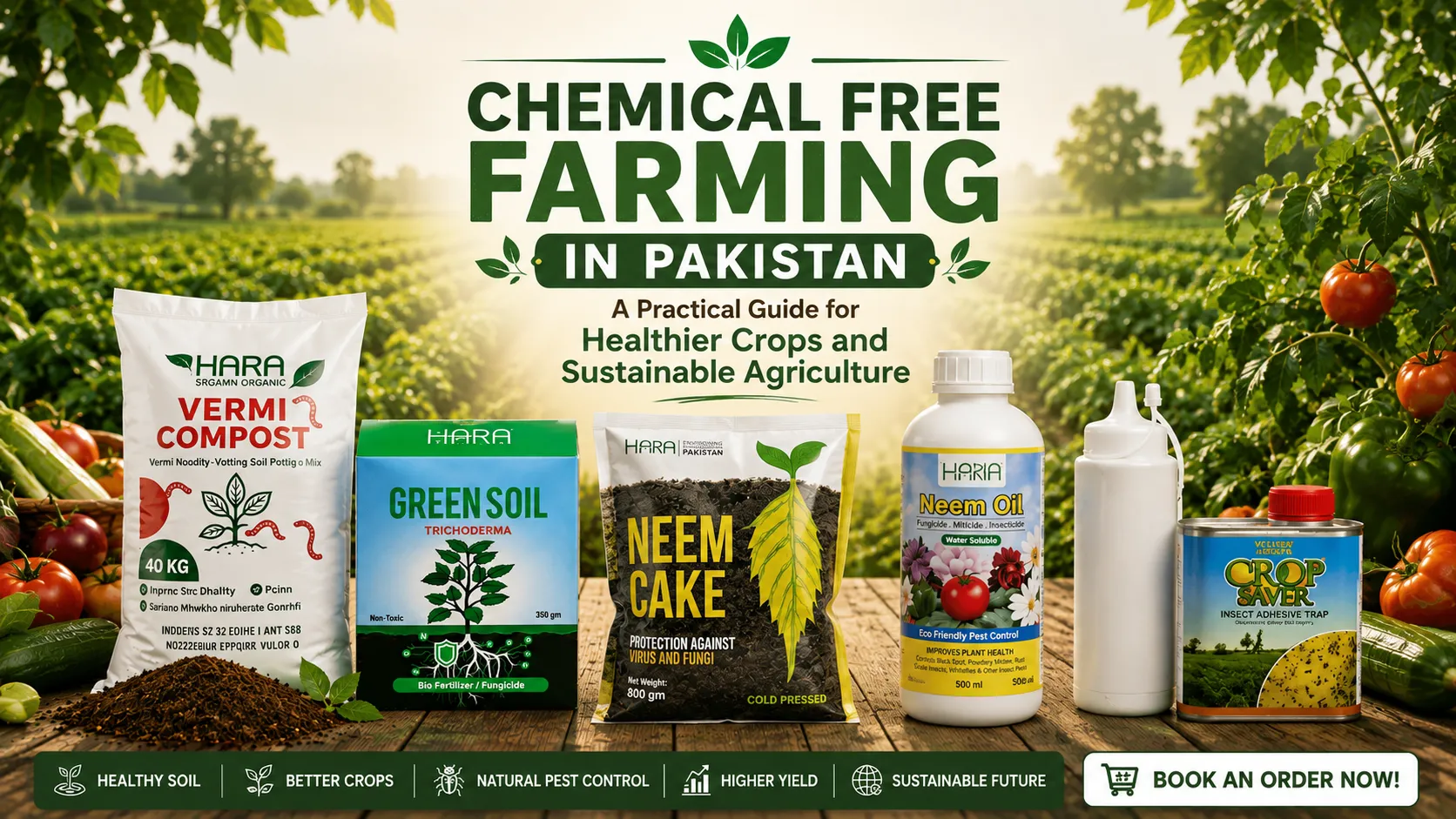
Chemical Free Farming Pakistan: A Practical Guide for Healthier Crops and Sustainable Agriculture
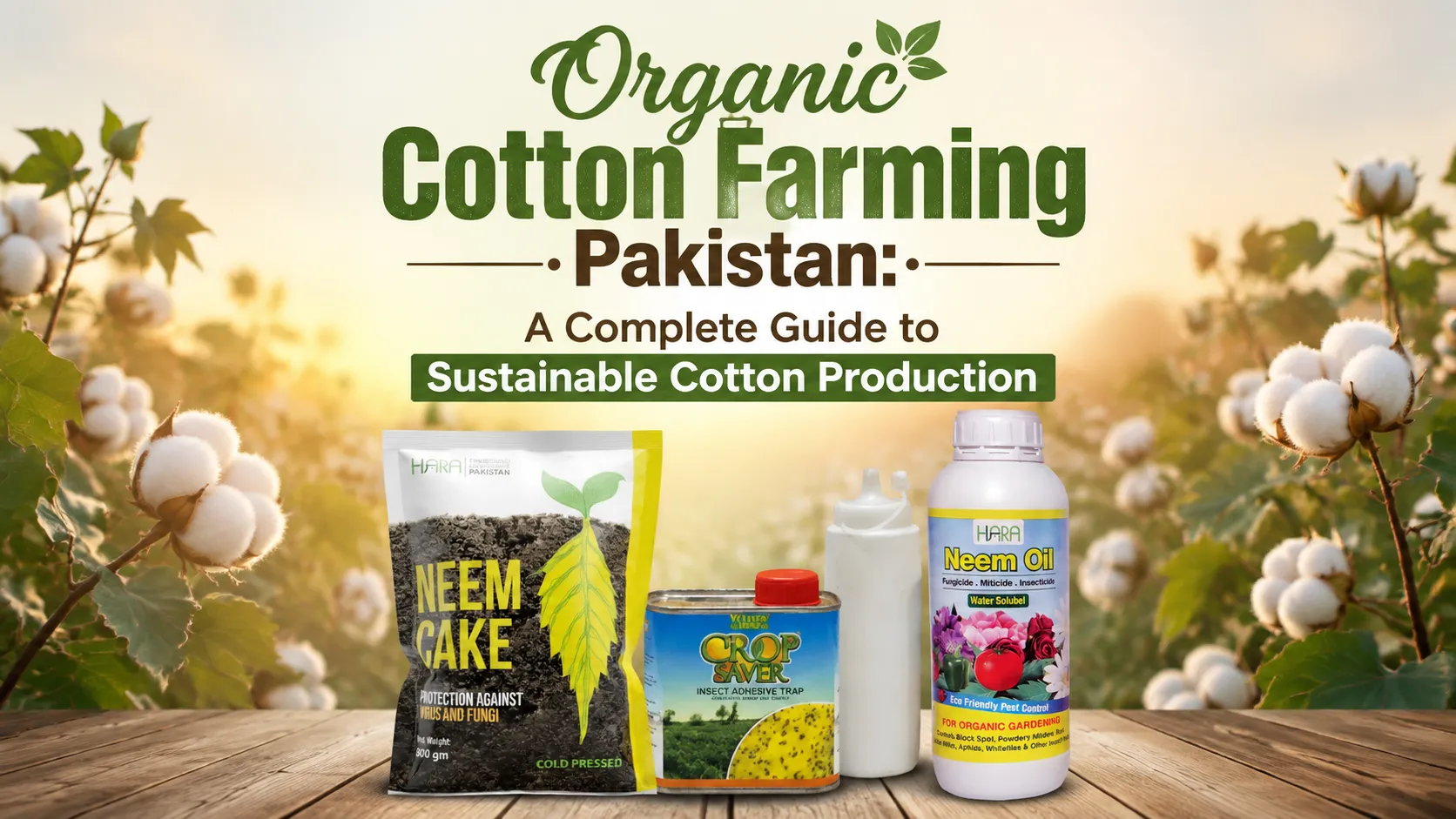
Organic Cotton Farming Pakistan: A Complete Guide to Sustainable Cotton Production
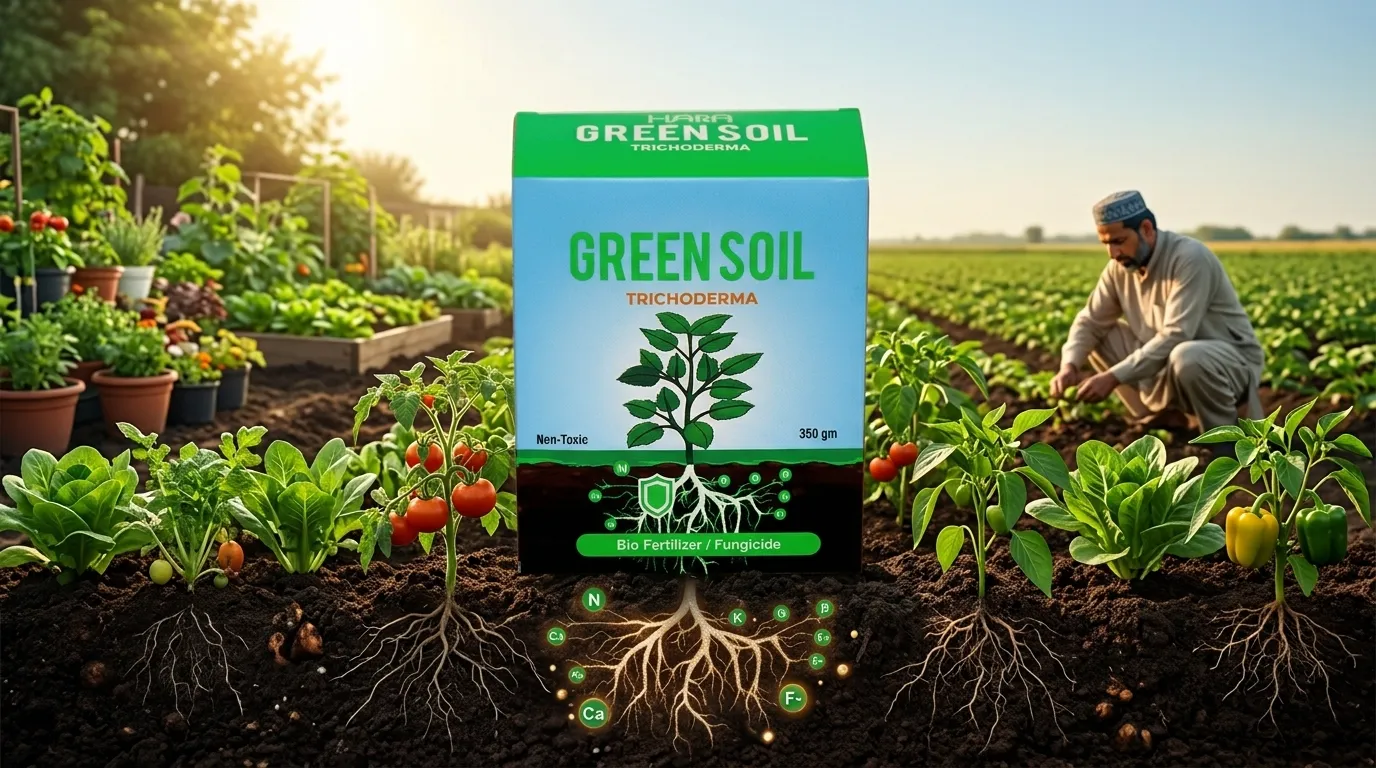
Green Soil Plant Growth: A Complete Guide to Better Soil Health and Stronger Plant Growth
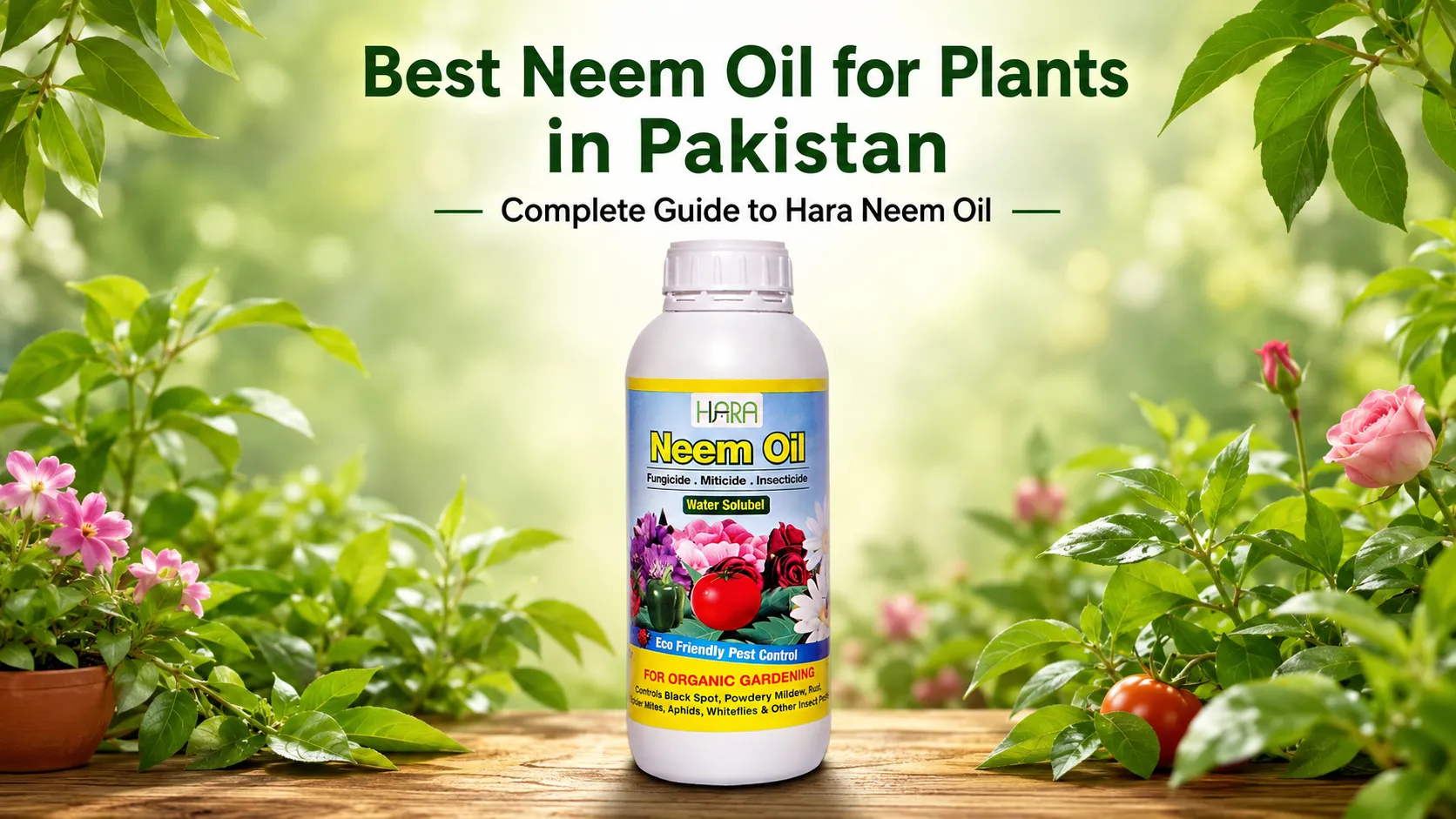
Best Neem Oil for Plants in Pakistan – Complete Guide to Hara Neem Oil
Latest Posts
Chemical Free Farming Pakistan: A Practical Guide for Healthier Crops and Sustainable Agriculture
Jump To Chemical Free Farming Pakistan: A Practical Guide for
Organic Cotton Farming Pakistan: A Complete Guide to Sustainable Cotton Production
Jump To Organic Cotton Farming Pakistan: A Complete Guide to
Green Soil Plant Growth: A Complete Guide to Better Soil Health and Stronger Plant Growth
Jump To Green Soil Plant Growth: A Complete Guide to
Best Neem Oil for Plants in Pakistan – Complete Guide to Hara Neem Oil
Jump To Best Neem Oil for Plants in Pakistan –
