


Healthy soil is the key to successful farming, and Organic Compost is one of the best natural ways to improve soil fertility. In Pakistan, where farmers face challenges such as declining soil organic matter, nutrient depletion, and water scarcity, organic compost has become an effective solution for building healthier, more productive soils.
It improves soil structure, enhances moisture retention, supports beneficial microorganisms, and provides nutrients that promote long-term crop growth.
For farmers looking for a trusted organic solution, Hara Vermicompost by Hara Organic Pakistan offers premium-quality vermicompost produced through natural earthworm processing. It helps improve soil health, supports sustainable farming, and is suitable for a wide range of crops across Pakistan.
This guide explains what organic compost is, its benefits, proper application methods, and why vermicompost is an important part of modern agriculture.
What Is Organic Compost?
Organic compost is a nutrient-rich natural material produced through the controlled decomposition of biodegradable organic matter such as crop residues, animal manure, leaves, vegetable waste, fruit peels, and other plant-based materials.
During the composting process, naturally occurring microorganisms break down these materials into a stable, dark-colored substance that is rich in organic matter and beneficial microbes.
Unlike raw organic waste, properly matured compost is safe for plants because the decomposition process converts unstable materials into a form that plants can use gradually. This slow and balanced release of nutrients makes compost an excellent soil conditioner rather than simply a fertilizer.
One of the biggest advantages of organic compost is that it improves both the physical and biological properties of soil. Instead of feeding only the crop, it feeds the soil itself. Healthy soil then continues supporting crops season after season, making compost one of the most sustainable investments a farmer can make.
Modern agriculture increasingly recognizes compost as an important component of integrated nutrient management because it improves long-term soil productivity while reducing the negative effects associated with excessive chemical fertilizer use.
Why Is Organic Compost Becoming Essential in Pakistan?
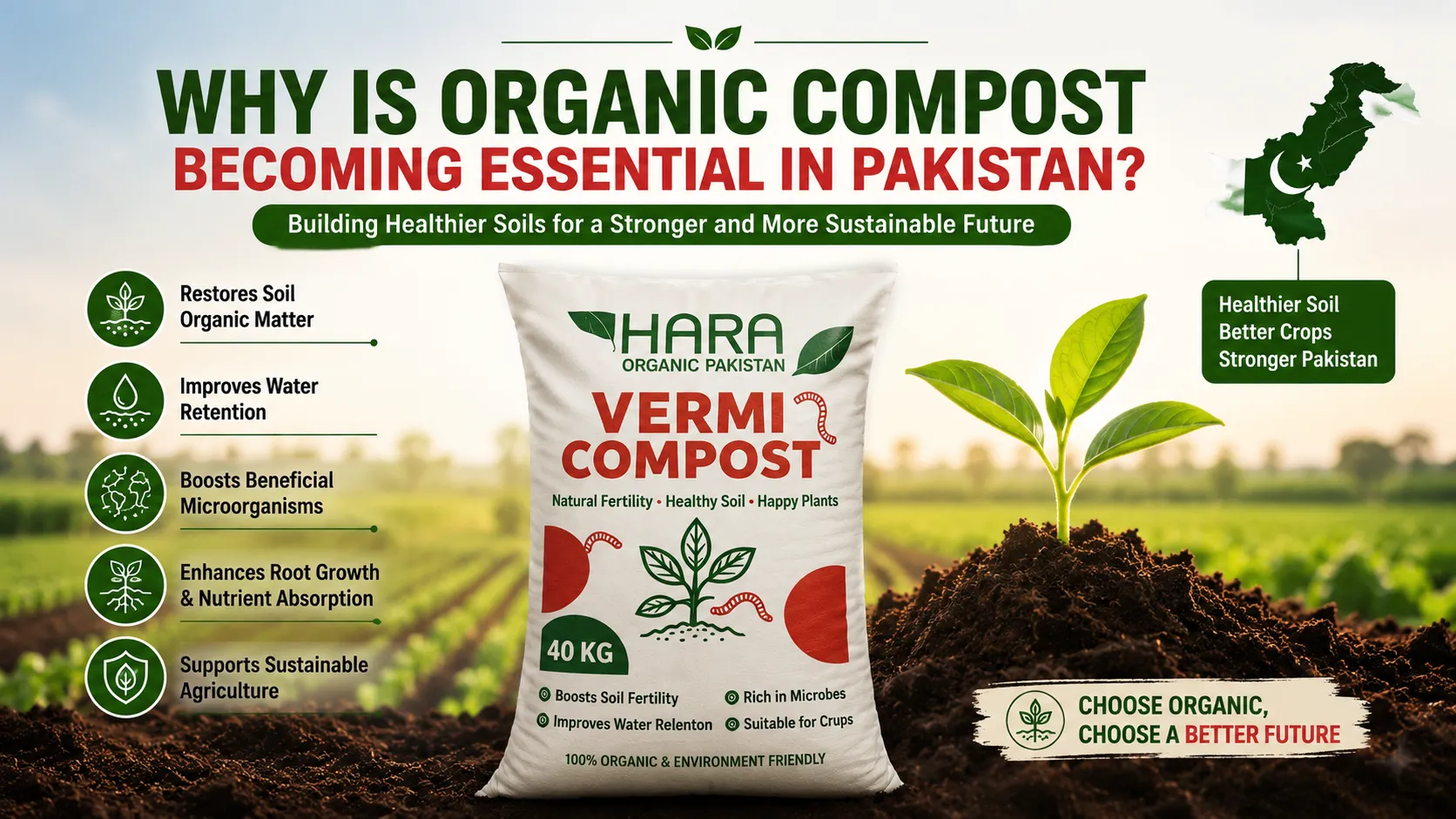
Pakistan’s agriculture depends on healthy soil, but continuous farming, excessive tillage, crop residue burning, and heavy use of chemical fertilizers have reduced soil organic matter in many areas. As a result, soils retain less water and nutrients, while crop productivity gradually declines.
Organic Compost helps restore soil fertility by increasing organic matter, improving soil structure, and supporting beneficial microorganisms. These benefits are especially valuable in Pakistan, where water conservation and sustainable farming are becoming increasingly important.
Products like Hara Vermicompost from Hara Organic Pakistan provide a reliable organic solution that helps farmers improve soil health and achieve better long-term crop performance.
How Does Organic Compost Improve Soil Health?
Organic compost improves soil through biological, physical, and chemical processes that create a healthier growing environment. Instead of providing only short-term nutrition, it gradually builds long-term soil fertility and supports sustainable crop production.
It improves soil structure by increasing aeration, reducing compaction, and helping sandy soils retain more water and nutrients. Organic compost also promotes beneficial microorganisms that enhance nutrient cycling and overall soil health.
In addition, it encourages stronger root development, allowing plants to absorb water and nutrients more efficiently. Its ability to retain moisture makes it especially valuable in Pakistan, where efficient water management is essential for successful farming.
What Nutrients Are Found in Organic Compost?
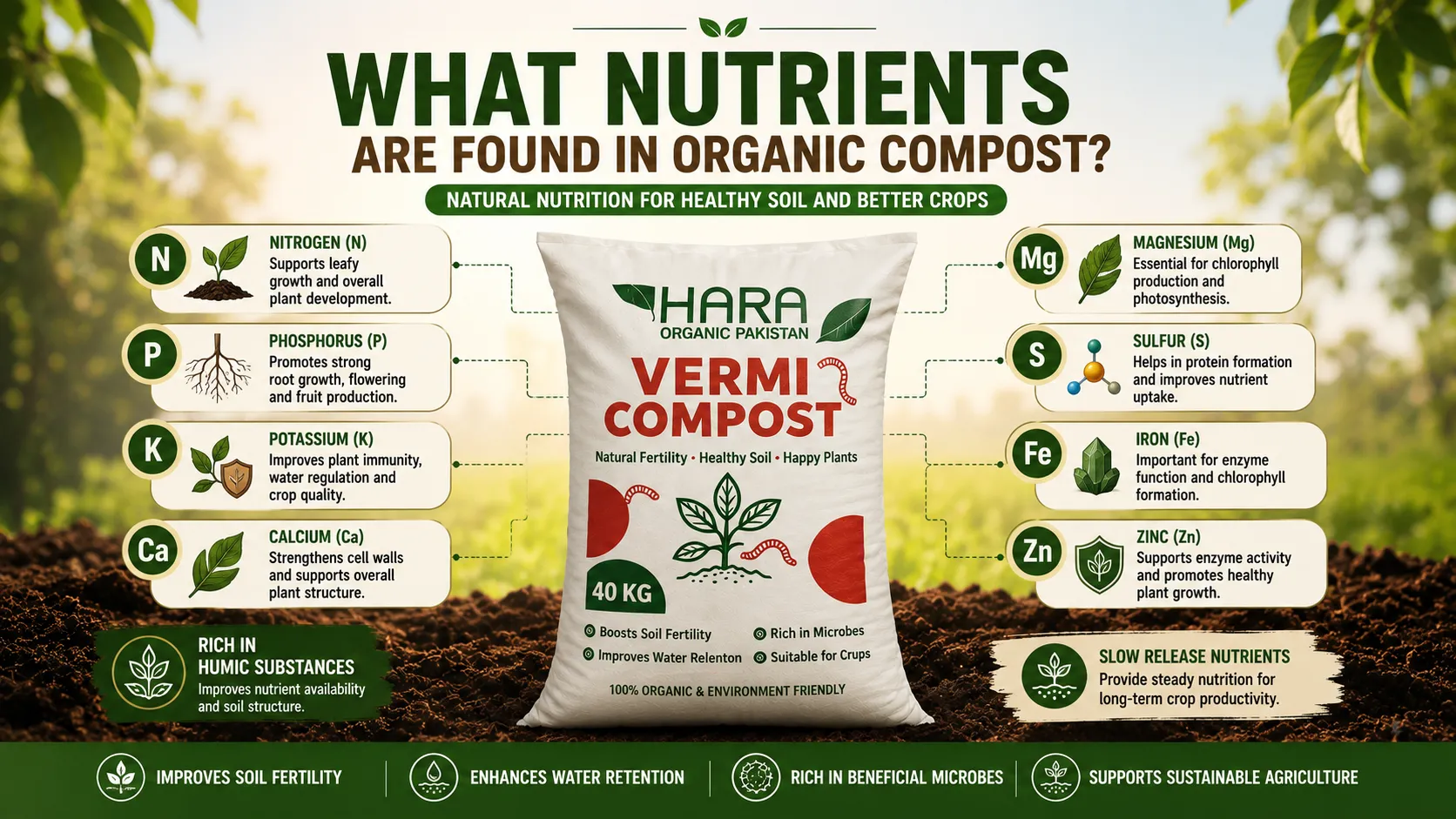
Organic compost supplies a wide range of essential nutrients while improving the soil’s ability to store and release them naturally. High-quality compost contains important macronutrients such as nitrogen, phosphorus, and potassium, along with calcium, magnesium, sulfur, and micronutrients that support healthy plant growth.
One of its biggest advantages is its slow-release nature. As organic matter breaks down, nutrients become available gradually, reducing nutrient loss and improving absorption by plants.
Organic compost also contains beneficial microorganisms and humic substances that enhance nutrient availability, improve fertilizer efficiency, and promote healthier crop growth over the long term.
Organic Compost vs Chemical Fertilizer
Farmers often compare organic compost with chemical fertilizers when planning their crop nutrition program. While both play important roles in agriculture, they serve different purposes. Chemical fertilizers mainly provide nutrients for immediate plant growth, whereas organic compost focuses on improving the overall health of the soil while supplying nutrients gradually.
Healthy farming is not simply about adding more fertilizer. It is about creating fertile soil that can continue producing healthy crops year after year. Organic compost contributes to this long-term goal by improving soil structure, supporting beneficial microorganisms, and increasing the soil’s ability to retain water and nutrients.
Many agricultural experts recommend combining quality compost with balanced fertilizer applications based on soil testing. This integrated approach allows farmers to achieve better crop performance while protecting soil fertility for future growing seasons.
Feature | Organic Compost | Chemical Fertilizer |
Source | Natural organic materials | Manufactured chemical compounds |
Nutrient Release | Slow and gradual | Fast and immediate |
Soil Structure | Improves soil texture and aggregation | Little effect on soil structure |
Soil Microorganisms | Encourages beneficial microbial activity | Does not significantly improve microbial life |
Water Holding Capacity | Increases moisture retention | Minimal effect |
Long-Term Soil Health | Improves soil fertility over time | May reduce soil quality if overused |
Environmental Impact | Environmentally friendly when used correctly | Can contribute to nutrient runoff if misused |
Although chemical fertilizers provide rapid nutrition during critical growth stages, they cannot replace the long-term benefits that organic matter provides. Compost improves the growing environment itself, making crops more resilient and productive over time.
What Makes Hara Vermicompost Different?
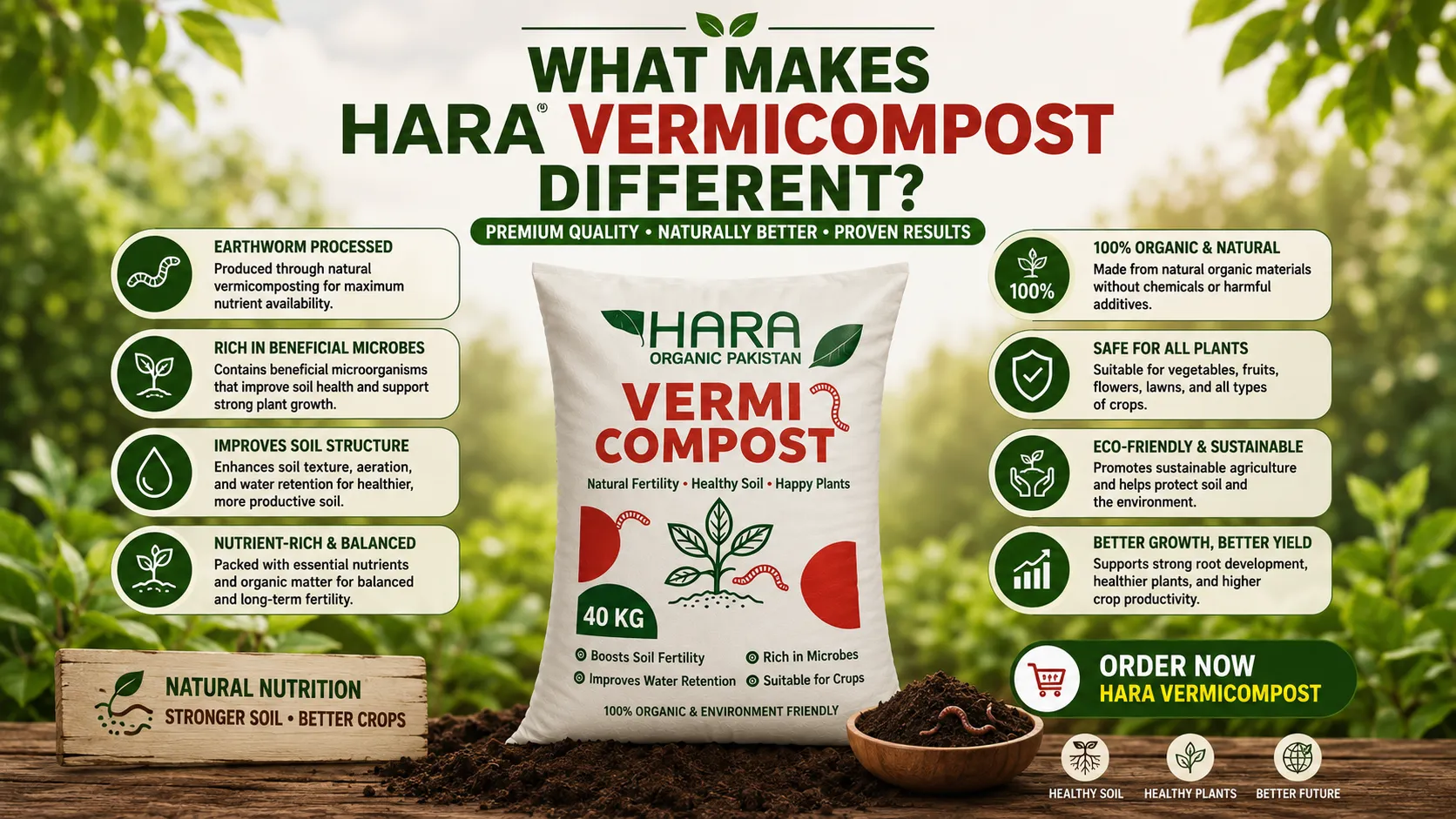
Not all compost products offer the same level of quality. The composting process, raw materials, maturity, and microbial activity all influence the final product. Hara Vermicompost, developed by Hara Organic Pakistan, is produced through a carefully managed vermicomposting process in which earthworms naturally convert organic materials into a fine, nutrient-rich soil amendment.
This biological process creates compost that is rich in stabilized organic matter and beneficial microorganisms. Because the material passes through the digestive system of earthworms, many nutrients become more readily available for plants while the final compost develops a fine texture that mixes easily with soil.
Another important advantage is consistency. Farmers often struggle with low-quality compost that contains undecomposed material, weed seeds, or contaminants. Properly processed vermicompost minimizes these issues and provides a cleaner, more reliable product suitable for field crops, orchards, vegetables, nurseries, and home gardens.
Hara Vermicompost is designed to improve soil fertility rather than simply acting as another fertilizer. Regular application helps increase organic matter levels, improve soil aeration, encourage healthy microbial populations, and support stronger root systems. These improvements contribute to healthier crops and better long-term productivity under Pakistan’s diverse agricultural conditions.
As sustainable farming practices continue gaining importance, many growers are choosing quality vermicompost because it supports both crop production and environmental conservation.
Which Crops Can Benefit from Hara Vermicompost?
One of the greatest strengths of organic compost is its versatility. Nearly every crop benefits from improved soil health, making vermicompost suitable for a wide range of agricultural and horticultural applications.
Field crops such as wheat, rice, maize, cotton, and sugarcane require fertile soils capable of supplying nutrients throughout the growing season. Incorporating vermicompost during land preparation helps improve soil structure while supporting steady nutrient availability and better root development.
Vegetable growers also benefit significantly from organic compost. Crops including tomatoes, onions, potatoes, chilies, cucumbers, okra, cauliflower, cabbage, spinach, and brinjal often respond positively to improved soil organic matter. Better soil conditions promote healthier plants, stronger root systems, and improved water management.
Fruit orchards can also gain long-term advantages from regular compost applications. Mango, citrus, guava, banana, pomegranate, dates, and other fruit trees develop extensive feeder root systems that benefit from nutrient-rich organic matter applied around the canopy. Improved soil biology helps maintain tree vigor while supporting flowering, fruit development, and overall orchard productivity.
Home gardeners increasingly use vermicompost because it provides a safe and natural way to enrich garden soil without relying entirely on synthetic fertilizers. Flowers, herbs, ornamental plants, lawns, and kitchen garden vegetables all benefit from healthier soil enriched with organic matter.
Whether farming on a commercial scale or maintaining a small household garden, improving soil quality remains one of the most effective ways to encourage consistent plant growth.
How Should Organic Compost Be Applied?
Proper application is just as important as selecting a high-quality compost product. Applying compost at the right stage allows the soil sufficient time to absorb organic matter and begin supporting beneficial microbial activity before crops reach peak growth.
Before sowing field crops, compost should be incorporated evenly into the soil during land preparation. Mixing it into the upper soil layer allows organic matter to interact with existing soil microorganisms while creating a favorable environment for seed germination and early root growth.
For vegetable production, compost is commonly mixed into planting beds before transplanting or direct seeding. This creates loose, fertile soil that supports rapid root establishment while improving moisture retention throughout the growing season.
In orchards, compost is generally applied around the tree canopy where the majority of feeder roots are located. After spreading the compost, light irrigation helps move nutrients into the root zone and encourages microbial activity.
Kitchen gardens and ornamental landscapes also benefit from periodic compost applications. Mixing vermicompost into garden beds before seasonal planting helps maintain fertile soil while supporting continuous vegetable and flower production.
Application frequency depends on crop type, soil condition, and management practices. Many growers include compost as part of their regular annual soil improvement program to gradually build long-term soil fertility.
What Are the Benefits of Organic Compost?
Organic compost delivers advantages that extend well beyond supplying nutrients. By improving the physical, biological, and chemical properties of soil, it creates conditions that support healthier crops throughout the growing season.
The most important benefits include:
- Improves soil fertility naturally.
- Enhances soil structure and aeration.
- Supports beneficial microorganisms that improve nutrient cycling.
- Increases water-holding capacity and reduces moisture loss.
- Encourages stronger root development for healthier crops.
- Improves nutrient availability through slow and balanced release.
- Helps reduce soil erosion by improving soil stability.
- Supports environmentally responsible farming practices.
- Reduces dependence on excessive chemical fertilizer use.
- Contributes to long-term agricultural productivity and sustainable soil management.
These improvements often become more noticeable with regular use over multiple growing seasons. Instead of providing only short-term results, organic compost builds healthier soil capable of producing consistent yields year after year.
Can Organic Compost Replace Chemical Fertilizers?
This is one of the most common questions among farmers who want to adopt more sustainable farming practices. The simple answer is that organic compost can significantly improve soil fertility, but it should not always be viewed as a complete replacement for chemical fertilizers.
Organic compost supplies nutrients slowly while improving the soil’s physical and biological properties. However, high-yield commercial crops often have greater nutrient requirements than compost alone can provide during peak growth stages.
Crops such as wheat, rice, maize, cotton, and sugarcane require balanced nutrition throughout the season, and their nutrient demand may exceed the nutrients released naturally from compost.
For this reason, many agricultural specialists recommend an Integrated Nutrient Management (INM) approach. This method combines quality organic compost with soil testing and balanced fertilizer applications to achieve the best results. Organic compost improves soil health, while fertilizers provide additional nutrients when crops need them most.
Using compost regularly can also improve fertilizer efficiency. Healthy soils retain nutrients better, reduce leaching losses, and allow plant roots to absorb nutrients more effectively. Over time, many farmers find that improving soil organic matter helps them optimize fertilizer use while maintaining strong crop performance.
How Can Farmers Identify High-Quality Organic Compost?
The quality of compost has a direct impact on its effectiveness. Mature, well-prepared compost supports healthy plant growth, while poor-quality compost may contain undecomposed material, contaminants, or harmful organisms that reduce its value.
High-quality compost is usually dark brown to black in color with a soft, crumbly texture. It should have a fresh, earthy smell that indicates healthy decomposition. A strong foul odor often suggests that the compost has not matured properly or has been produced under unsuitable conditions.
The compost should also be free from plastic, glass, stones, and other contaminants. Properly prepared compost should not contain recognizable pieces of raw organic waste because these materials should have completely decomposed during the composting process.
Another important characteristic is maturity. Immature compost may temporarily reduce nutrient availability as microorganisms continue breaking down organic matter after application. Mature compost, on the other hand, is stable and can be safely incorporated into agricultural soils without harming crops.
Products such as Hara Vermicompost are produced under controlled conditions to provide farmers with a consistent, well-processed organic soil amendment that supports healthy crop growth and long-term soil improvement.
Why Are Farmers Across Pakistan Choosing Hara Vermicompost?
As awareness of sustainable agriculture continues to grow, many farmers are recognizing that healthy soil is the key to consistent crop production. Instead of focusing only on short-term fertilizer inputs, growers are investing in practices that improve the long-term productivity of their land.
Hara Organic Pakistan has developed Hara Vermicompost to support this goal by offering a premium organic soil amendment suitable for Pakistan’s diverse agricultural conditions. Produced through a natural vermicomposting process, it contains stabilized organic matter that helps improve soil structure, supports beneficial microbial activity, and enhances nutrient availability.
The product is suitable for a wide range of farming systems, including field crops, orchards, vegetable farms, nurseries, landscaping projects, and home gardens. Its fine texture allows easy mixing with soil, while its organic composition contributes to improved moisture retention and healthier root development.
Farmers who regularly incorporate quality vermicompost into their soil management practices often observe gradual improvements in soil workability, crop vigor, and overall soil health. Because compost builds fertility over time, its benefits continue beyond a single growing season.
As Pakistan moves toward more sustainable agricultural practices, products such as Hara Vermicompost provide an environmentally responsible option for improving soil naturally while supporting productive farming systems.
Frequently Asked Questions
Is organic compost suitable for all soil types?
Yes. Organic compost can improve sandy, clay, and loamy soils by increasing organic matter, improving soil structure, and supporting beneficial microbial activity. Although the level of improvement varies depending on soil condition, almost every soil type benefits from regular compost applications.
Can vermicompost improve vegetable production?
Vermicompost creates favorable growing conditions by improving soil fertility, enhancing moisture retention, and encouraging healthy root development. Vegetables grown in healthy soils often establish more quickly and produce better-quality harvests throughout the growing season.
How often should organic compost be applied?
The application schedule depends on crop type, soil fertility, and farming practices. Many growers apply compost during land preparation before planting, while orchards and home gardens often benefit from annual or seasonal applications as part of a long-term soil improvement program.
Is Hara Vermicompost suitable for home gardens?
Yes. Hara Vermicompost is suitable for kitchen gardens, flower beds, ornamental plants, fruit trees, lawns, and container gardening. It improves soil naturally and supports healthy plant growth without relying entirely on synthetic fertilizers.
Does organic compost help improve water retention?
Yes. Organic matter acts like a natural sponge within the soil, allowing it to hold moisture for longer periods. Improved water retention supports plant growth, reduces irrigation frequency in some situations, and helps crops perform better during periods of limited rainfall.
Is vermicompost environmentally friendly?
Yes. Vermicompost is produced from biodegradable organic materials through a natural biological process. It helps recycle organic waste, supports soil biodiversity, improves soil fertility, and contributes to more sustainable agricultural practices.
Conclusion
Healthy soil is the key to better crop production, and Organic Compost is one of the most effective ways to improve soil fertility naturally. It enhances soil structure, increases water retention, supports beneficial microorganisms, and promotes sustainable farming for long-term productivity.
If you’re looking for a reliable organic solution, Hara Vermicompost is an excellent choice for improving soil health and supporting healthier crop growth across Pakistan. Order Hara Vermicompost today and give your crops the natural nutrition they need for stronger roots, healthier plants, and better yields.
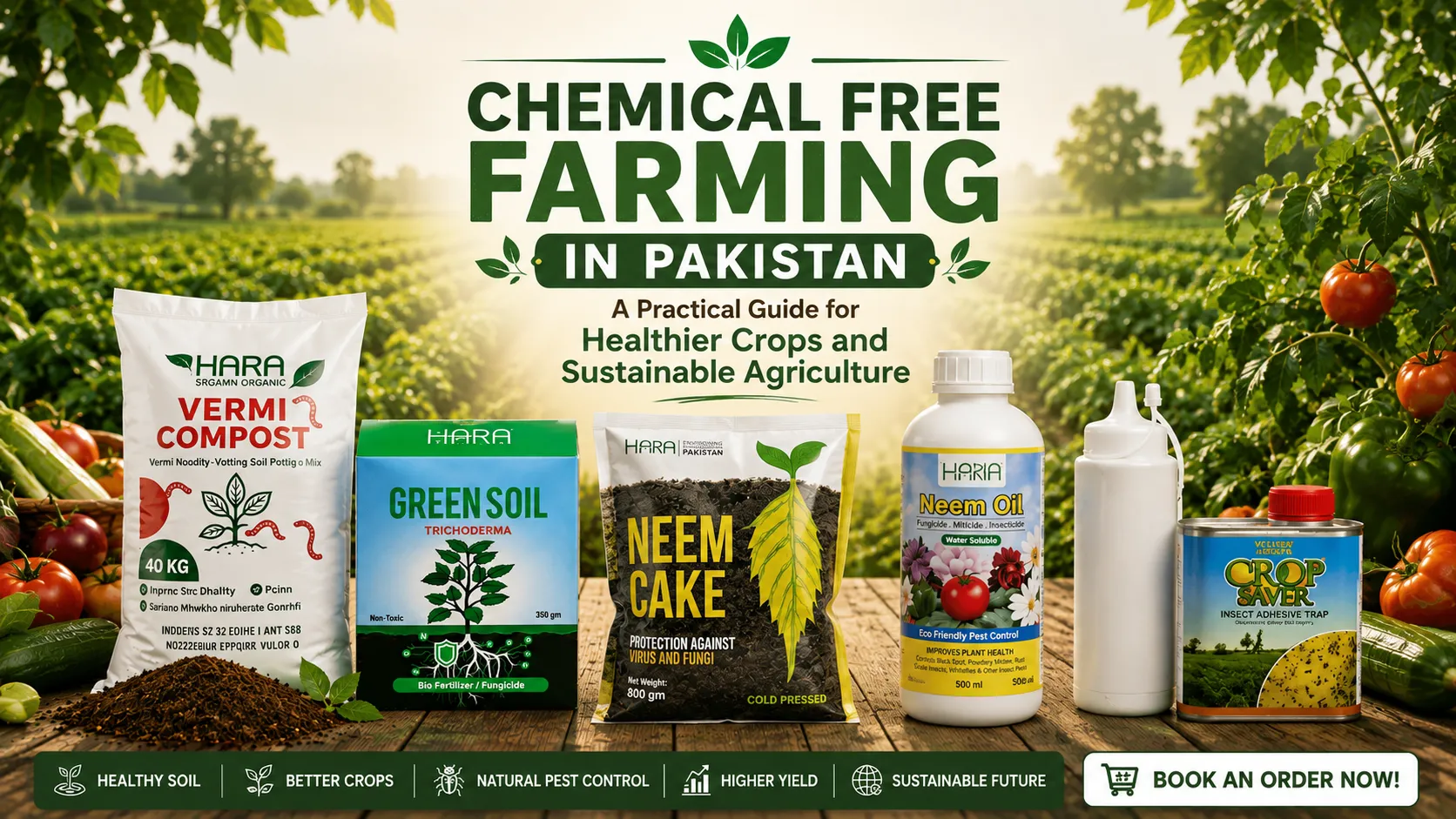
Chemical Free Farming Pakistan: A Practical Guide for Healthier Crops and Sustainable Agriculture
Jump To Chemical Free Farming Pakistan: A Practical Guide for
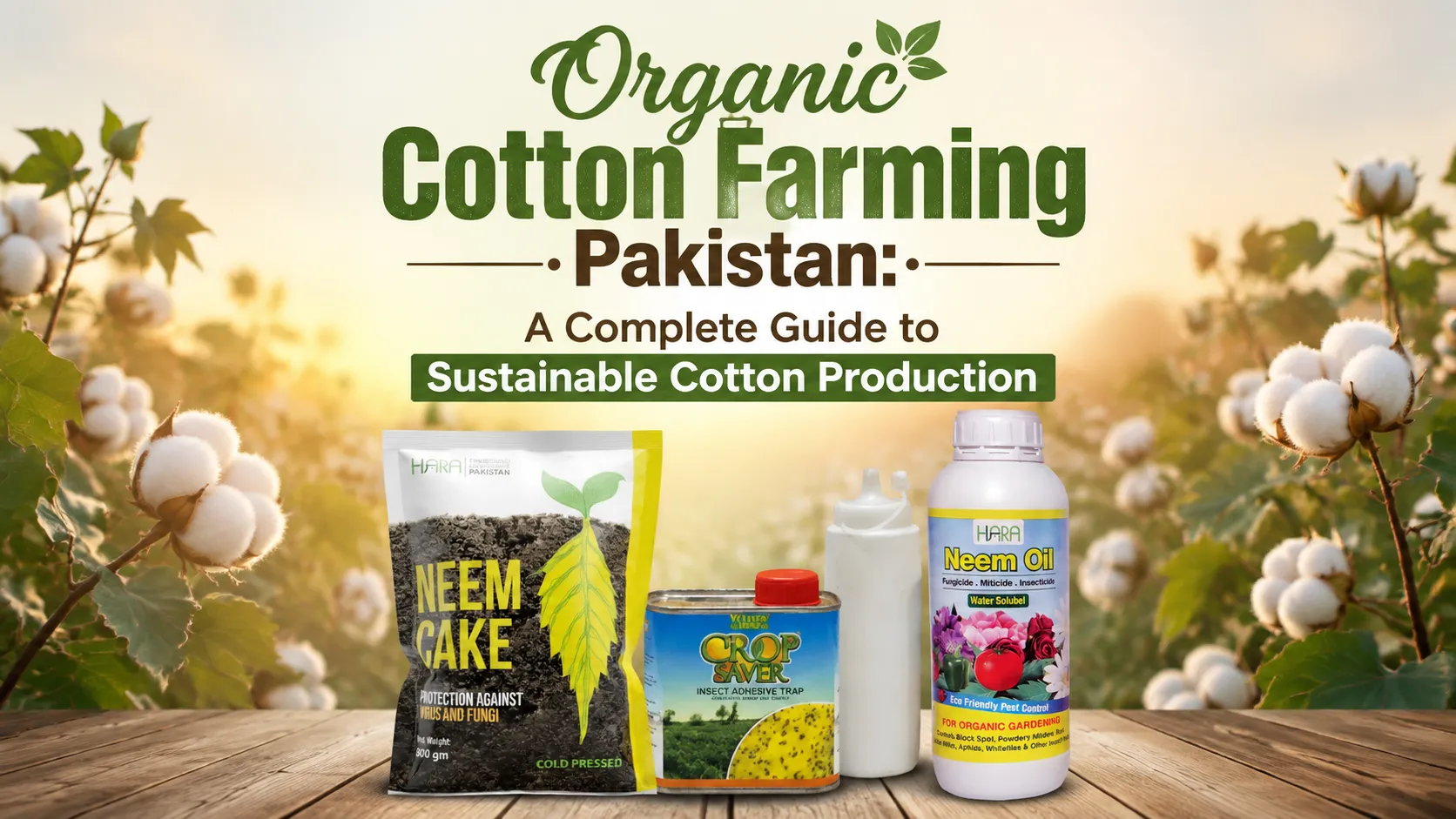
Organic Cotton Farming Pakistan: A Complete Guide to Sustainable Cotton Production
Jump To Organic Cotton Farming Pakistan: A Complete Guide to
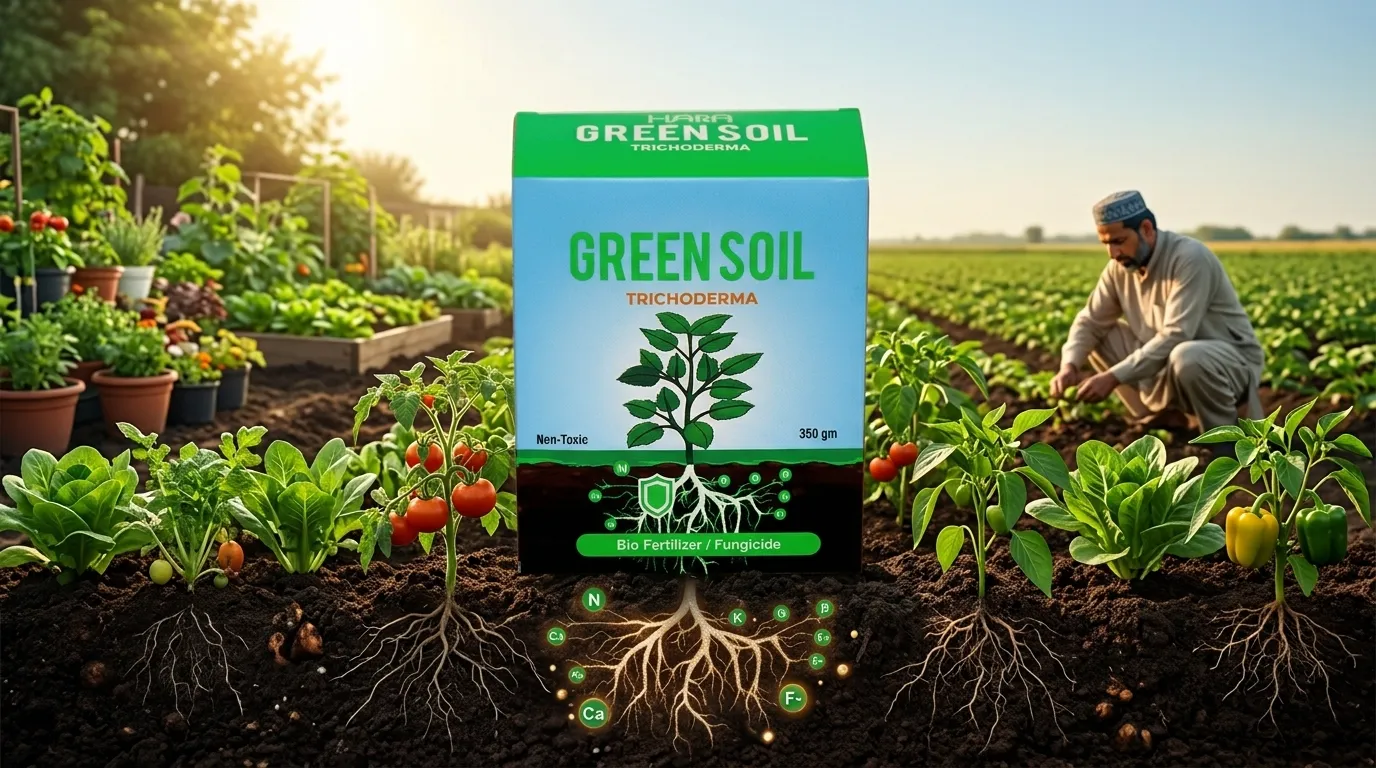
Green Soil Plant Growth: A Complete Guide to Better Soil Health and Stronger Plant Growth
Jump To Green Soil Plant Growth: A Complete Guide to

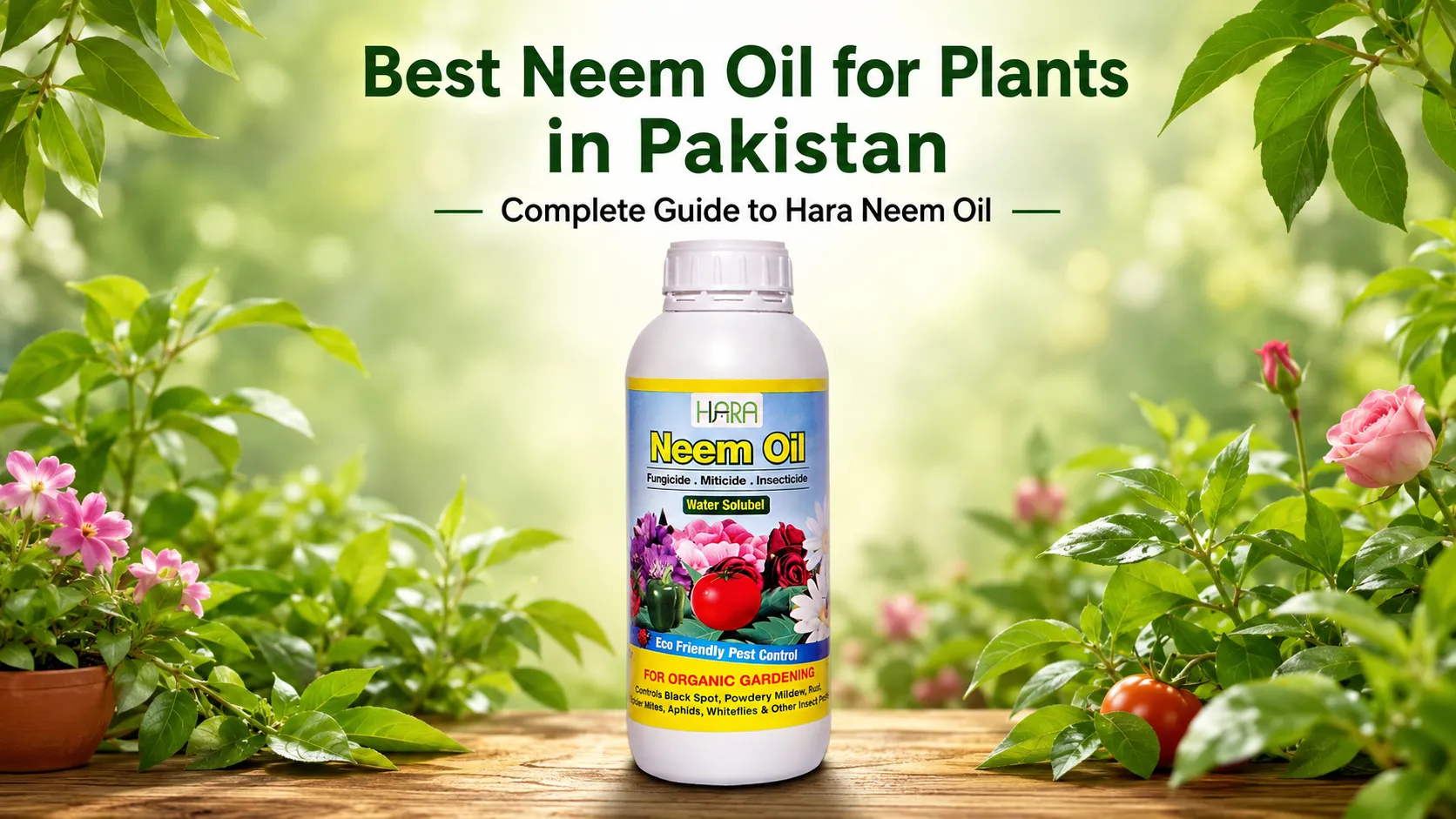
Best Neem Oil for Plants in Pakistan – Complete Guide to Hara Neem Oil
Jump To Best Neem Oil for Plants in Pakistan –
