


Healthy soil supports strong crops and successful gardening. However, soil-borne fungi can damage roots, reduce nutrient uptake, and weaken plant growth in farms, nurseries, orchards, and home gardens across Pakistan.
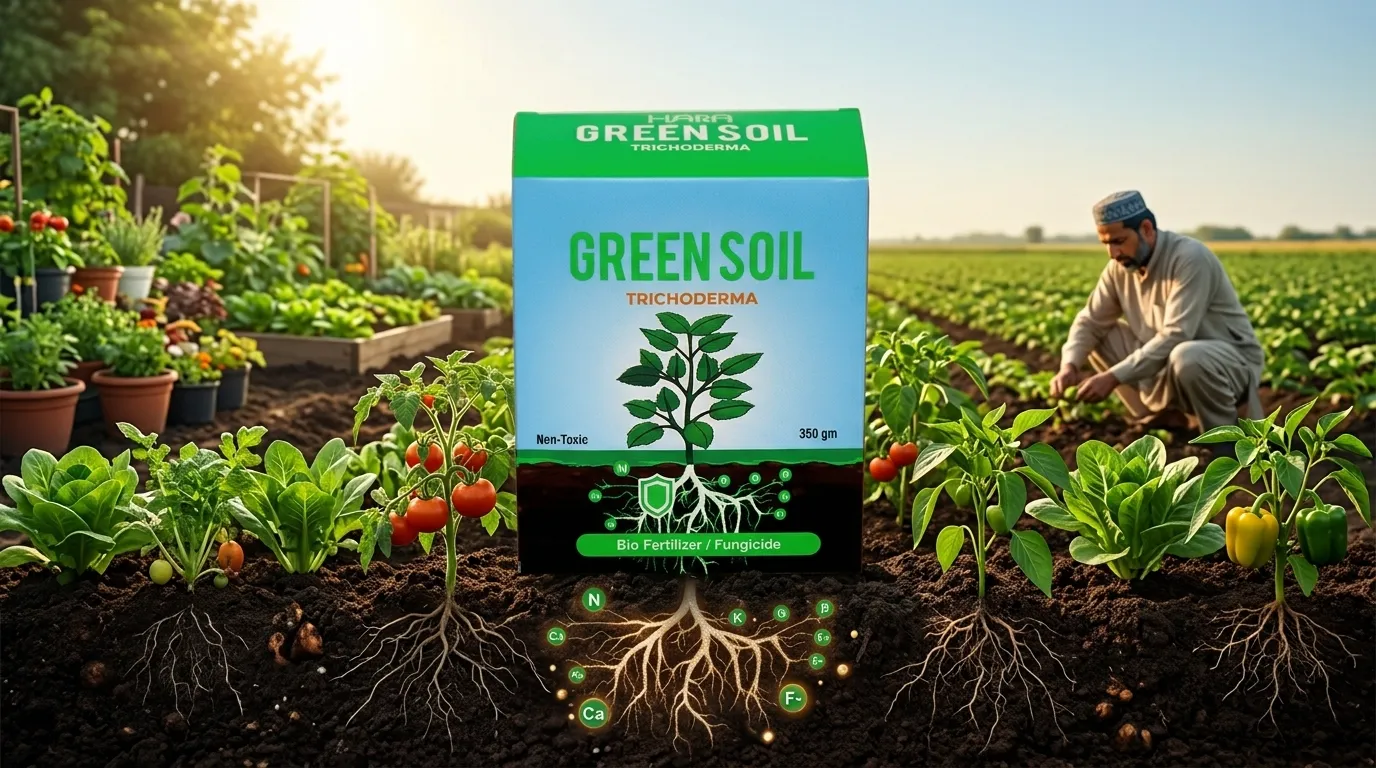
Green Soil Bio Fertilizer, known as Hara Green Soil, is a Trichoderma harzianum G8-based biological product developed for soil and root-zone protection. It helps manage problems such as root rot, Fusarium wilt, damping-off, and Rhizoctonia-related diseases while supporting healthier root development.
Unlike conventional NPK fertilizers, Hara Green Soil does not directly supply complete plant nutrition. It works as a biological fungicide and soil-health input that supports preventive disease management.
What Is Green Soil Bio Fertilizer?
Hara Green Soil is applied to soil or growing media, where beneficial Trichoderma competes with harmful fungi around plant roots. It can be used in farms, nurseries, seedbeds, and suitable gardening applications.
For best results, use it as part of an integrated crop management program that also includes balanced nutrition, proper irrigation, good sanitation, and correct disease management.
Is Hara Green Soil a Bio Fertilizer or Bio Fungicide?
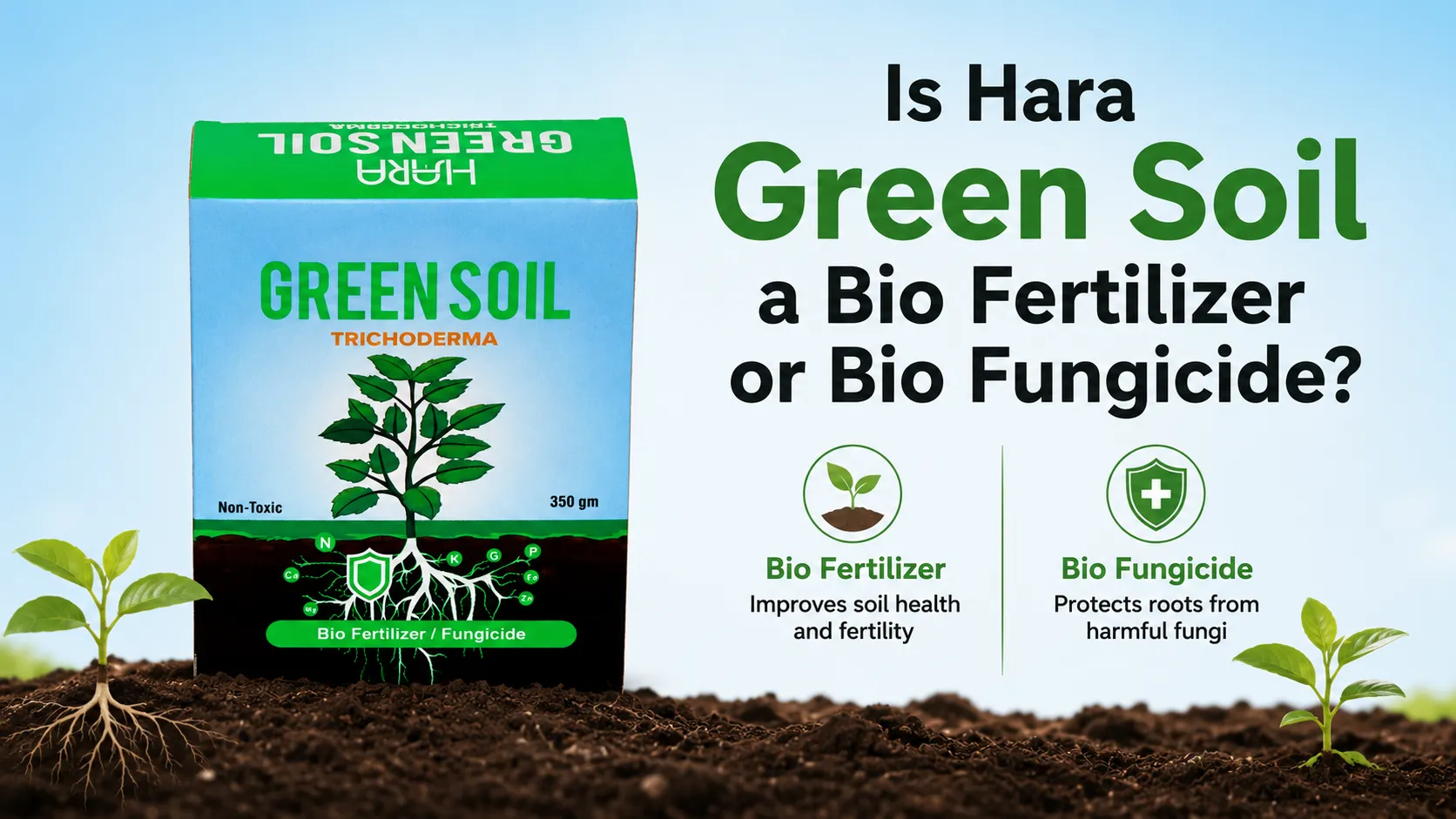
The most accurate classification of Hara Green Soil is a biological fungicide and soil/root-zone protection input containing beneficial Trichoderma.
The term Green Soil Bio Fertilizer may be used by people searching for beneficial microbial products because Trichoderma can contribute indirectly to better root-zone health and plant performance. However, growers should distinguish this biological function from the role of conventional fertilizers.
A fertilizer primarily provides plant nutrients. A biological fungicide is primarily used to help manage disease-causing organisms through biological mechanisms. A soil conditioner improves physical, chemical, or biological soil properties.
Hara Green Soil can fit into a biological soil-management program because of its Trichoderma-based activity, but growers still need to manage crop nutrition separately according to soil conditions and crop requirements.
This distinction is important. A crop showing yellow leaves, weak growth, or poor yield may have a nutrient deficiency, irrigation problem, disease, salinity issue, unsuitable pH, or another cause. Applying a microbial product without identifying the underlying problem may not produce the expected result.
What Is Trichoderma harzianum and Why Is It Used in Agriculture?
Trichoderma is a group of beneficial fungi widely associated with biological crop protection and root-zone management. Selected strains are used in agriculture because they can establish in the soil and around plant roots, where they interact with other microorganisms. Hara Green Soil is marketed with Trichoderma harzianum G8, intended for biological soil and root protection.
The performance of a Trichoderma-based product depends on several factors, including the quality and viability of the microbial material, correct storage, suitable application, soil moisture, temperature, organic matter, crop conditions, and the severity of existing disease pressure.
This is why biological products should be applied carefully rather than treated exactly like chemical fertilizers or conventional fungicides.
How Does Hara Green Soil Work?
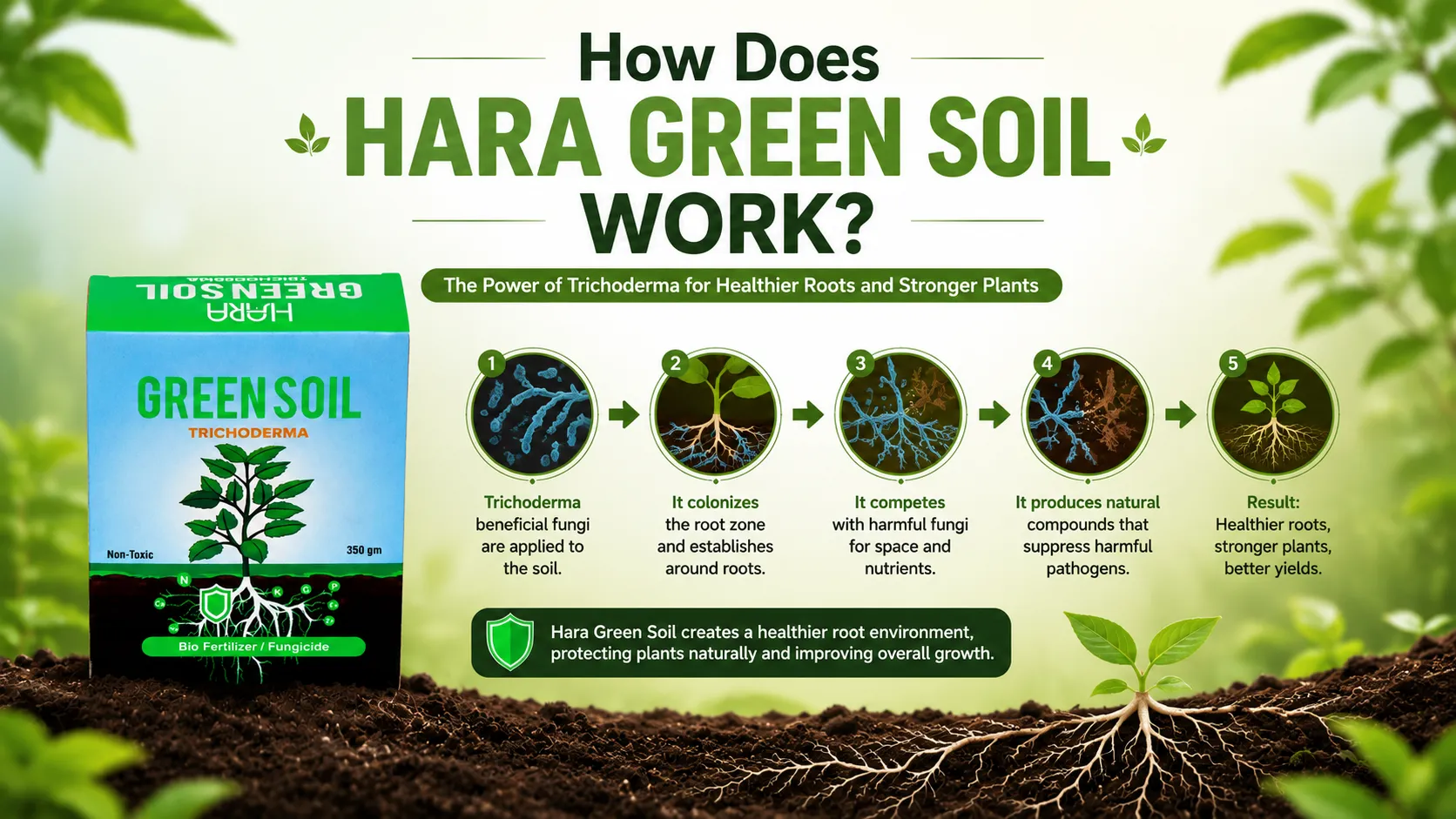
Hara Green Soil works primarily through biological activity in the root zone. After appropriate soil application, beneficial Trichoderma can colonize suitable areas around plant roots. This creates competition between beneficial microorganisms and certain harmful fungi for space and available resources.
Trichoderma may also interact directly with some plant-pathogenic fungi and produce naturally occurring metabolites or enzymes that contribute to biological suppression. At the same time, establishing beneficial microbial activity around roots can help create a more balanced root-zone environment.
The practical objective is to make conditions less favorable for damaging soil-borne pathogens while supporting healthier roots.
However, biological control is influenced by field conditions. If a field has severe waterlogging, badly infected planting material, poor drainage, contaminated nursery media, or very high disease pressure, Hara Green Soil should be combined with appropriate agronomic and disease-management measures.
What Are the Main Benefits of Hara Green Soil?
The value of Hara Green Soil comes from its role in biological soil and root management.
Helps Manage Soil-Borne Fungal Problems
Soil-borne diseases can be difficult to manage because disease-causing organisms may survive in soil, crop residues, infected roots, or contaminated growing media. A Trichoderma-based biological product can become part of a preventive management program designed to reduce the opportunity for harmful fungi to dominate the root zone.
Hara identifies its Green Soil product for problems associated with Fusarium wilt, root rot, damping-off, Phytophthora root rot, Rhizoctonia root rot, and Verticillium wilt in relevant crops. The exact disease affecting a crop should still be diagnosed correctly because wilting and yellowing are not always caused by fungal infection.
Supports Healthier Root Development
Healthy roots allow plants to access water and nutrients more effectively. When root systems are damaged by disease, plants may become weak even when fertilizer is available in the soil.
Protecting the root environment can therefore indirectly contribute to better plant establishment and vigor. This is particularly valuable during early crop development, nursery production, and transplant establishment.
Supports a Healthier Soil Microbial Environment
Agricultural soil is biologically active. It contains beneficial, neutral, and potentially harmful microorganisms. Introducing selected beneficial organisms such as Trichoderma can support a more biologically active root-zone management approach, especially when combined with good-quality organic matter and responsible soil management.
Can Reduce Dependence on Routine Chemical Intervention
Biological products can play an important role in integrated disease management. This does not mean that every chemical treatment can always be eliminated. Instead, biological inputs can help growers develop preventive programs that rely on multiple management practices rather than waiting for severe disease outbreaks.
Suitable for Commercial and Small-Scale Growing
The basic biological principle behind Hara Green Soil can be relevant to both large farms and smaller growing systems. Commercial growers may use it as part of a seasonal soil-management program, while gardeners and nursery operators may use appropriate label-directed applications in growing media, seedbeds, or root zones.
Why Is Root-Zone Health Important for Pakistani Agriculture?
Pakistan’s agricultural conditions vary considerably between regions. Soil type, irrigation water quality, drainage, temperature, cropping intensity, and management practices all affect plant health.
One common challenge is that repeated cultivation can create conditions where soil-borne diseases become established. In vegetable production and nurseries, repeated use of contaminated soil or growing media can also increase disease pressure.
Over-irrigation is another important issue. Roots require both moisture and oxygen. When soil remains excessively wet for long periods, root function can decline, and some root diseases may become more difficult to manage.
A biological soil product can support a broader root-health strategy, but growers should also focus on drainage, irrigation timing, crop rotation where practical, clean planting material, removal of badly infected residues, and balanced nutrition.
Which Crops Can Use Hara Green Soil in Pakistan?
Hara Green Soil is promoted for several important Pakistani crops, particularly where soil-borne fungal diseases and root problems are a concern.
Wheat
Wheat can experience root and crown diseases under favorable disease conditions. Applying a Trichoderma-based soil input as part of preventive soil preparation may help support healthier root establishment. For field application, Hara recommends incorporating the product with vermicompost or well-prepared farmyard manure before irrigation.
Cotton
Cotton growers may encounter wilt problems associated with soil-borne pathogens such as Fusarium and Verticillium. Because these problems can persist in affected fields, an integrated approach is important. Biological soil management can be combined with suitable varieties, crop rotation where feasible, field sanitation, irrigation management, and balanced plant nutrition.
Tomato and Chilli
Tomato and chilli crops can be vulnerable during nursery and early establishment stages. Damping-off can damage seedlings, while root diseases and wilts can affect plants after transplanting. Using clean growing media and preventive biological soil management can be particularly useful during nursery preparation and before transplantation.
Potato
Potato production requires careful soil and disease management. Where soil-borne disease pressure exists, growers should use healthy planting material, appropriate crop rotation, good drainage, and suitable biological or registered crop-protection practices.
Hara Green Soil may be integrated into soil preparation where Trichoderma-based biological protection is appropriate.
Sugarcane
Sugarcane remains in the field for an extended period, making early root establishment important. A healthy root system supports water and nutrient uptake throughout crop development. Biological soil management before or around crop establishment can complement good field preparation and nutrition practices.
Vegetables
Vegetable crops can be particularly sensitive to root-zone diseases because many are grown intensively and repeatedly on the same land.
Hara Green Soil may be relevant to crops such as tomato, chilli, okra, onion, and other vegetables where compatible soil-borne fungal problems occur. Application is generally most useful as part of preventive management rather than waiting until plants are severely damaged.
Fruit Plants and Orchards
Young fruit plants depend heavily on successful root establishment. Where a Trichoderma application is appropriate, biological root-zone management can be considered during planting or soil preparation.
However, established orchards require crop-specific recommendations because root-zone size, irrigation systems, soil type, and disease pressure vary considerably. For orchard applications not specifically covered by the product label, growers should obtain technical guidance before deciding on dosage.
When Is the Best Growth Stage to Apply Hara Green Soil?
Preventive application is generally more effective than waiting until severe root damage has occurred. For field crops, the product is best incorporated during soil preparation or before the cropping season according to Hara’s directions. This allows beneficial microorganisms to establish in the root environment as the crop develops.
For nurseries and seedbeds, application before sowing can help prepare the growing medium before seedlings emerge. For transplanted crops, growers should follow crop-specific product guidance regarding pre-plant soil treatment or root-zone application.
If plants are already severely wilted or roots are extensively rotted, diagnosis becomes important. Biological treatment alone may not restore badly damaged plants.
How Can Home Gardeners Use Hara Green Soil?
Home gardeners increasingly use biological inputs because pots, kitchen gardens, terrace gardens, and small lawns can also experience root-zone problems. The same basic principle applies: maintain a healthy growing environment and use beneficial microbial products appropriately.
Kitchen Gardens
Vegetables such as tomato, chilli, okra, and other garden crops may experience damping-off or root problems, particularly when the same beds are used repeatedly.
Gardeners can incorporate appropriate Trichoderma-based products into the growing medium before planting according to label instructions. Good drainage and correct watering remain essential.
Terrace and Balcony Gardens
Container plants can easily suffer from overwatering because excess moisture may remain trapped around roots. Before blaming every problem on fungal disease, check whether drainage holes are open, the potting mix is suitable, and watering frequency is appropriate.
Where biological soil protection is needed, use only the product quantity recommended for the relevant container or growing-medium application.
Flower Pots and Decorative Plants
Hara Green Soil may be considered for suitable soil-based ornamental growing systems where root-zone fungal problems are a concern.
However, gardeners should avoid guessing dosage for small pots. A field dose cannot simply be scaled down casually without considering product concentration and pot volume. Follow current package instructions or obtain guidance from Hara Organic Pakistan for small-container applications.
Fruit Plants
Young fruit plants benefit from well-drained soil and healthy root establishment. A Trichoderma-based input may complement organic matter and good planting practices where appropriate, but it should not replace the plant’s nutritional requirements.
Lawns
Not every lawn problem is caused by soil-borne fungi. Brown patches can result from irrigation problems, compaction, nutrient imbalance, heat stress, insects, or fungal diseases. Identify the likely cause first. Use Hara Green Soil only where its biological function matches the actual root-zone problem and follow appropriate application guidance.
How to Use Green Soil Bio Fertilizer Correctly
Application methods should match the product formulation and official recommendations. For Hara Green Soil, soil incorporation is the primary published field method.
Step-by-Step Field Application
First, calculate the area to be treated.
Measure the required amount of Hara Green Soil according to the recommended acre rate.
Mix it thoroughly with suitable vermicompost or properly decomposed farmyard manure to help distribute the product evenly.
Spread the mixture over the target area.
Incorporate it approximately 10–15 cm into the soil where practical.
Irrigate after application according to Hara’s directions and normal crop requirements.
The objective is to place beneficial microorganisms in the soil environment where plant roots will develop.
Nursery and Seedbed Application
Prepare clean, well-drained nursery soil or growing medium.
Measure the product according to the recommended rate per square metre.
Mix it evenly through the appropriate soil layer before sowing.
Maintain suitable moisture without keeping the nursery continuously waterlogged.
Monitor seedlings for damping-off and remove severely diseased seedlings where necessary to reduce disease spread.
Hara Green Soil Dosage Guide
The following dosage reflects Hara Organic Pakistan’s published product guidance. Always check the latest product label before application because formulations and recommendations can change.
Application | Published Dosage | Method | Timing/Frequency |
Field crops | 2 packs of 350 g each per acre | Mix with vermicompost or farmyard manure, incorporate approximately 10–15 cm into soil, then irrigate | Before the cropping season; follow current label for repeat applications |
Nursery/seedbeds | 100–200 g per m² | Mix into soil before sowing | During seedbed preparation |
For pots, lawns, established orchards, drip irrigation, root dipping, seed treatment, or other application methods not clearly specified in the current product directions, do not invent or estimate a dose. Follow the latest package label or obtain technical advice from Hara Organic Pakistan.
Can Hara Green Soil Be Used as a Foliar Spray?
Hara Green Soil is primarily positioned as a soil and root-zone product. Unless the current product label specifically provides foliar instructions, it should not automatically be treated as a foliar spray product.
Trichoderma products vary in formulation and concentration. An application method suitable for one formulation may not be appropriate for another. For this reason, use the method recommended for the specific Hara Green Soil formulation rather than applying general advice taken from unrelated Trichoderma products.
What Problems Can Hara Green Soil Help Address?
Hara Green Soil is most relevant where problems are connected to soil health, roots, and susceptible soil-borne fungal pathogens. It may support management programs for Fusarium-associated wilt, root rot, damping-off, Rhizoctonia root disease, and other compatible soil-borne fungal problems.
It may also indirectly support plants experiencing weak establishment when root disease pressure is one of the contributing causes. However, it is important to avoid misdiagnosis.
Yellow leaves may indicate nitrogen deficiency, iron deficiency, waterlogging, salinity, root damage, or disease. Wilting may result from drought as well as root infection. Slow growth may be caused by poor soil fertility, unsuitable pH, compacted soil, pests, or inadequate sunlight. Correct diagnosis should come before treatment whenever possible.
Is Hara Green Soil Compatible With Fertilizers and Other Agricultural Inputs?
Trichoderma is a living biological organism, so compatibility requires more care than simply mixing conventional fertilizers. Organic materials such as well-prepared vermicompost or properly decomposed farmyard manure can serve as useful carriers for soil distribution when used according to the product instructions.
Growers should be cautious about tank-mixing or directly combining microbial products with fungicides or other products that could reduce microbial viability. The safest approach is to check the label of both products before mixing.
If compatibility information is unavailable, apply products separately rather than assuming they can be mixed. This is especially important with fungicides because a product designed to kill fungi may also affect beneficial fungal organisms.
A small compatibility test may identify physical mixing problems, but it cannot confirm whether a chemical product harms the living Trichoderma. Biological compatibility therefore requires product-specific guidance.
What Can You Use With Hara Green Soil?
Hara Green Soil works best as part of an integrated program rather than as a standalone solution for every crop requirement.
Depending on crop needs, growers may combine their overall management program with organic matter, vermicompost, balanced crop nutrition, micronutrients where deficiencies are confirmed, proper irrigation, and appropriate plant growth-support products.
The key is to give each product a specific role.
Hara Green Soil focuses primarily on biological root-zone and soil-borne disease management.
Organic fertilizer or vermicompost contributes nutrients and organic matter.
Micronutrient products address specific nutrient requirements.
Plant growth promoters may support physiological growth processes.
Using the correct input for the correct problem is more effective than applying several products without a clear objective.
Hara Green Soil vs Other Hara Organic Products
Different Hara Organic products are designed for different agricultural objectives. Choosing between them depends on whether the main problem is disease pressure, soil fertility, nutrient availability, or plant growth.
Product Type | Best Considered When | Main Advantage | Limitation |
Hara Green Soil | Soil-borne fungal pressure and root-zone protection are priorities | Trichoderma-based biological soil protection | Does not replace complete crop nutrition |
Hara Organic Vermicompost | Soil organic matter, structure, and general fertility need improvement | Adds organic matter and supports soil quality | Not a targeted treatment for every soil-borne disease |
Hara Grow | Plants need additional growth support as part of a balanced program | Designed as a plant growth-support input | Cannot correct serious disease or major nutrient deficiencies by itself |
Hara Blue Power | A crop requires targeted micronutrient support | Helps address micronutrient-related crop needs when appropriately used | Should not be used as a substitute for disease management |
In many situations, these products are complementary rather than direct alternatives.
For example, a farmer dealing with poor soil organic matter and recurring root disease may need both an organic soil-improvement strategy and biological root-zone protection. A grower with a confirmed micronutrient deficiency needs appropriate nutrition rather than relying only on Trichoderma.
Green Soil Bio Fertilizer vs Conventional Fertilizer
The two should not be considered interchangeable. Conventional fertilizers are primarily used to supply nutrients required for plant growth. Hara Green Soil is primarily used for biological soil and root protection.
A healthy crop may need both adequate nutrition and a healthy root environment. Applying more fertilizer cannot necessarily solve a root disease problem.
Similarly, applying Trichoderma cannot supply all the nitrogen, phosphorus, potassium, and other nutrients required for high-yield crop production. A better approach is to assess soil health, crop nutrition, disease pressure, irrigation, and environmental conditions together.
Best Practices for Better Results
Successful use of biological inputs depends heavily on management practices.
- Store the product according to label instructions, keep it properly sealed, avoid unnecessary exposure to extreme heat or direct sunlight, check the expiry or shelf-life information, use clean application equipment, maintain appropriate soil moisture, and follow the recommended dosage.
- Do not assume that higher doses automatically give better results, avoid mixing with incompatible fungicides without guidance, do not apply to severely waterlogged soil without correcting drainage, and do not rely on a biological product as the sole response to advanced disease outbreaks.
Healthy soil management is a system. Irrigation, drainage, crop rotation, organic matter, plant nutrition, sanitation, and biological inputs all influence results.
Common Mistakes When Using Hara Green Soil
Treating It as a Complete Fertilizer
This is one of the most serious mistakes to avoid. Hara Green Soil supports biological soil and root management, but crops still require appropriate nutrition.
Waiting Until Plants Are Severely Diseased
Biological products generally fit best into preventive and early-management strategies. Once roots are extensively damaged, plant recovery may be limited.
Overwatering After Application
Moisture supports biological activity, but waterlogging can damage roots and encourage certain disease problems. Maintain suitable soil moisture rather than continuously saturated conditions.
Mixing It With Any Fungicide
Because Trichoderma itself is a beneficial fungus, incompatible fungicides may reduce its viability. Always check compatibility.
Using the Same Dose Everywhere
Field crops, nurseries, pots, and orchards have different application requirements. Use only verified dosage recommendations.
Ignoring the Real Cause of Plant Problems
Not every wilted or yellow plant has a fungal disease. Inspect irrigation, roots, nutrient status, soil drainage, pests, and other possible causes.
Can Hara Green Soil Improve Crop Yield?
Hara Green Soil may contribute indirectly to crop performance when root-zone disease pressure is limiting healthy plant development.
Plants with healthier root systems are generally better positioned to access available water and nutrients. However, yield depends on many factors, including seed quality, variety, soil fertility, irrigation, weather, pest management, disease pressure, and overall farm practices.
Therefore, it is more accurate to say that Hara Green Soil can support conditions for healthier crop development rather than guarantee a specific yield increase.
Is Green Soil Bio Fertilizer Suitable for Organic Farming?
Trichoderma-based products are widely used in biological and environmentally conscious crop-management systems. Hara Green Soil can fit into an organic-input strategy where its ingredients and certification status meet the specific production standard being followed.
Commercial certified-organic growers should verify the product’s current certification and the requirements of their certification body before use. For general home gardening and biological farming, it provides an option for growers interested in reducing unnecessary dependence on conventional chemical disease-control approaches.
How to Decide Whether Hara Green Soil Is Right for Your Farm or Garden
Consider the main problem first. If you are experiencing repeated damping-off in nursery seedlings, root rot, wilt associated with susceptible soil-borne pathogens, or recurring root-zone disease pressure, a Trichoderma-based biological input may be worth considering as part of a preventive management program.
If your main problem is nutrient deficiency, you may need a fertilizer or micronutrient solution instead. If the problem is poor soil structure or low organic matter, compost or vermicompost may be more directly relevant.
If plants are suffering from insect pests, a biological fungicide will not replace an appropriate pest-management strategy. Correct product selection begins with correct problem identification.
Frequently Asked Questions
What is Green Soil Bio Fertilizer?
Green Soil Bio Fertilizer, in the context of Hara Green Soil, is a Trichoderma harzianum G8-based biological soil product. Its primary purpose is to support root-zone protection and biological management of compatible soil-borne fungal diseases rather than act as a complete NPK fertilizer.
What is Hara Green Soil used for?
Hara Green Soil is used as part of a biological soil-management program to help manage soil-borne fungal problems and support healthier root-zone conditions. Hara promotes it for problems including Fusarium wilt, root rot, damping-off, Rhizoctonia, and other relevant fungal diseases.
Is Hara Green Soil a fertilizer?
It is more accurately classified as a Trichoderma-based biological fungicide and soil-health input. Although it may indirectly support plant performance through healthier roots, it should not replace balanced crop fertilization.
How much Hara Green Soil is used per acre?
Hara’s published guidance recommends two 350 g packs per acre for field crops. The product is mixed with vermicompost or farmyard manure, incorporated approximately 10–15 cm into the soil, and followed by irrigation. Always confirm the current label before application.
How much should be used in a nursery?
Hara’s published guidance lists approximately 100–200 g per square metre for nurseries or seedbeds, mixed into the soil before sowing. Follow the current product label for the latest directions.
Conclusion
Hara Green Soil offers Pakistani farmers and gardeners a biological way to protect soil and roots. Its Trichoderma harzianum G8-based formula helps manage soil-borne fungal problems and supports healthier root growth.
It does not replace NPK fertilizer, proper irrigation, drainage, or balanced crop nutrition. For best results, follow the recommended dosage and combine it with good soil and crop management practices.
Want to improve soil and root health naturally? Order Hara Green Soil today and give your crops and plants the biological protection they need.
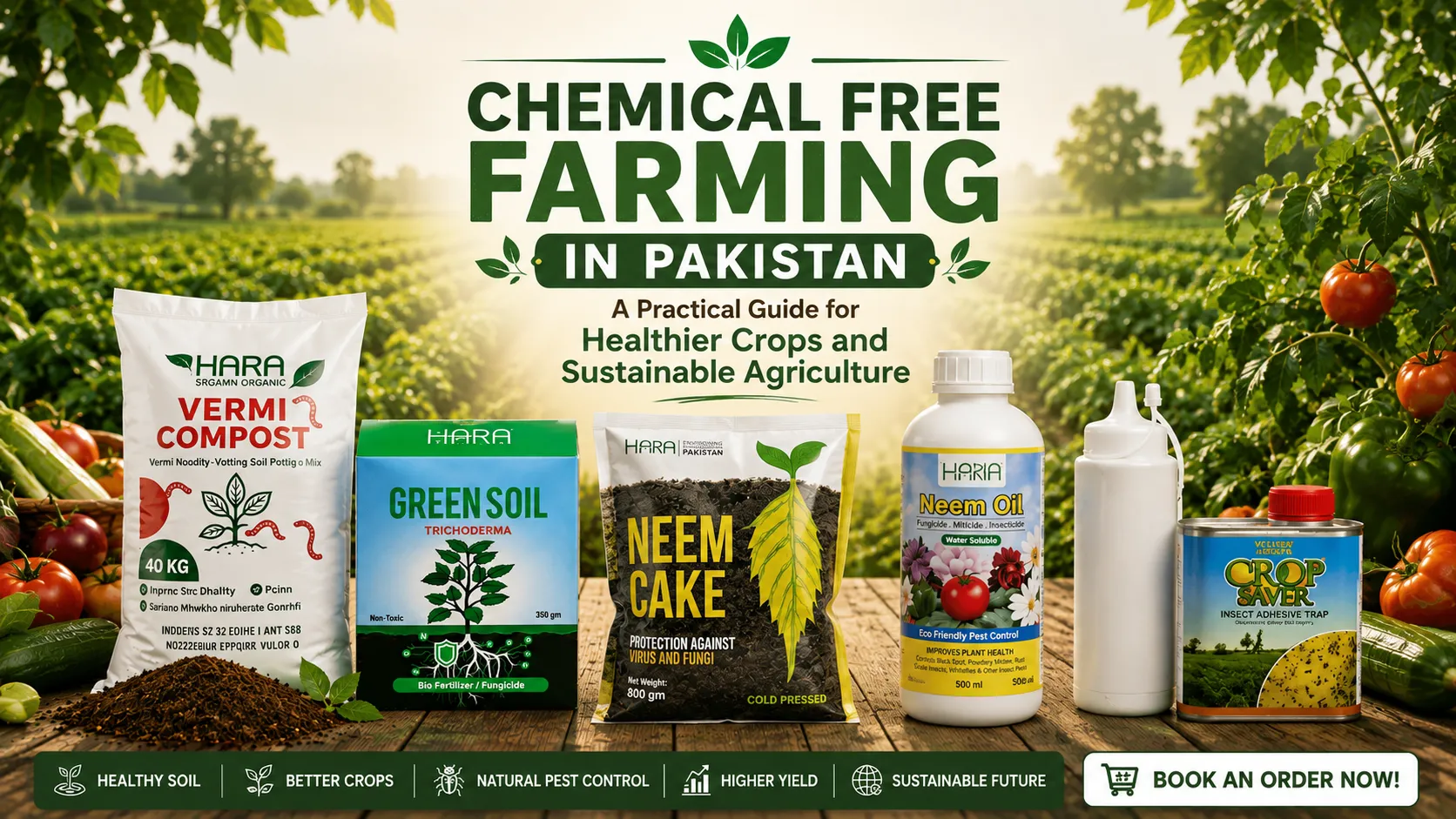
Chemical Free Farming Pakistan: A Practical Guide for Healthier Crops and Sustainable Agriculture
Jump To Chemical Free Farming Pakistan: A Practical Guide for
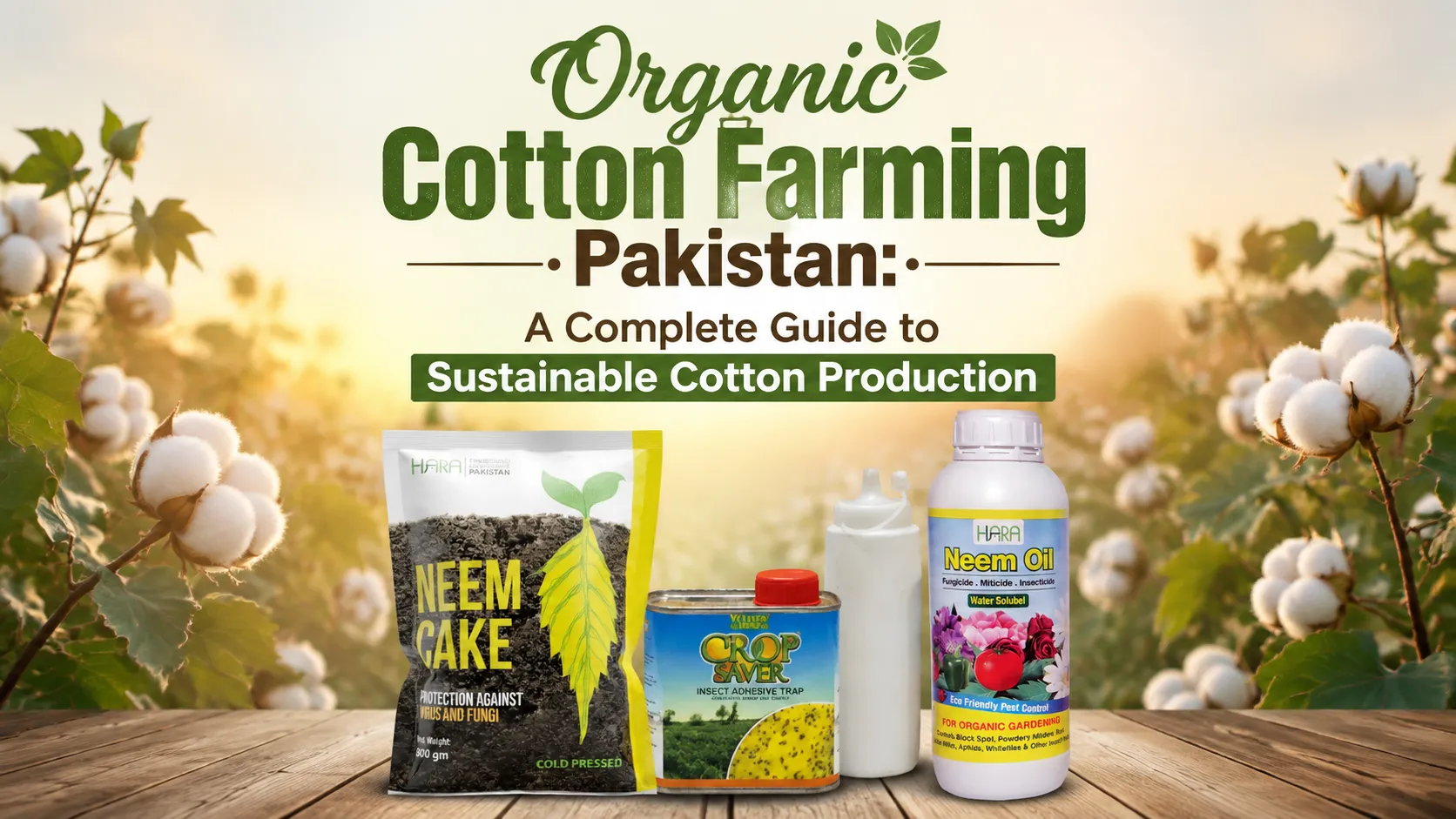
Organic Cotton Farming Pakistan: A Complete Guide to Sustainable Cotton Production
Jump To Organic Cotton Farming Pakistan: A Complete Guide to
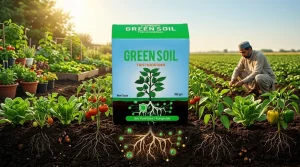
Green Soil Plant Growth: A Complete Guide to Better Soil Health and Stronger Plant Growth
Jump To Green Soil Plant Growth: A Complete Guide to
Best Neem Oil for Plants in Pakistan – Complete Guide to Hara Neem Oil
Jump To Best Neem Oil for Plants in Pakistan –
