


Cotton is one of Pakistan’s most important cash crops and plays a major role in the country’s economy. As global demand for sustainably produced textiles continues to grow, many farmers are exploring organic cotton farming in Pakistan as a practical way to improve soil health, reduce dependence on synthetic chemicals, and produce environmentally responsible cotton.
Organic farming focuses on maintaining healthy soil, encouraging beneficial microorganisms, and managing pests through natural methods rather than relying heavily on chemical inputs. While transitioning to organic production requires careful planning and patience, it can help improve farm sustainability and reduce production risks associated with excessive chemical use.
For Pakistani farmers, combining good agricultural practices with reliable organic inputs such as Hara Neem Cake Organic Fertilizer, Hara Neem Oil, and Hara Yellow Sticky Traps can support healthier crop growth and integrated pest management throughout the cotton growing season.
Organic Cotton Farming Pakistan: Quick Answer
Organic cotton farming in Pakistan is the practice of growing cotton without synthetic fertilizers, chemical pesticides, or genetically modified seeds.
Instead, farmers rely on natural soil amendments, organic fertilizers, crop rotation, biological pest management, and eco-friendly products such as Hara Neem Cake Organic Fertilizer, Hara Neem Oil, and Hara Yellow Sticky Traps to improve soil fertility and manage pests.
This approach helps produce healthier cotton, protects beneficial insects, and supports long-term soil health while reducing environmental pollution.
What Is Organic Cotton Farming?
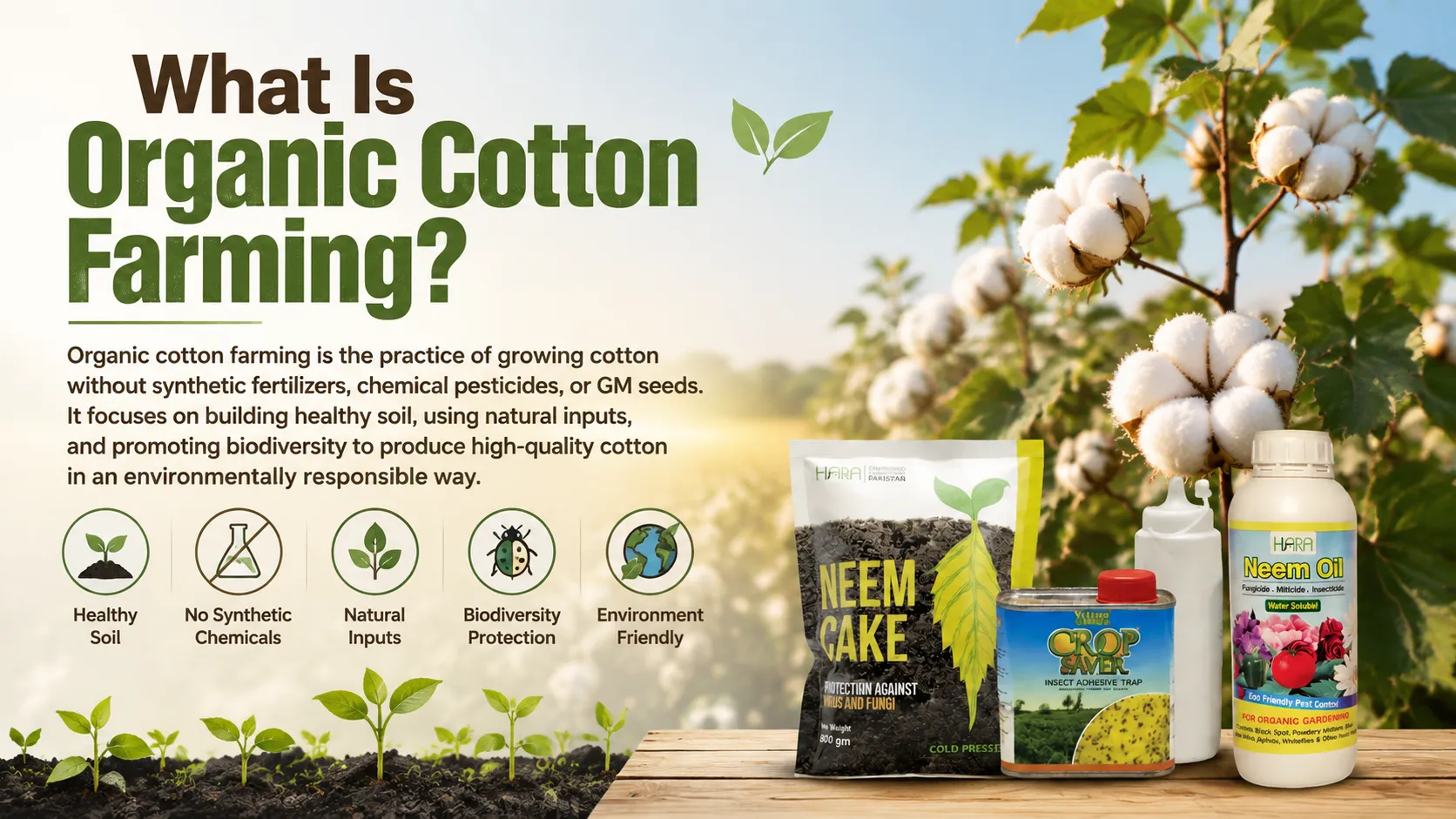
Organic cotton farming is an agricultural system that grows cotton using natural farming techniques instead of synthetic fertilizers, chemical pesticides, and herbicides. The goal is to protect soil fertility, conserve biodiversity, improve water efficiency, and produce cotton in an environmentally responsible manner.
Unlike conventional farming, organic cotton production emphasizes building healthy soil first. Healthy soil supports stronger plants that are naturally more resilient against pests, diseases, and environmental stress.
This farming method is increasingly attracting interest from Pakistani growers because international textile manufacturers are looking for responsibly sourced cotton produced under sustainable farming practices.
Why Organic Cotton Farming Is Becoming Popular in Pakistan
Pakistan is among the world’s largest cotton-producing countries. However, years of intensive chemical farming have affected soil fertility in many cotton-growing regions. Organic farming offers an opportunity to restore soil productivity while reducing chemical dependency. Several factors are driving interest in organic cotton production across Pakistan.
- Growing international demand for sustainable cotton
- Improved long-term soil fertility
- Reduced environmental pollution
- Better conservation of beneficial insects
- Lower chemical exposure for farmers
- Improved biodiversity on farms
Although organic farming may require more careful management during the transition period, healthier soils often become more productive over time when managed properly.
Suitable Areas for Organic Cotton Farming in Pakistan
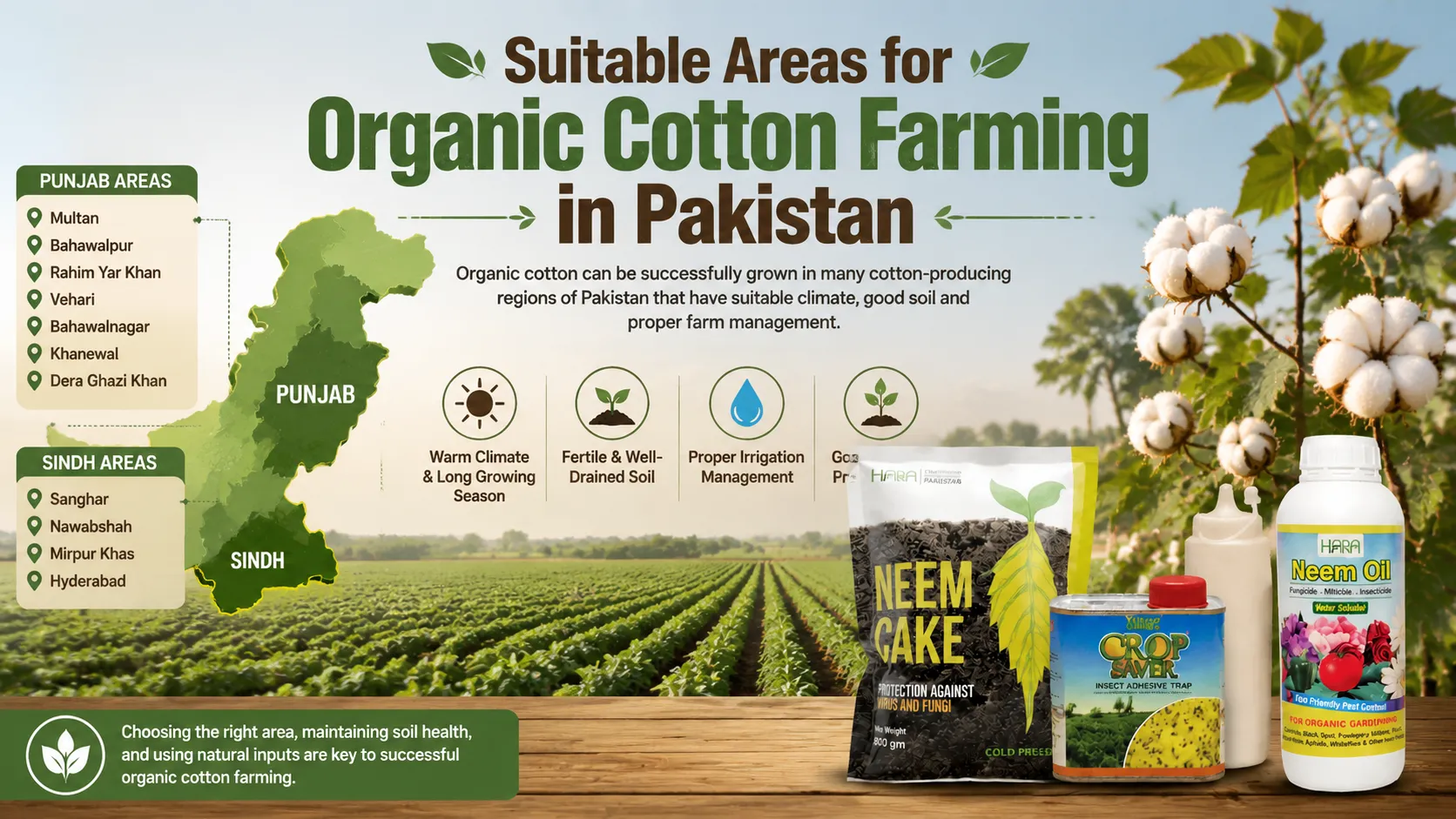
Cotton is mainly cultivated in Punjab and Sindh, where warm temperatures and long growing seasons support healthy crop development. Organic cotton farming can be successfully adopted in many cotton-growing districts, including:
- Multan
- Bahawalpur
- Rahim Yar Khan
- Vehari
- Bahawalnagar
- Khanewal
- Dera Ghazi Khan
- Sanghar
- Nawabshah
- Mirpur Khas
- Hyderabad
Farmers should select fields with good drainage, adequate sunlight, and a history of balanced crop management to achieve the best results.
Soil Requirements for Organic Cotton
Healthy soil is the foundation of successful organic cotton production. Cotton performs best in fertile, well-drained loam or clay loam soils with good organic matter. Before planting, farmers should conduct a soil test to understand nutrient levels and pH. Organic farming focuses on gradually improving soil quality rather than supplying large amounts of synthetic nutrients.
Adding organic matter improves soil structure, increases water retention, enhances microbial activity, and supports stronger root development. One effective option is Hara Neem Cake Organic Fertilizer, which enriches the soil while contributing organic nutrients. Neem cake is also valued for improving soil biological activity and supporting healthier root zones.
Climate Requirements
Cotton requires warm temperatures throughout its growing season. Most cotton-growing regions in Pakistan naturally provide suitable climatic conditions for organic cultivation. Ideal conditions include:
- Warm temperatures during vegetative growth
- Moderate humidity
- Good sunlight
- Well-distributed irrigation
- Proper air circulation
Heavy rainfall during boll formation may increase disease pressure, making preventive crop monitoring particularly important.
Land Preparation
Proper field preparation helps establish a healthy crop from the beginning. Fields should be deeply ploughed to loosen compacted soil and improve root penetration. Organic matter should be incorporated before sowing to enhance soil fertility and water-holding capacity.
Level fields also improve irrigation efficiency and reduce waterlogging, which can negatively affect root health. Farmers transitioning from conventional farming should gradually reduce synthetic chemical inputs while increasing organic soil amendments over successive seasons.
Choosing the Right Cotton Seed
Seed quality plays a major role in crop performance. Farmers should select healthy, disease-free seed from reliable sources that is suitable for local climatic conditions.
Certified organic seed is preferred whenever available, although locally adapted untreated seed may also be used according to organic farming standards. Healthy seed promotes uniform germination, stronger seedlings, and better crop establishment.
Organic Seed Treatment
Instead of relying on chemical seed treatments, organic farmers can protect seeds through biological and botanical methods.
Neem-based products are commonly used as part of integrated pest management because they help reduce early insect pressure while remaining environmentally friendly. Good sanitation, crop rotation, and healthy soil remain equally important for preventing early crop problems.
Planting and Crop Establishment
Cotton should be planted at the recommended sowing time for each region to ensure proper crop development. Adequate plant spacing allows better sunlight penetration and air movement throughout the field. Proper spacing also reduces disease risk while improving boll development.
Healthy seedlings established under balanced soil fertility generally develop stronger root systems capable of tolerating moderate environmental stress.
Organic Nutrient Management
One of the biggest differences between conventional and organic cotton farming is nutrient management. Instead of supplying nutrients through synthetic fertilizers, organic farming focuses on feeding the soil ecosystem. As microorganisms break down organic matter, nutrients become gradually available to the crop throughout the growing season.
Well-managed organic soils often show improved structure, greater moisture retention, and increased biological activity over time. The following table summarizes commonly used organic nutrient sources suitable for Pakistani cotton farms.
Organic Input | Primary Purpose | Best Time to Apply |
Hara Neem Cake Organic Fertilizer | Improves soil fertility and supports root development | During land preparation |
Well-rotted Farmyard Manure | Adds organic matter and improves soil structure | Before sowing |
Compost | Enhances microbial activity and nutrient availability | Before planting or early growth |
Green Manure Crops | Improves long-term soil fertility | Before cotton cultivation |
Besides improving fertility, maintaining crop residues and rotating cotton with legumes can naturally enhance soil nitrogen and reduce nutrient depletion.
Irrigation Management
Cotton requires consistent moisture, especially during flowering and boll formation. Over-irrigation should be avoided because excessive soil moisture can encourage root diseases and reduce oxygen availability.
Efficient irrigation scheduling helps maintain healthy plant growth while conserving water. Organic soils rich in organic matter generally retain moisture better than degraded soils, making crops more resilient during short dry periods.
Weed Management in Organic Cotton
Since herbicides are not used in organic farming, weed management depends on preventive and cultural practices. Early weed control is particularly important because young cotton plants compete poorly with aggressive weeds.
Timely hoeing, mulching, proper crop spacing, and crop rotation help suppress weed growth naturally while reducing future infestations. Maintaining a healthy crop canopy later in the season also limits sunlight reaching weed seedlings, slowing their development.
Integrated Pest Management (IPM) for Organic Cotton
One of the biggest challenges in organic cotton farming in Pakistan is managing insect pests without relying on synthetic pesticides. Instead of trying to eliminate every insect, Integrated Pest Management (IPM) focuses on maintaining a healthy balance between pests and beneficial insects.
Regular field scouting allows farmers to detect pest problems early, making control measures more effective. Crop rotation, proper field sanitation, healthy soil, and biological control methods all play an important role in reducing pest pressure naturally.
Using botanical products and physical monitoring tools also helps farmers manage pests while protecting pollinators and other beneficial organisms.
Common Cotton Pests in Pakistan
Cotton growers across Punjab and Sindh frequently encounter several insect pests during the growing season. The most common include:
- Whiteflies
- Aphids
- Jassids (Leafhoppers)
- Thrips
- Pink Bollworm
- American Bollworm
- Armyworms
- Mealybugs
Early monitoring is essential because heavy infestations can reduce plant vigor, affect boll formation, and lower overall yield. Organic farming emphasizes prevention and early intervention rather than waiting for severe outbreaks.
Managing Cotton Pests with Hara Neem Oil
Hara Neem Oil is a plant-based product derived from neem seeds and is widely used in organic farming as part of an integrated pest management program. It is commonly applied to help suppress soft-bodied insects and reduce pest populations while being less disruptive to many beneficial insects when used correctly.
Rather than acting like a conventional chemical pesticide, neem oil works by interfering with the feeding and life cycle of susceptible pests. Because of this mode of action, it is generally most effective when applied during the early stages of an infestation.
For the best results, farmers should spray during the early morning or late evening when temperatures are lower and beneficial pollinators are less active. Thorough coverage of both the upper and lower leaf surfaces improves effectiveness. Always follow the application instructions provided on the product label.
Monitoring Flying Insects with Hara Yellow Sticky Traps
Monitoring is a key part of organic pest management. Hara Yellow Sticky Traps attract many flying insect pests, including whiteflies, aphids, leaf miners, and fungus gnats, helping farmers detect infestations before they become severe.
Sticky traps are most effective when installed early in the crop cycle and checked regularly. While they can help reduce small pest populations, their primary role is monitoring, allowing growers to make timely management decisions. Replacing traps when they become covered with insects or dust ensures they remain effective throughout the season.
Disease Management in Organic Cotton
Although organic practices can improve overall crop health, cotton may still be affected by diseases under favorable environmental conditions. Good cultural practices remain the first line of defense.
Maintaining proper plant spacing, avoiding excessive irrigation, using disease-free seed, rotating crops, and removing infected plant debris can significantly reduce disease pressure. Healthy soils rich in organic matter often support stronger root systems and beneficial microorganisms that contribute to improved plant resilience.
Recommended Organic Inputs for Cotton
The following table summarizes how the featured Hara Organic products can be integrated into an organic cotton production system.
Product | Primary Purpose | Suitable Growth Stage | Best Use |
Hara Neem Cake Organic Fertilizer | Improves soil fertility and root health | Before sowing | Mixed into the soil during land preparation |
Hara Neem Oil | Botanical pest management | Vegetative to boll formation | Foliar application according to the product label |
Hara Yellow Sticky Traps | Monitoring and reducing flying insect pests | Early crop establishment onwards | Install throughout the field and inspect regularly |
Organic Alternatives Available in Pakistan
While the Hara Organic product range provides practical solutions for sustainable farming, Pakistani growers can also integrate other approved organic inputs depending on local availability and certification requirements.
Farmyard manure (FYM) remains one of the most widely used organic soil amendments. Well-decomposed FYM improves soil structure, increases organic matter, and enhances moisture retention, making it particularly useful before planting.
Compost is another excellent option for enriching soil with organic matter and beneficial microorganisms. It supports gradual nutrient release and contributes to long-term soil fertility.
Vermicompost, produced through earthworm activity, is valued for improving microbial life and supplying readily available nutrients. It can be especially beneficial for nursery production and home gardens.
Green manure crops, such as sesbania or sunhemp, are grown and incorporated into the soil before cotton planting. These crops increase organic matter and can improve soil fertility over time.
Farmers may also use biological pest control agents, pheromone traps for specific insects, and beneficial predators as part of an integrated organic farming system. The most suitable combination depends on local pest pressure, climate, and farm management practices.
Organic Cotton for Home Gardeners
Although cotton is mainly grown on commercial farms, home gardeners interested in sustainable gardening can also cultivate a small number of cotton plants.
Cotton grows best in containers or garden beds that receive full sunlight for most of the day. Well-drained soil enriched with compost or organic fertilizers encourages healthy root development.
Applying Hara Neem Cake Organic Fertilizer before planting helps improve soil quality, while Hara Neem Oil may be used if soft-bodied insect pests begin appearing on the plants. Hara Yellow Sticky Traps can also help monitor flying insects in kitchen gardens or terrace gardens without relying on chemical pesticides.
Growing cotton at home can be an educational experience for gardening enthusiasts and agriculture students interested in understanding sustainable crop production.
Common Mistakes to Avoid
Many challenges in organic cotton farming are linked to management practices rather than the farming system itself. Avoiding a few common mistakes can significantly improve crop performance.
- Switching completely to organic farming without preparing the soil for the transition period.
- Ignoring regular field scouting and allowing pest populations to build before taking action.
- Applying organic products without following the manufacturer’s instructions.
- Using undecomposed manure, which may affect seedling establishment.
- Over-irrigating fields, increasing the risk of root diseases and nutrient loss.
- Planting cotton repeatedly on the same land without crop rotation.
Frequently Asked Questions
Is organic cotton farming profitable in Pakistan?
Organic cotton can become profitable when farmers maintain healthy soils, manage pests effectively, and access markets that value sustainably produced cotton. Profitability depends on farm management, yield, and market demand.
Can organic cotton be grown without chemical fertilizers?
Yes. Organic cotton relies on compost, farmyard manure, green manures, neem cake, and other approved organic inputs instead of synthetic fertilizers.
Is neem oil safe for cotton crops?
When used according to the product label, neem oil is commonly included in integrated organic pest management programs for cotton.
What insects do yellow sticky traps help monitor?
Yellow sticky traps are commonly used to monitor whiteflies, aphids, leaf miners, and other flying insect pests.
Why is soil health important in organic cotton farming?
Healthy soil supports root growth, improves water retention, enhances microbial activity, and helps plants tolerate environmental stress more effectively.
Which Hara Organic product improves soil fertility?
Hara Neem Cake Organic Fertilizer is designed to enrich soil with organic matter while supporting healthy root development.
Can home gardeners grow cotton?
Yes. Cotton can be grown in home gardens or large containers provided it receives adequate sunlight, well-drained soil, and regular care.
Does organic farming eliminate all pests?
No. Organic farming aims to keep pest populations below damaging levels through prevention, monitoring, and integrated management rather than complete elimination.
Conclusion
Organic cotton farming in Pakistan is a sustainable approach that improves soil health, reduces reliance on synthetic chemicals, and supports long-term farm productivity. By combining good farming practices with Hara Neem Cake Organic Fertilizer, Hara Neem Oil, and Hara Yellow Sticky Traps, farmers can promote healthier crops while managing pests in an eco-friendly way.
Whether you’re a commercial farmer or a home gardener, choosing the right organic inputs can help build a more productive and sustainable farming system. Book your order today from Hara Organic Pakistan and take the next step toward healthier cotton cultivation with trusted organic farming solutions.
Chemical Free Farming Pakistan: A Practical Guide for Healthier Crops and Sustainable Agriculture
Jump To Chemical Free Farming Pakistan: A Practical Guide for
Organic Cotton Farming Pakistan: A Complete Guide to Sustainable Cotton Production
Jump To Organic Cotton Farming Pakistan: A Complete Guide to
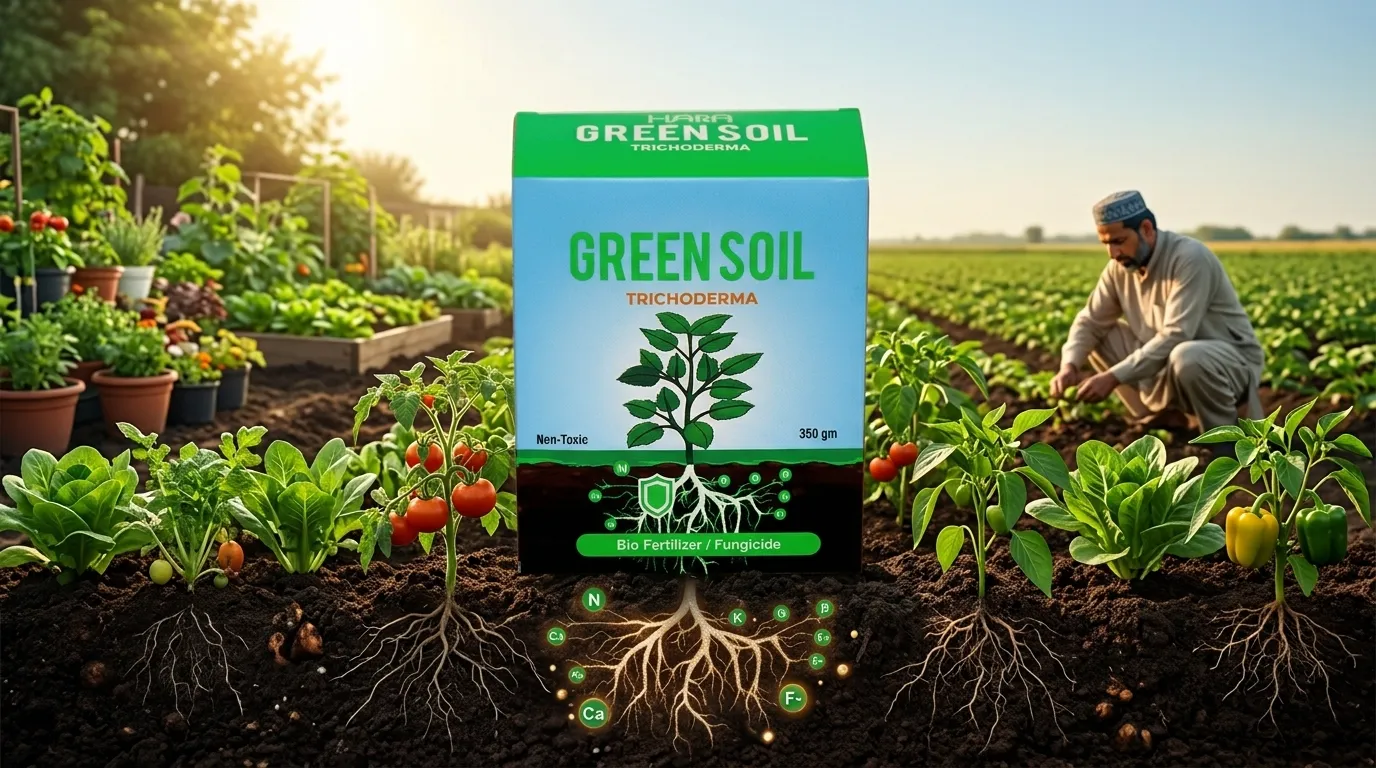
Green Soil Plant Growth: A Complete Guide to Better Soil Health and Stronger Plant Growth
Jump To Green Soil Plant Growth: A Complete Guide to
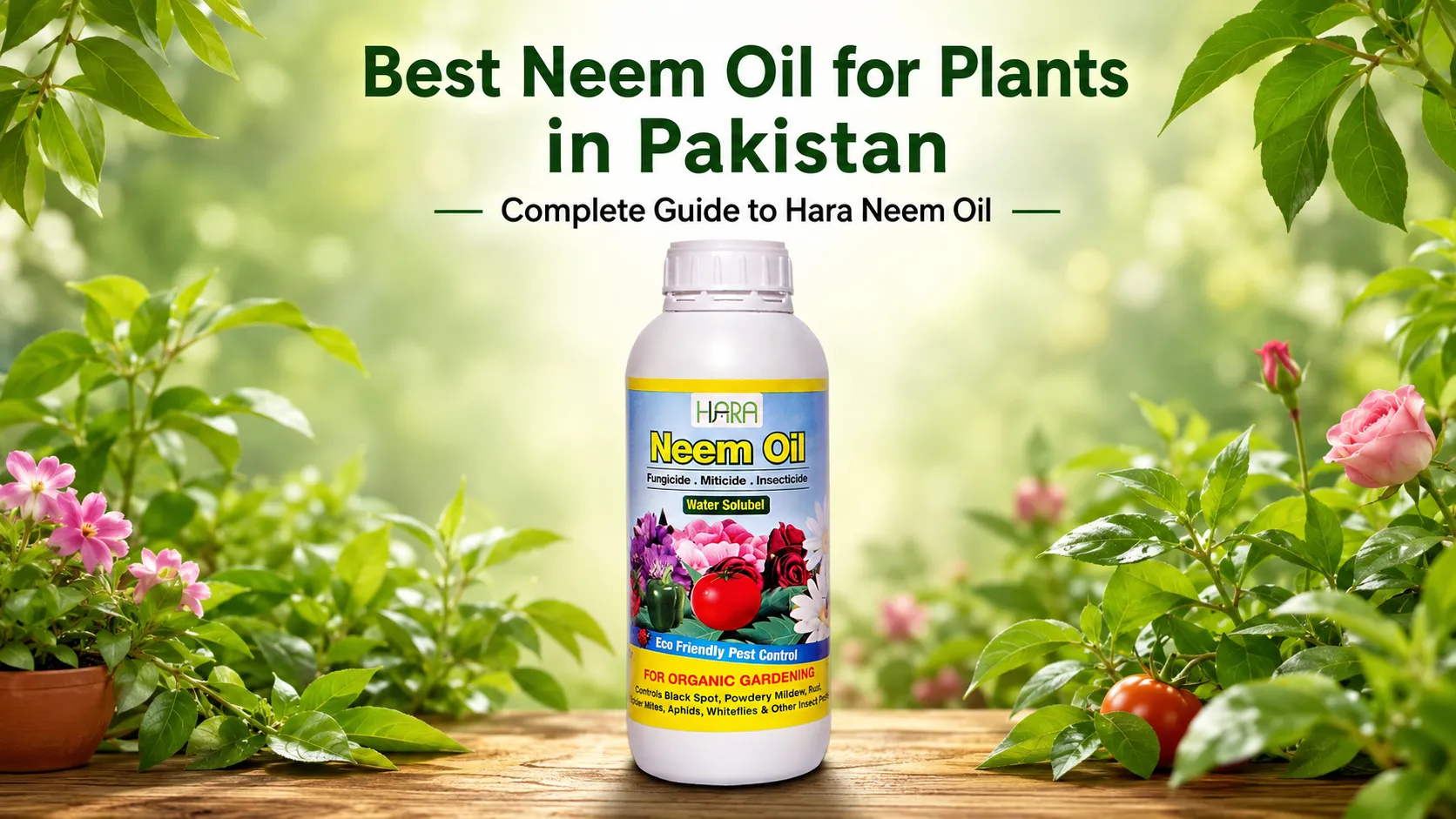
Best Neem Oil for Plants in Pakistan – Complete Guide to Hara Neem Oil
Jump To Best Neem Oil for Plants in Pakistan –
