
Organic Farming in Pakistan: Complete Practical Guide 2026
If Pakistan wants to grow in agriculture and compete in global markets, we must align with global demand. Today, the world is moving towards clean, chemical-free, and safe food. The demand for organic products is rising fast. However, many farmers in Pakistan still face export restrictions due to pesticide contamination.
At the same time, farmers are not getting proper returns in the local market. One major reason is declining soil health. The organic matter in Pakistan’s soil has dropped to dangerous levels. As a result, crop yields are falling, and plants cannot handle heat or water stress effectively.
This problem is not only about farming. It also affects human health. Poor nutrition and chemical residues in food are increasing health risks.
Today, every farmer is searching for a system where:
- Costs are controlled
- Yields are stable
- Profit is sustainable
That is why organic farming in Pakistan is no longer just an option. It has become a necessity.
What Is Organic Farming and Why Does It Matter in Pakistan
Organic farming is not just a replacement for chemical fertilizers. It is a complete farming system based on natural balance.
It includes:
- Soil health management
- Plant nutrition systems
- Natural pest control without chemicals
- Crop rotation and intercropping
- Agroforestry practices
- Farm waste recycling
The core idea of organic farming is simple:
“Make the soil alive.”
When soil becomes healthy:
- Plants grow stronger
- Diseases decrease
- Nutritional value improves naturally
In regions like Punjab and Sindh, soil fertility is declining rapidly. This directly affects food quality. If the soil lacks nutrients, the food will also lack nutrients. This leads to deficiencies in humans.
That is why organic farming is not just about agriculture. It is about food security and public health. Organizations like Pakistan Organic Association and initiatives like Organic Pakistan are helping promote sustainable farming practices across the country.
How Organic Farming Works (Real System Approach)
Organic farming focuses on managing the entire system, not just adding inputs.
Soil Health Management (Foundation)
Soil is a living system. A healthy soil contains:
- Minerals
- Organic matter
- Air
- Water
Microorganisms play a key role in soil fertility. They break down organic matter and make nutrients available to plants. Even a small increase in organic matter can improve water retention and crop yield.
Practices like mulching protect soil from heat and moisture loss. On the other hand, deep tillage and chemical use destroy soil life. Improving organic matter is the foundation of organic farming.
Organic Plant Nutrition Management
Plants need more than just basic nutrients. They require a balanced supply of minerals.
Organic farming uses:
- Compost
- Animal manure
- Plant-based fertilizers
- Natural mineral sources
Farmers in Pakistan are increasingly using local resources to build a sustainable nutrition system instead of relying on imported chemicals.
Natural Pest Control Without Chemicals
Nature works in balance. When chemicals are used, this balance breaks.
In organic systems:
- Plants attract insects
- Beneficial insects control harmful ones
- Natural predators maintain balance
Common methods include:
- Yellow sticky traps
- Light traps
- Trap crops
The goal is not to eliminate pests, but to keep them under control.
Crop Rotation and Intercropping
Crop rotation helps maintain soil health and reduces disease cycles. Intercropping allows farmers to grow multiple crops together. This reduces risk and improves income stability.
For example, farmers in Punjab rotate wheat with vegetables, while Sindh farmers combine mango orchards with cover crops.
Agroforestry and Climate Protection
Modern farming often depends on single-crop systems, which increases risk.
Agroforestry introduces trees into farming systems. This:
- Reduces heat stress
- Improves soil moisture
- Protects crops from climate changes
It creates a natural microclimate that supports long-term sustainability.
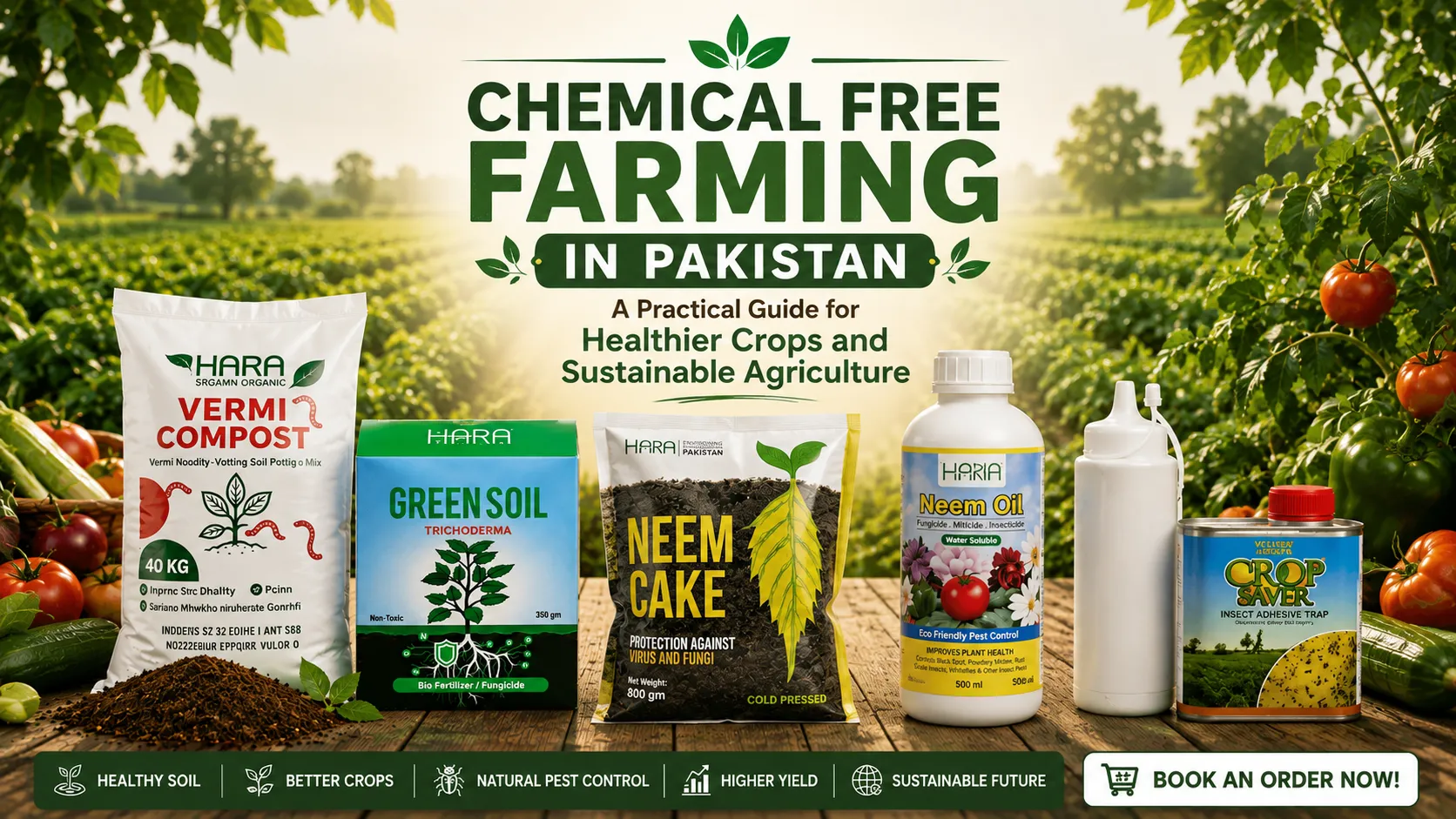
Expert Insight from Hara Organic Pakistan
Field experience shows that organic farming is not just about products. It is about managing a living ecosystem.
Practical results from farmers show:
- Long-term costs decrease significantly
- Pest problems reduce naturally
- Beneficial insects return
- Crop quality and taste improve
Organic systems often solve problems that chemical farming cannot fix.
Benefits of Organic Farming in Pakistan
Organic farming offers real and measurable benefits:
- Improves soil fertility over time
- Produces healthy and chemical-free food
- Reduces long-term farming costs
- Opens access to export and premium markets
- Improves climate resilience
Consumers in cities now prefer organic vegetables due to health awareness. This trend is increasing demand across Pakistan.
Cost of Organic Farming in Pakistan
The cost structure of organic farming is different from that of conventional farming.
In the beginning:
- Soil needs rebuilding
- Compost and inputs are required
- Training is necessary
However, in the long term:
- Chemical costs are eliminated
- Soil becomes self-sustaining
- Profit margins increase
A practical model shows:
- Year 1: Cost may be slightly higher
- Year 2: Costs begin to decrease
- Year 3: Profits become stable and higher
Organic Farming vs Conventional Farming
|
Feature |
Organic Farming |
Conventional Farming |
|
Fertilizers |
Natural inputs |
Chemical fertilizers |
|
Soil Health |
Improves over time |
Decreases over time |
|
Crop Quality |
Clean and nutrient-rich |
Risk of chemical residue |
|
Cost |
Lower in the long term |
High input cost |
|
Yield |
Stable over time |
High in the short term |
Challenges of Organic Farming in Pakistan
Organic farming also has some challenges:
- Lack of awareness among farmers
- Risk of lower yield in early stages
- Limited availability of organic inputs
- Certification costs
- Market access issues
However, the situation is improving quickly.
Efforts by local organizations and companies are helping farmers:
- Improve knowledge and training
- Reduce yield risks
- Access better inputs
- Connect with markets
Local certification systems are also being developed to support farmers.
Real Case Study from Pakistan
Field data shows promising results:
- First year: Yield remains stable
- Second year: Costs decrease
- Third year: Profit increases by up to 30 to 40 percent
Farmers who sell directly to customers often earn even higher profits.
How to Start Organic Farming in Pakistan
Follow these simple steps to begin:
- Start with a small area
- Improve soil using compost and natural inputs
- Stop using chemical fertilizers completely
- Choose suitable crops for your region
- Learn from experts and training programs
- Build direct market connections
Starting small helps reduce risk and gives better control.
FAQs
What is organic farming in Pakistan?
It is a natural farming system without chemical fertilizers or pesticides.
Which crops are suitable for organic farming?
Wheat, rice, vegetables, mangoes, and cotton work well.
Is organic farming profitable?
Yes, it becomes more profitable over time due to lower costs and higher prices.
Why is soil health important in organic farming?
Healthy soil produces stronger and more nutritious crops.
How can farmers learn organic methods?
They can join training programs and connect with expert organizations.
Conclusion
Organic farming is the future of agriculture. It offers a sustainable way to improve soil, increase crop quality, and secure better profits. With rising demand for clean food, organic farming in Pakistan is becoming essential for long-term success. Farmers who take the first step today can build a more stable and profitable future tomorrow.