


Cotton is one of Pakistan’s most important cash crops, but pests like whiteflies, jassids, thrips, aphids, and pink bollworms can significantly reduce yield and fiber quality. Effective cotton pest control in Pakistan focuses on early monitoring, preventive care, and sustainable solutions.
Hara Neem Oil, Hara Yellow Sticky Traps, and Hara Neem Cake Organic Fertilizer work together as part of an Integrated Pest Management (IPM) approach to help protect cotton crops, improve soil health, and support long-term productivity.
Quick Answer
Cotton pest control in Pakistan is most effective when it combines early pest monitoring, preventive practices, and organic solutions. Hara Neem Oil, Hara Yellow Sticky Traps, and Hara Neem Cake Organic Fertilizer help manage common cotton pests, improve soil health, and promote healthier crops through a sustainable Integrated Pest Management (IPM) approach.
Why Cotton Pest Control Is Important in Pakistan?
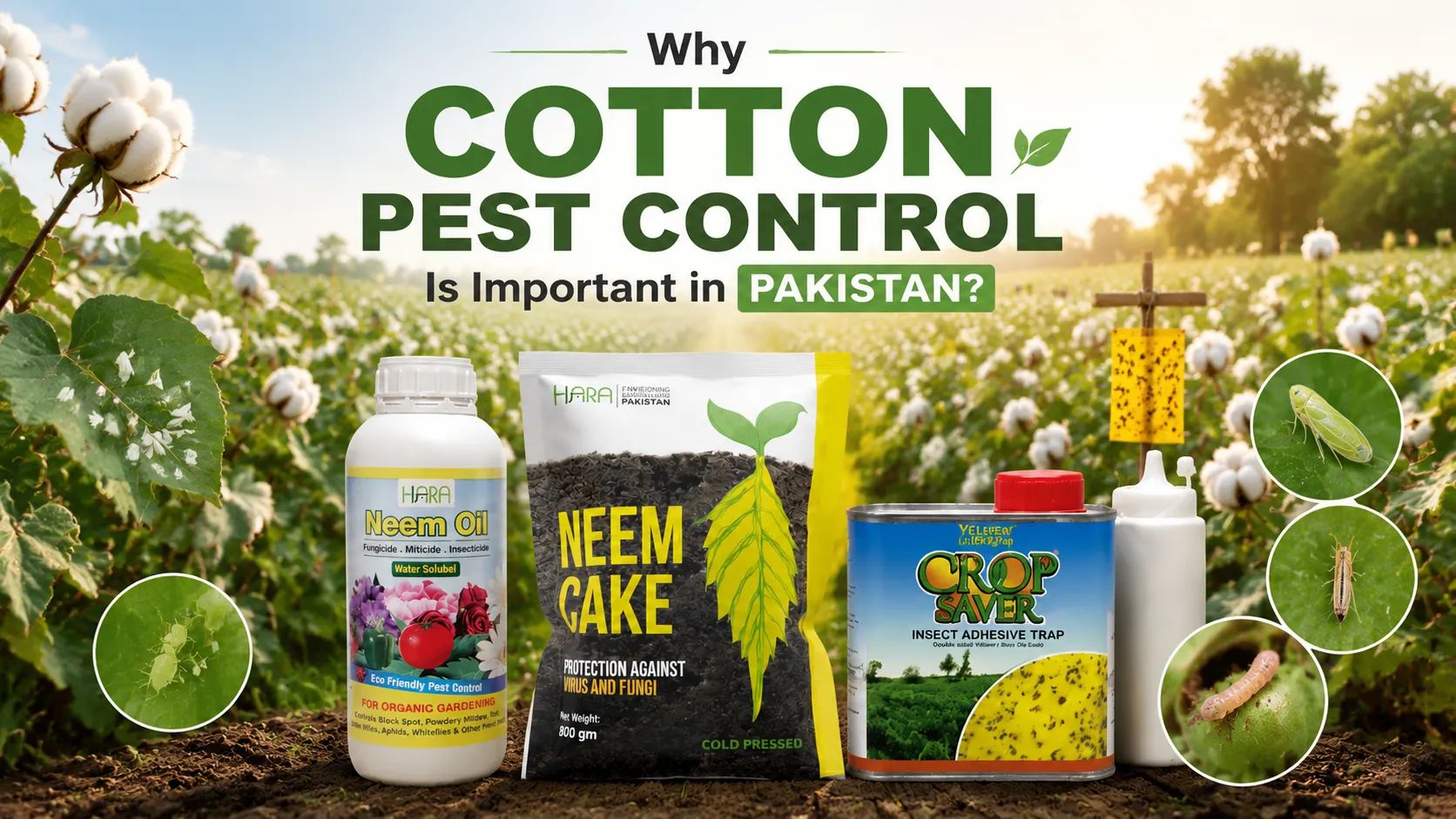
Pakistan’s warm climate creates favorable conditions for many insect pests. Long periods of heat combined with irrigation allow pest populations to multiply rapidly if fields are not monitored regularly.
Unchecked infestations may lead to reduced photosynthesis, leaf curling, poor flowering, weak boll development, and lower cotton quality. Some pests also spread plant diseases that further reduce crop performance. Early pest management helps farmers:
- Protect crop yield and fiber quality.
- Reduce unnecessary pesticide applications.
- Lower production costs over time.
- Support healthier soil and beneficial insects.
- Improve overall crop sustainability.
Instead of relying only on chemical sprays, many successful growers now combine monitoring tools, botanical products, and healthy soil management for better long-term results.
Common Cotton Pests Found in Pakistan
Understanding the target pest is the first step toward successful management.
Whitefly
Whiteflies are among the most destructive cotton pests in Pakistan. They suck plant sap, weaken leaves, and produce honeydew that encourages black sooty mold. Heavy infestations reduce photosynthesis and affect boll development.
Yellow sticky traps help monitor adult whiteflies, while neem-based products can support pest management as part of an IPM strategy.
Jassids
Jassids feed on leaf sap and often cause leaf edges to curl, yellow, and dry. Young cotton plants are especially vulnerable during early growth. Maintaining healthy plants through balanced nutrition and regular field monitoring can reduce damage.
Thrips
Thrips attack tender leaves and shoots, causing silver-colored scars and distorted plant growth. Early infestations may slow crop development and reduce plant vigor. Regular scouting combined with sticky traps helps detect increasing populations before severe damage occurs.
Aphids
Aphids reproduce rapidly under favorable weather conditions. Large colonies weaken plants by feeding on sap and may also encourage fungal growth through honeydew production. Botanical pest management products are commonly used alongside cultural practices to reduce aphid populations.
Pink Bollworm
Pink bollworm attacks cotton bolls and directly affects lint quality and yield. Unlike sucking pests, this insect requires careful field monitoring throughout boll development. Good crop hygiene, timely monitoring, and integrated management practices remain essential for reducing infestations.
Understanding the Role of Hara Organic Products
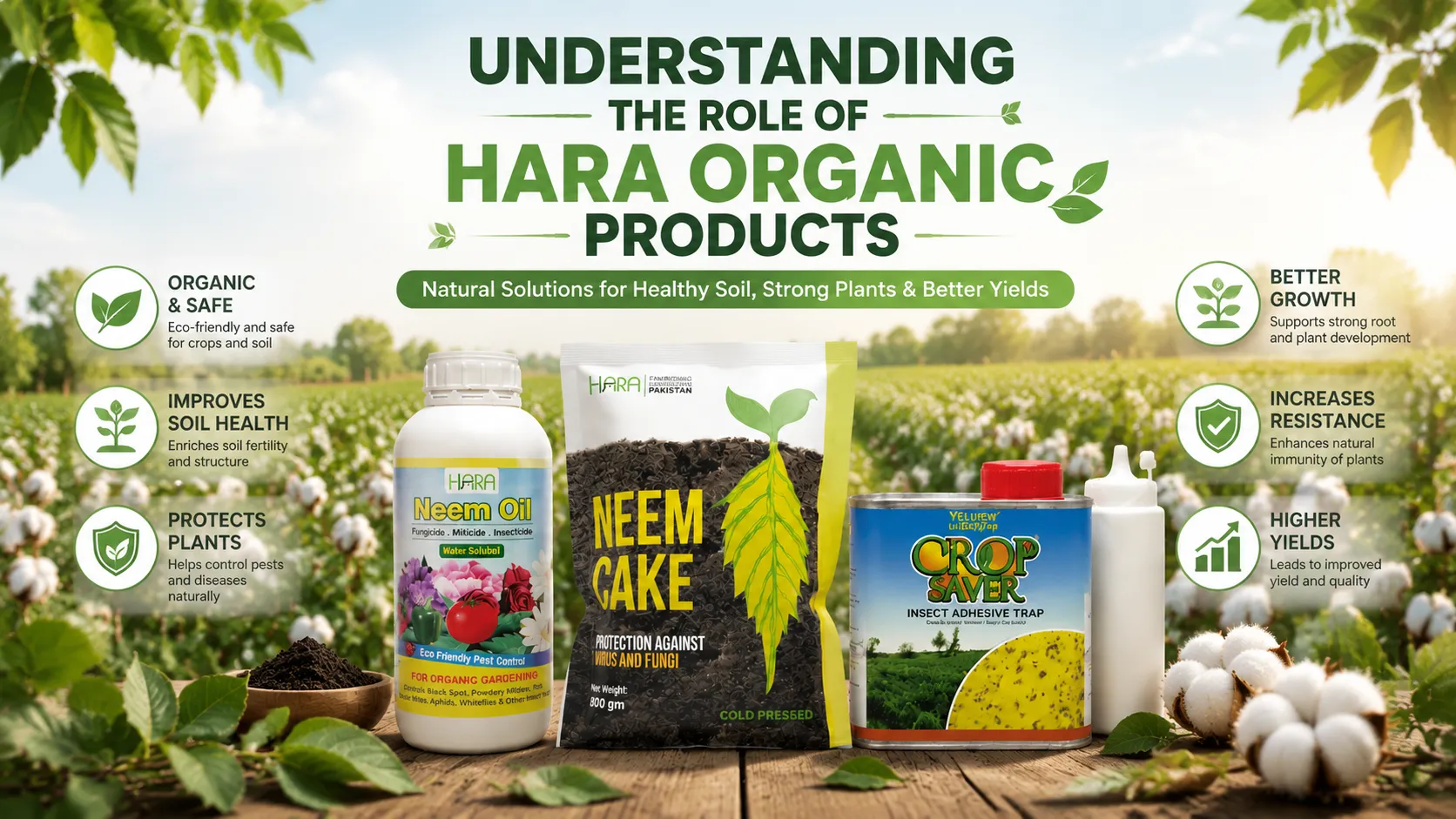
Each Hara Organic product performs a different function. When used together, they provide a more balanced pest management strategy rather than relying on a single solution.
Hara Neem Oil
Hara Neem Oil is a botanical pest management product derived from neem. It is commonly used against many soft-bodied sucking insects found in cotton fields.
Rather than serving as a broad-spectrum chemical pesticide, neem-based products are valued for supporting sustainable farming practices when used correctly. Farmers often include neem oil during periods of increasing pest activity because it fits well within integrated pest management programs.
Hara Yellow Sticky Traps
Hara Yellow Sticky Traps are monitoring tools designed to attract flying insects that are naturally drawn to the yellow color. They help growers:
- Detect pest populations early.
- Monitor whiteflies, aphids, leaf miners, and other flying insects.
- Make better pest management decisions before infestations become severe.
Because they require no spraying, sticky traps are suitable for farms, kitchen gardens, nurseries, and greenhouses.
Hara Neem Cake Organic Fertilizer
Healthy plants naturally tolerate pest pressure better than weak plants. Hara Neem Cake Organic Fertilizer improves soil quality by adding organic matter while supporting beneficial soil activity. Better soil health encourages stronger root systems and healthier crop growth. Many growers include neem cake before planting or during soil preparation to build long-term soil fertility.
Benefits for Commercial Farmers and Home Gardeners
Commercial cotton growers often focus on maximizing yield while controlling production costs. Home gardeners and small growers usually prioritize safe, environmentally responsible pest management.
These Hara Organic products offer advantages for both groups because they encourage preventive crop care instead of depending entirely on repeated chemical applications.
For commercial farms, regular pest monitoring allows earlier intervention, reducing the likelihood of widespread infestations. Healthier soil also supports stronger crop development throughout the season.
Home gardeners benefit from easy-to-use products that can be applied in kitchen gardens, terrace gardens, and small vegetable plots without introducing unnecessary chemical residues into the growing environment.
Cotton Growth Stages Where Pest Monitoring Matters
Pest pressure changes throughout the cotton season, making regular observation more important than occasional inspections.
Cotton Growth Stage | Common Pest Concern | Recommended Hara Solution |
Seedling Stage | Jassids, Thrips | Yellow Sticky Traps, field monitoring |
Vegetative Growth | Whiteflies, Aphids | Neem Oil, Sticky Traps |
Flowering Stage | Whiteflies, Thrips | Neem Oil with regular scouting |
Boll Formation | Pink Bollworm, Whiteflies | IPM monitoring and timely management |
Late Season | Mixed pest populations | Continued monitoring and field sanitation |
Cotton Pest Control for Different Areas of Pakistan
Punjab
Punjab produces a significant portion of Pakistan’s cotton crop. Hot summers and irrigated fields create favorable conditions for whiteflies, jassids, and aphids. Farmers should begin monitoring shortly after crop establishment instead of waiting until visible damage appears.
Sindh
Cotton growers in Sindh often experience prolonged pest activity due to warmer temperatures. Regular scouting, combined with sticky-trap monitoring, helps identify increases in pest populations before economic damage occurs.
Southern Cotton Belt
Areas with continuous cotton cultivation may experience greater pest pressure because insects survive between seasons. Crop rotation, field sanitation, and integrated pest management become especially valuable under these conditions.
Home Gardening and Small Cotton Plots
Although cotton is mainly grown commercially, some agriculture students, researchers, and home gardeners also cultivate small cotton plots. For smaller growing areas, Hara Yellow Sticky Traps provide an easy way to observe insect activity without spraying.
Healthy soil prepared with organic amendments such as neem cake promotes stronger root growth, while neem oil can be incorporated into an overall pest management routine as needed. Unlike commercial fields, home gardens allow growers to inspect plants frequently, making early pest detection much easier.
How to Use Hara Organic Products for Cotton Pest Control
Successful cotton pest control in Pakistan depends on using the right product at the right time. Rather than waiting until pests become widespread, farmers should monitor their fields regularly and take preventive action during the early stages of infestation.
Combining Hara Neem Oil, Hara Yellow Sticky Traps, and Hara Neem Cake Organic Fertilizer can support a more balanced and sustainable pest management program.
Using Hara Neem Oil
Hara Neem Oil is best used when sucking pests such as whiteflies, aphids, jassids, or thrips are first noticed. Since neem-based products work differently from conventional chemical insecticides, early application generally provides better results than waiting for heavy infestations.
Before spraying, inspect several plants across different parts of the field to determine pest activity. Apply the spray during the early morning or late afternoon when temperatures are lower and beneficial insects are less active.
Ensure both the upper and lower leaf surfaces are covered because many sucking insects remain on the underside of leaves. Avoid spraying during strong winds, rainfall, or the hottest part of the day, as these conditions may reduce spray effectiveness.
Installing Hara Yellow Sticky Traps
Yellow sticky traps are primarily designed for monitoring flying insect populations. They should be installed early in the cotton season before pest numbers increase significantly.
Place the traps slightly above the crop canopy where insects can easily see them. As the cotton plants grow taller, adjust the trap height accordingly. Inspect the traps every few days to observe changes in insect activity. Replace them whenever the adhesive surface becomes covered with insects or dust.
Sticky traps should not be considered a complete replacement for other pest management practices. Instead, they provide valuable information that helps farmers decide when additional control measures may be needed.
Applying Hara Neem Cake Organic Fertilizer
Healthy soil forms the foundation of healthy crops. Hara Neem Cake Organic Fertilizer is generally incorporated into the soil before planting or during field preparation to improve soil fertility and support root development.
Organic matter from neem cake encourages beneficial soil microorganisms while gradually improving soil structure. Strong root systems help cotton plants tolerate environmental stress and recover more effectively from minor pest attacks. Because neem cake works within the soil, it complements above-ground pest monitoring methods instead of replacing them.
Recommended Application Guide
Application rates may vary depending on crop condition, product formulation, pest pressure, and local agricultural recommendations. Always follow the instructions printed on the Hara Organic product label.
Product | Purpose | Application Method | General Timing |
Hara Neem Oil | Helps manage sucking pests | Foliar spray | At early pest detection and repeat if required according to label directions |
Hara Yellow Sticky Traps | Pest monitoring and trapping | Install throughout the field | From early crop growth until harvest |
Hara Neem Cake Organic Fertilizer | Improve soil health and root growth | Soil application before planting or during soil preparation | Before sowing or as recommended |
Best Time for Cotton Pest Control
Timing often determines whether pest management succeeds or fails. Many cotton insects reproduce quickly during warm weather, so delaying action can allow populations to increase rapidly.
The most effective strategy is to begin monitoring shortly after crop establishment. Regular field inspections help identify pest activity before visible damage becomes widespread. Early intervention usually requires fewer corrective measures than treating severe infestations later in the season.
Weather also plays an important role. High humidity and warm temperatures often encourage rapid pest development, making more frequent scouting beneficial during these periods.
Integrated Pest Management (IPM) for Cotton
Modern cotton production increasingly relies on Integrated Pest Management rather than depending entirely on repeated insecticide applications. IPM combines several complementary practices that work together to reduce pest pressure while supporting long-term crop health.
Farmers can strengthen their pest management strategy by combining field scouting, sticky trap monitoring, healthy soil management, timely irrigation, balanced nutrition, and botanical products such as neem oil. This integrated approach helps reduce unnecessary pesticide applications while encouraging a healthier farming ecosystem.
Compatibility with Other Agricultural Inputs
Hara Neem Oil is often used within broader crop management programs, but growers should avoid mixing products unless compatibility has been confirmed by the manufacturer or agricultural advisor.
Before preparing a large spray tank, performing a small jar test can help identify possible mixing problems. If uncertain, apply products separately according to their recommended schedules.
Hara Yellow Sticky Traps require no chemical mixing because they function as a physical monitoring tool. Hara Neem Cake Organic Fertilizer is generally incorporated into the soil and fits well within organic soil management programs.
Best Practices for Better Cotton Protection
Good pest management is based on consistent field care rather than reacting only after visible damage appears.
- Inspect cotton fields regularly, especially during periods of warm weather.
- Remove heavily infested plant material whenever practical.
- Keep weeds under control because they may serve as alternate hosts for insect pests.
- Encourage beneficial insects by avoiding unnecessary broad-spectrum pesticide applications.
- Rotate crops where possible to help interrupt pest life cycles.
- Follow product label instructions carefully for safe and effective use.
Storage and Safety
Proper storage helps maintain product quality and supports safe farm operations. Store Hara Organic products in their original packaging in a cool, dry, and well-ventilated location away from direct sunlight. Keep them out of reach of children and pets, and avoid storing them near food, animal feed, or drinking water.
When handling agricultural products, wear appropriate protective clothing as recommended on the product label. Wash hands thoroughly after application and clean spraying equipment before using it with other products.
Common Mistakes Farmers Should Avoid
Many pest management failures occur because of timing rather than product choice. Waiting until the entire field is heavily infested often makes control more difficult and may increase production costs.
Another common mistake is relying on a single method throughout the season. Successful cotton pest control usually combines monitoring, healthy soil management, preventive practices, and appropriate treatments instead of depending on one product alone.
Some growers also overlook field inspections after spraying. Continued monitoring remains essential because new pest populations may enter the field later in the season.
Finally, applying products without reading label instructions can reduce effectiveness or increase the risk of improper use. Always follow manufacturer recommendations and consult local agricultural experts when needed.
Alternative Products for Cotton Pest Control in Pakistan
No single product can solve every pest problem in cotton. The best results usually come from combining monitoring, soil health improvement, and preventive pest management. Depending on crop conditions, farmers may consider other Hara Organic products or biological solutions that complement the three products discussed in this guide.
If your main concern is sucking insects such as whiteflies, aphids, jassids, and thrips, Hara Neem Oil remains an excellent botanical option. When the goal is early pest detection, Hara Yellow Sticky Traps provide continuous monitoring without spraying. For improving soil fertility and encouraging stronger plant growth, Hara Neem Cake Organic Fertilizer is a suitable choice.
Growers practicing organic or integrated farming may also use beneficial bio-fertilizers, compost-based soil amendments, vermicompost, or microbial soil conditioners alongside these products to improve overall crop health. Healthier plants are naturally better equipped to tolerate environmental stress and minor pest pressure.
Comparison of Hara Organic Solutions
Product | Best For | Main Advantage | Best Time to Use |
Hara Neem Oil | Whiteflies, aphids, jassids, thrips | Botanical pest management for sucking insects | When early pest activity is observed |
Hara Yellow Sticky Traps | Flying insect monitoring | Detects pest populations before severe infestation | Throughout the growing season |
Hara Neem Cake Organic Fertilizer | Soil health and root development | Improves soil fertility and supports stronger plants | Before planting or during soil preparation |
Common Cotton Problems These Products Can Help Address
Cotton growers in Pakistan face several recurring challenges during the growing season. While no single product provides a complete solution, integrating Hara Organic products into a well-planned crop management program can help reduce many common issues.
Healthy soil supported by neem cake encourages stronger root development and more vigorous plant growth. Strong plants generally recover better from environmental stress and are better prepared to withstand minor pest attacks.
Yellow sticky traps provide valuable information about flying insect populations before visible crop damage becomes widespread. This early warning allows farmers to make better pest management decisions.
Neem oil supports environmentally responsible management of common sucking pests that feed on cotton leaves and stems. When combined with regular scouting, field sanitation, and balanced nutrition, it becomes part of an effective Integrated Pest Management strategy.
Frequently Asked Questions
Is neem oil effective for cotton pest control in Pakistan?
Neem oil can help manage several common sucking pests, including whiteflies, aphids, jassids, and thrips, when used according to the product label as part of an Integrated Pest Management program.
What is the biggest pest affecting cotton in Pakistan?
Whitefly is considered one of the most damaging cotton pests in many cotton-growing regions of Pakistan. Pink bollworm is also a major concern during boll development.
Can yellow sticky traps replace insecticide sprays?
No. Sticky traps are mainly monitoring and trapping tools. They help detect pest activity early but should be used alongside other appropriate pest management practices.
Why is early pest monitoring important?
Early detection allows farmers to manage pests before populations become large enough to cause significant economic losses.
Can home gardeners use these products?
Yes. Hara Neem Oil, Hara Yellow Sticky Traps, and Hara Neem Cake Organic Fertilizer are also suitable for kitchen gardens, terrace gardens, nurseries, and small research plots when used according to label instructions.
Does neem cake kill insects directly?
Neem cake is primarily an organic fertilizer and soil amendment. Its main purpose is improving soil health and supporting stronger plant growth rather than acting as a direct insecticide.
When should sticky traps be installed?
They should be installed during the early growth stage of the cotton crop and monitored throughout the growing season.
Can these products be used together?
Yes. Since each product serves a different purpose, they can complement one another within an Integrated Pest Management program.
Are organic pest control methods safer for beneficial insects?
When used correctly, botanical and monitoring-based approaches generally have less impact on beneficial insects than repeated use of broad-spectrum chemical pesticides.
How often should cotton fields be inspected?
Weekly field scouting is recommended during normal conditions, while more frequent inspections may be necessary during periods of heavy pest activity.
Conclusion
Effective cotton pest control in Pakistan starts with prevention. Regular crop scouting, timely pest monitoring, healthy soil management, and responsible pest control practices help improve cotton quality and support healthier yields.
Hara Neem Oil, Hara Yellow Sticky Traps, and Hara Neem Cake Organic Fertilizer work together as part of an Integrated Pest Management (IPM) approach to protect cotton crops naturally.
Ready to protect your cotton crop? Book your order today with Hara Organic Pakistan and choose trusted organic solutions for healthier, more productive farming.
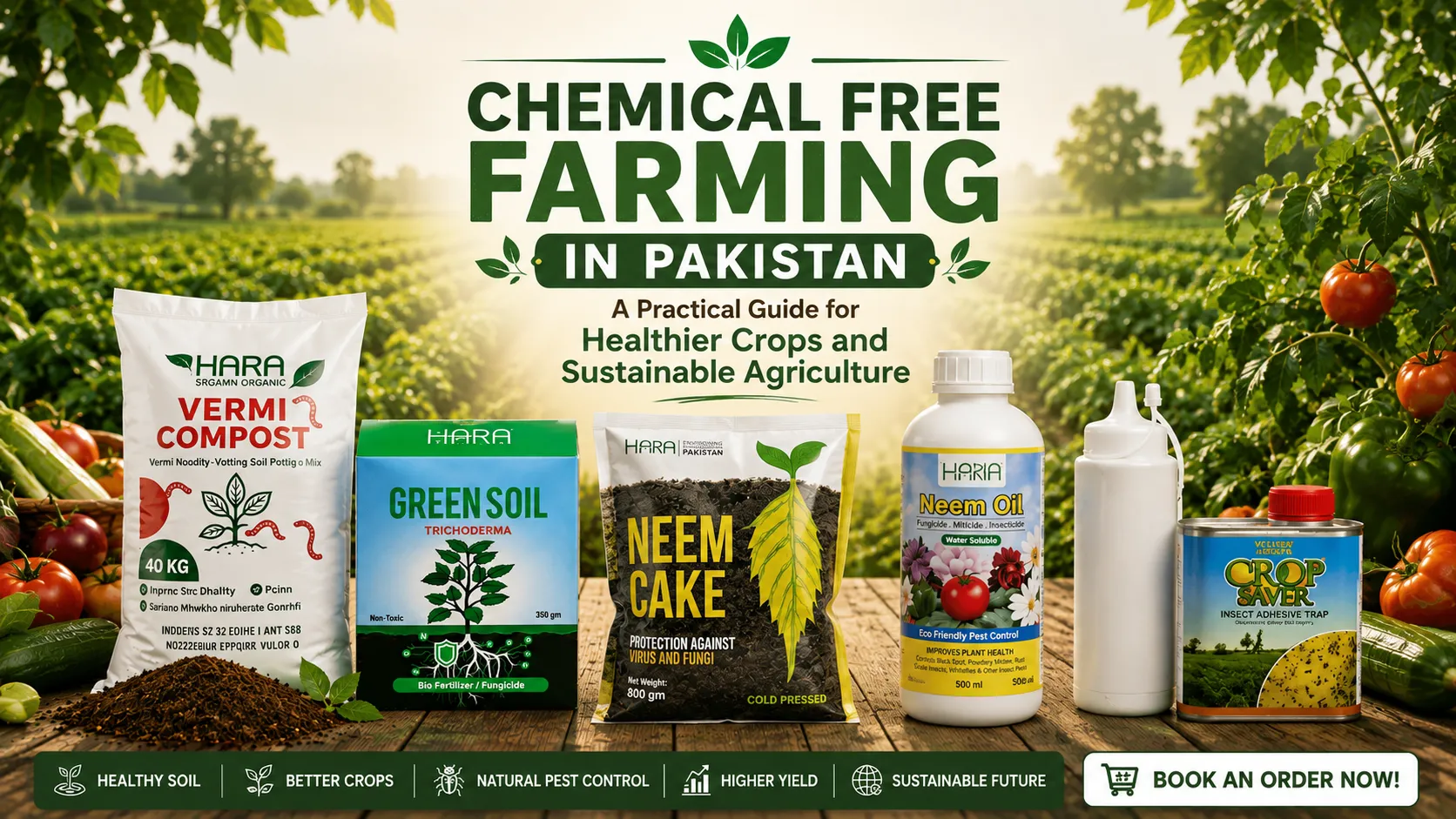

Chemical Free Farming Pakistan: A Practical Guide for Healthier Crops and Sustainable Agriculture
Jump To Chemical Free Farming Pakistan: A Practical Guide for
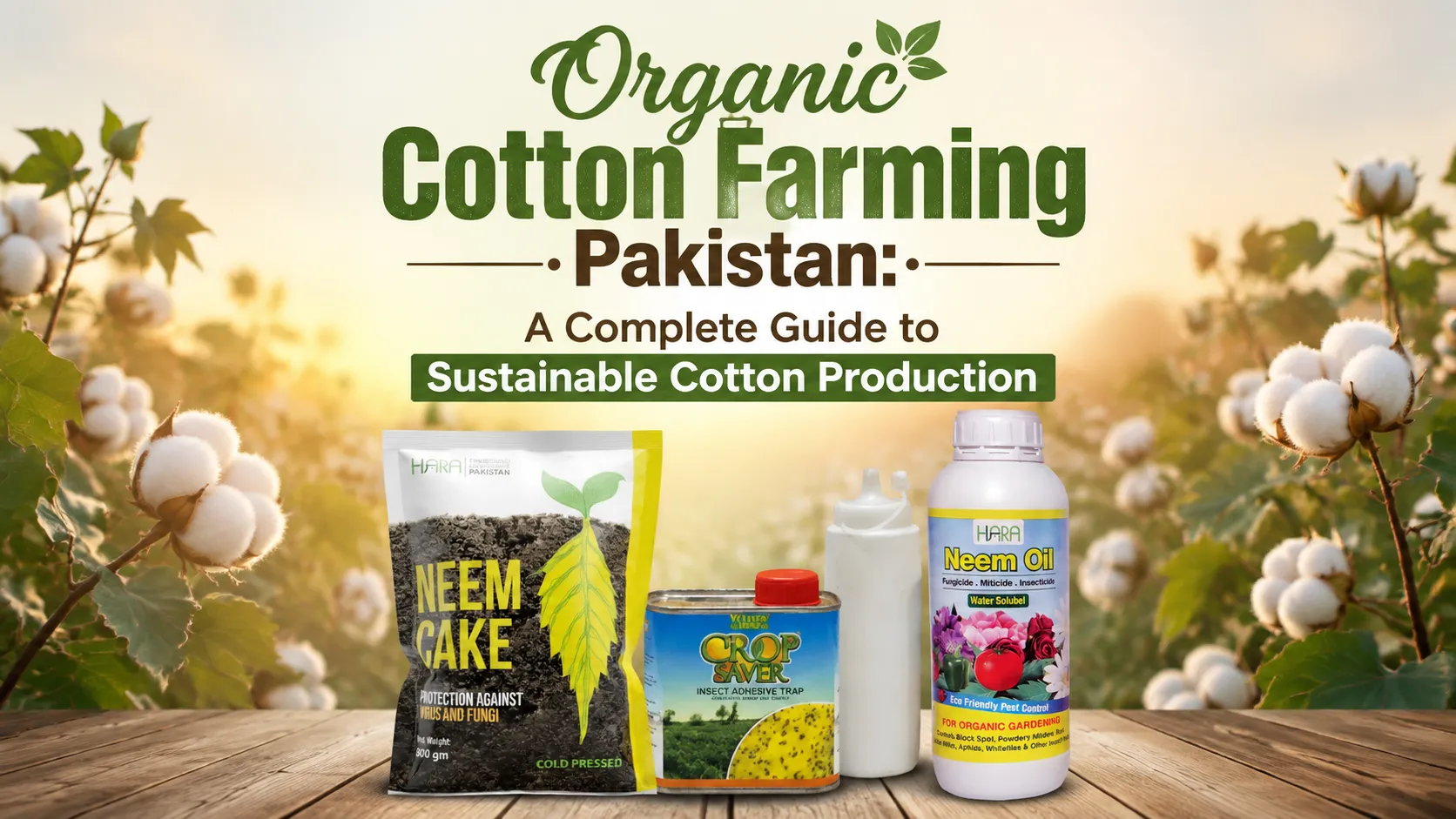
Organic Cotton Farming Pakistan: A Complete Guide to Sustainable Cotton Production
Jump To Organic Cotton Farming Pakistan: A Complete Guide to

Green Soil Plant Growth: A Complete Guide to Better Soil Health and Stronger Plant Growth
Jump To Green Soil Plant Growth: A Complete Guide to
Best Neem Oil for Plants in Pakistan – Complete Guide to Hara Neem Oil
Jump To Best Neem Oil for Plants in Pakistan –
