


Mature fruit trees are one of the most valuable assets in any orchard. Once trees reach the productive stage, proper management becomes essential to maintain consistent yields, improve fruit quality, and protect long-term tree health.
A well-planned organic management system helps trees produce more flowers, achieve better fruit set, reduce fruit drop, and develop larger, healthier fruits.
This guide explains the complete, stage-wise organic management plan for mature fruit trees three years old or older. Whether you grow mango, citrus, guava, pomegranate, apple, peach, or other fruit crops, these principles can help you maximize production while naturally maintaining soil health.
Why Proper Mature Trees Plantation Management Is Important
Many growers focus heavily on young trees but pay less attention to mature trees. Once trees start producing fruit regularly, their nutrient demand increases significantly. Poor management can lead to weak flowering, low fruit set, excessive fruit drop, poor fruit quality, and declining tree health.
A structured organic management system helps:
- Increase flowering and fruit production
- Improve fruit size, taste, and appearance
- Strengthen roots and branches
- Reduce plant stress
- Improve soil fertility naturally
- Maintain long-term orchard productivity
Healthy mature trees can remain productive for decades when managed correctly.
Understanding the Growth Cycle of Mature Fruit Trees
Every productive fruit tree passes through four major stages during the growing season:
Growth Stage | Main Objective |
Vegetative Stage | Build strong roots, shoots, and canopy |
Flowering Stage | Maximize flower production and pollination |
Fruit Development Stage | Increase fruit size and reduce fruit drop |
Pre-Harvest Stage | Improve fruit quality, sweetness, and shelf life |
Each stage requires different nutrients and management practices.
Stage 1: Vegetative Stage (Growth and Recovery Phase)
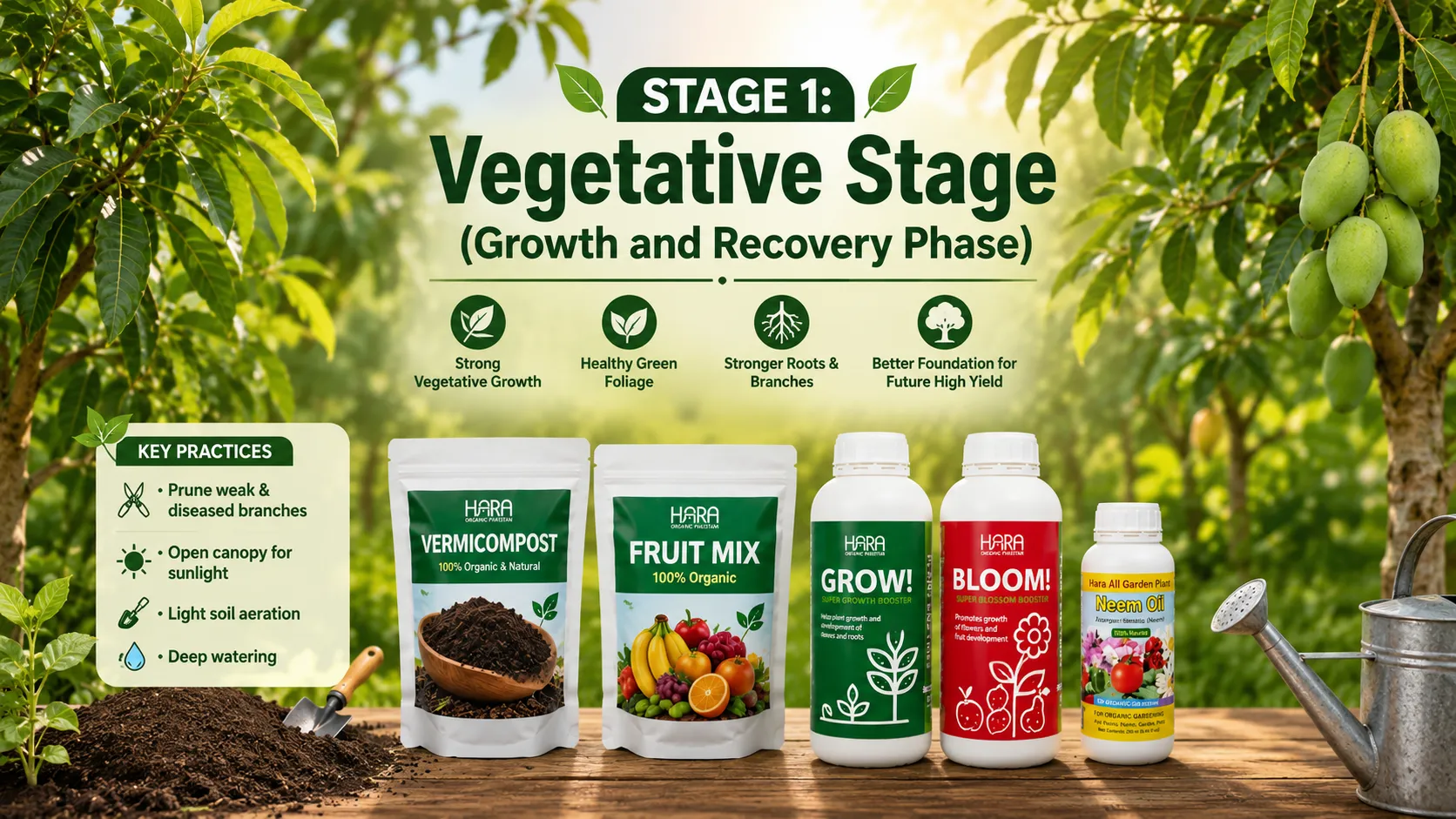
When Does This Stage Occur?
This stage usually begins after harvest, pruning, or during early spring. Depending on the region and crop, it commonly occurs between February and April. The tree focuses on producing new shoots, leaves, roots, and branches. Strong vegetative growth creates the foundation for future flowering and fruit production.
Main Objectives
During this stage, growers should focus on:
- Developing strong branches
- Encouraging healthy leaf growth
- Supporting new shoot development
- Strengthening root systems
- Building a healthy canopy
Organic Nutrition Plan
Hara Vermicompost
Apply approximately 2 to 5 kg per tree depending on tree size. Vermicompost improves soil structure, increases microbial activity, enhances water retention, and supplies essential nutrients gradually.
Hara Fruit Mix
Apply 1 to 3 kg per tree around the drip line. This organic nutrition source supports root development and encourages healthy vegetative growth.
The material should be spread evenly around the canopy area and lightly incorporated into the soil.
Foliar Nutrition
Hara Grow
Mix 10 ml in 1 liter of water. Spray every 15 to 20 days during active growth periods. This foliar application supports healthy leaf development and improves plant vigor.
Water Management
Proper irrigation is critical during vegetative growth. Deep watering should be provided away from the trunk to encourage deeper root development. Soil should remain consistently moist but never waterlogged. Excess water can reduce root oxygen and increase disease risks.
Tree Management Practices
Pruning and canopy management are essential during this phase. Remove:
- Weak branches
- Diseased branches
- Dead wood
- Crossing shoots
Opening the canopy improves sunlight penetration and air circulation, reducing disease pressure and improving future flowering potential. Light soil aeration around the root zone can also improve root activity.
Expected Results
When managed correctly, growers can expect:
- Strong vegetative growth
- Healthy green foliage
- Improved root development
- Better flowering potential for the next stage
Stage 2: Flowering Stage (Bud Formation and Blooming)
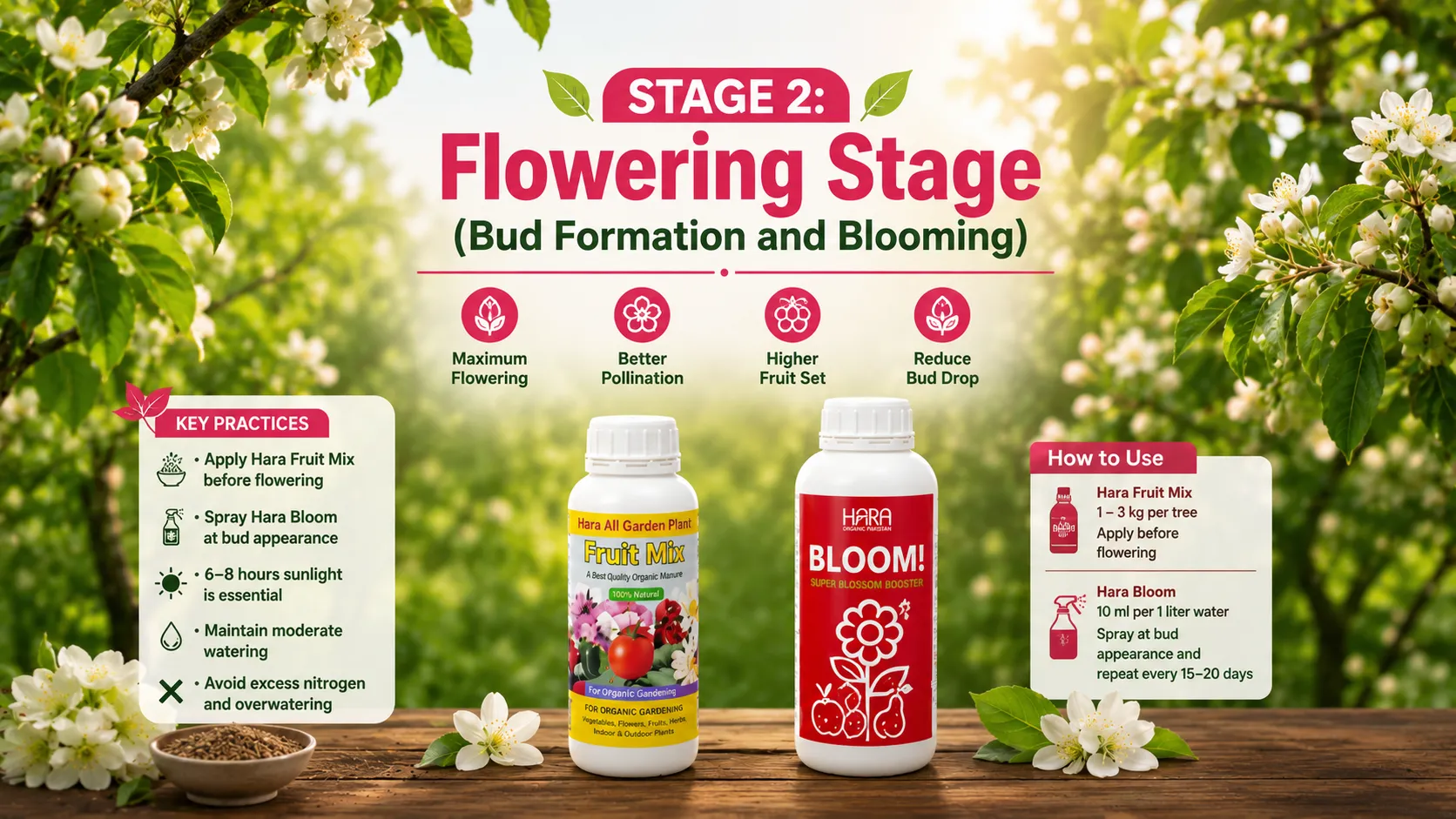
Why Flowering Management Matters
Flowering determines the yield potential of the entire season. Poor nutrition, water stress, or excessive nitrogen can reduce flower production and increase bud drop. The goal is to maximize flower retention and improve pollination success.
Main Objectives
At this stage, the focus should be on:
- Increasing flower production
- Reducing bud drop
- Supporting pollination
- Improving fruit set potential
Organic Nutrition Plan
Hara Fruit Mix
Apply 1 to 3 kg per tree before flowering begins or during the early bud formation stage. Balanced nutrition during this period helps trees develop strong flower clusters.
Foliar Spray Program
Hara Bloom
Mix 10 ml in 1 liter of water. Apply when flower buds first appear. Repeat every 15 to 20 days if required. This supports flowering performance and helps maintain healthy blooms.
Sunlight Requirements
Most fruit trees require at least 6 to 8 hours of direct sunlight daily for optimal flowering. Heavy shade often results in poor flower production and reduced fruit set. Proper canopy management can help improve sunlight penetration throughout the tree.
Irrigation During Flowering
Moderate irrigation is recommended. Trees should not experience drought stress, but excessive watering should also be avoided. Both overwatering and underwatering can cause flower and bud drop.
Important Practices to Avoid
Avoid excessive nitrogen fertilizers during flowering because they encourage leaf growth instead of flower development. Overwatering should also be avoided as it may reduce pollination success and increase flower loss.
Expected Results
Successful flowering management can lead to:
- Higher flower retention
- Better pollination
- Increased fruit set
- Improved yield potential
Stage 3: Fruit Development Stage (Fruit Growth and Sizing)
What Happens During Fruit Development?
Once pollination is successful, the tree shifts its energy toward developing fruits. During this period, nutrient and water management directly influence fruit size, quality, and retention.
Main Objectives
The goals include:
- Increasing fruit size
- Reducing fruit drop
- Improving fruit quality
- Supporting healthy fruit development
Organic Nutrition Plan
Hara Fruit Mix
Apply approximately 0.5 to 2 kg per tree depending on tree size and crop requirements. This application helps sustain fruit growth throughout the season.
Foliar Spray Program
Hara Bloom
Mix 10 ml per liter of water. Continue spraying every 15 to 20 days during fruit development if needed. Regular foliar feeding supports healthy fruit growth and quality.
Irrigation Management
Fruit development requires consistent moisture. Deep watering should be provided weekly or according to local climate conditions. Sudden fluctuations between dry and wet conditions often increase fruit drop and reduce fruit quality.
Canopy Management
Remove unnecessary shoots and excessive vegetative growth. This allows more sunlight to reach developing fruits and improves air circulation. Good canopy management also reduces disease pressure and supports uniform fruit growth.
Expected Results
Proper fruit development management can produce:
- Larger fruits
- Better fruit quality
- Reduced fruit drop
- Higher market value
Stage 4: Pre-Harvest Stage (Fruit Quality and Maturity)
Why Pre-Harvest Management Is Important
The final weeks before harvest have a major influence on fruit color, sweetness, shelf life, and market quality. Small adjustments during this stage can significantly improve the final harvest.
Main Objectives
Growers should focus on:
- Improving fruit color
- Increasing sweetness
- Enhancing shelf life
- Maximizing fruit quality
Organic Nutrition Plan
Hara Fruit Mix
Apply a light dose of approximately 0.5 to 1 kg per tree. This supports final fruit maturation without stimulating excessive growth.
Optional Potassium Source
A small amount of wood ash may be used to provide additional potassium if required. Potassium plays an important role in fruit quality and sweetness.
Foliar Spray Management
Hara Bloom
Mix 10 ml in 1 liter of water. Use only when necessary. Avoid excessive spraying close to harvest time.
Irrigation Management
Maintain moderate and consistent watering. Sudden water stress can affect fruit quality and may increase cracking or premature fruit drop in some crops.
Organic Pest Control
Hara Neem Oil
Mix 5 ml per liter of water. Apply only if insect activity is observed. Neem oil provides an effective organic solution while helping protect beneficial organisms.
Expected Results
Good pre-harvest management can result in:
- Better fruit color
- Improved sweetness
- Longer shelf life
- Higher-quality harvests
Common Mistakes in Mature Trees Plantation
Many production problems occur because of simple management mistakes. The most common issues include:
Mistake | Impact |
Excess watering | Root stress and disease problems |
Lack of pruning | Poor sunlight penetration and lower yield |
Excess nitrogen during flowering | Reduced flowering and fruit set |
Ignoring fruit thinning | Small fruits and lower quality |
Dense canopy growth | Reduced air circulation and disease risk |
Avoiding these mistakes can significantly improve orchard performance.
How Organic Management Supports Long-Term Tree Health
Organic orchard management does more than increase seasonal yields. It also improves soil biology, strengthens root systems, increases beneficial microbial activity, and enhances overall tree resilience.
Healthy soils produce healthier trees, and healthier trees produce better fruit year after year. This sustainable approach helps reduce dependency on synthetic inputs while improving orchard productivity over the long term.
Conclusion
A successful Mature Trees Plantation management system requires proper nutrition, irrigation, pruning, sunlight management, and stage-specific organic care throughout the growing season.
By following a structured program from vegetative growth through pre-harvest management, growers can achieve stronger flowering, better fruit set, larger fruits, improved quality, and healthier trees.
Using organic solutions such as Hara Vermicompost, Hara Fruit Mix, Hara Grow, Hara Bloom, and Hara Neem Oil at the right stage helps maintain soil fertility and supports sustainable fruit production. With consistent care and proper management, mature fruit trees can deliver high yields and excellent fruit quality for many years.
For expert guidance and organic farming solutions, contact Hara Organic Pakistan.



Chemical Free Farming Pakistan: A Practical Guide for Healthier Crops and Sustainable Agriculture
Jump To Chemical Free Farming Pakistan: A Practical Guide for

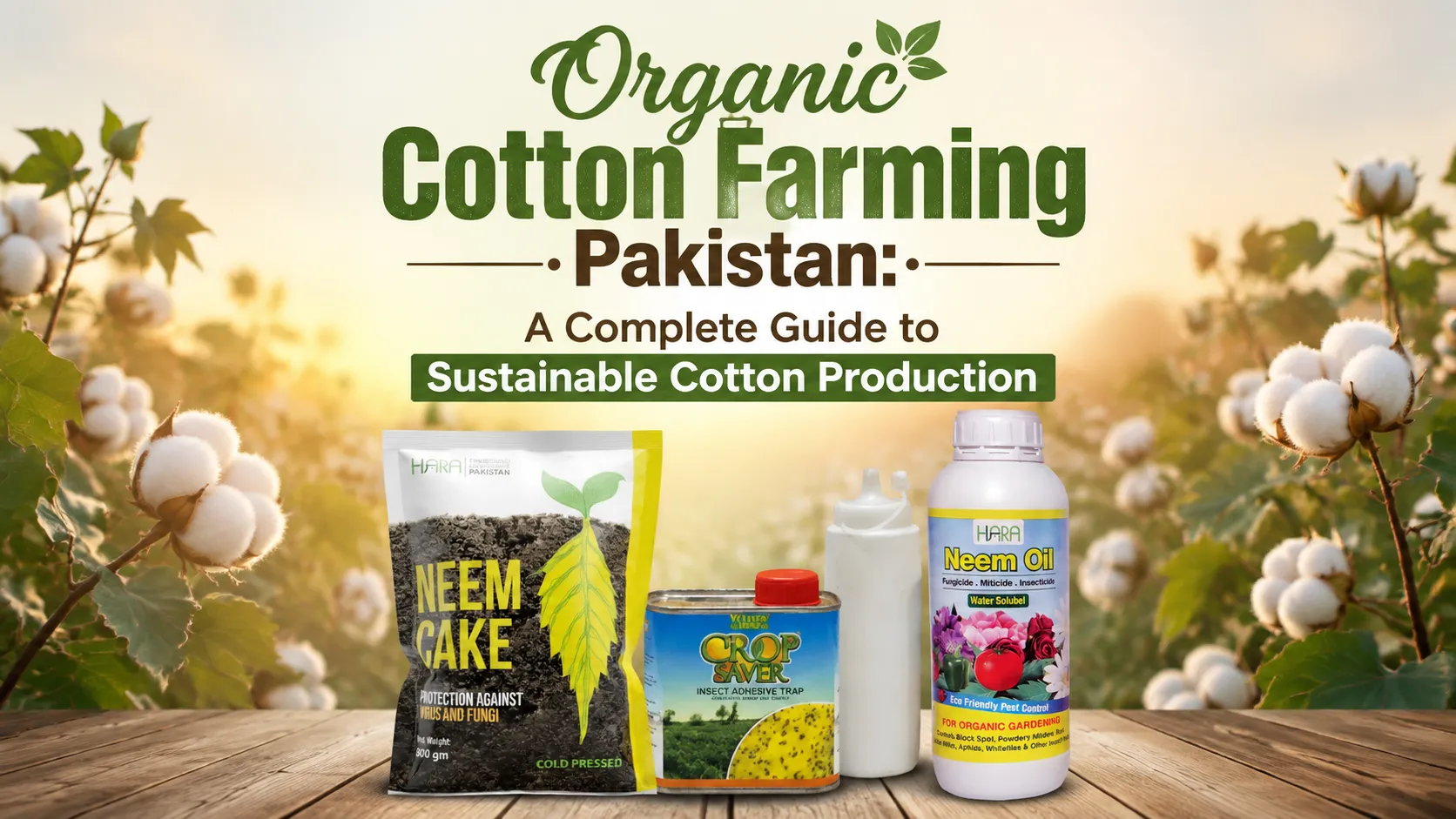
Organic Cotton Farming Pakistan: A Complete Guide to Sustainable Cotton Production
Jump To Organic Cotton Farming Pakistan: A Complete Guide to
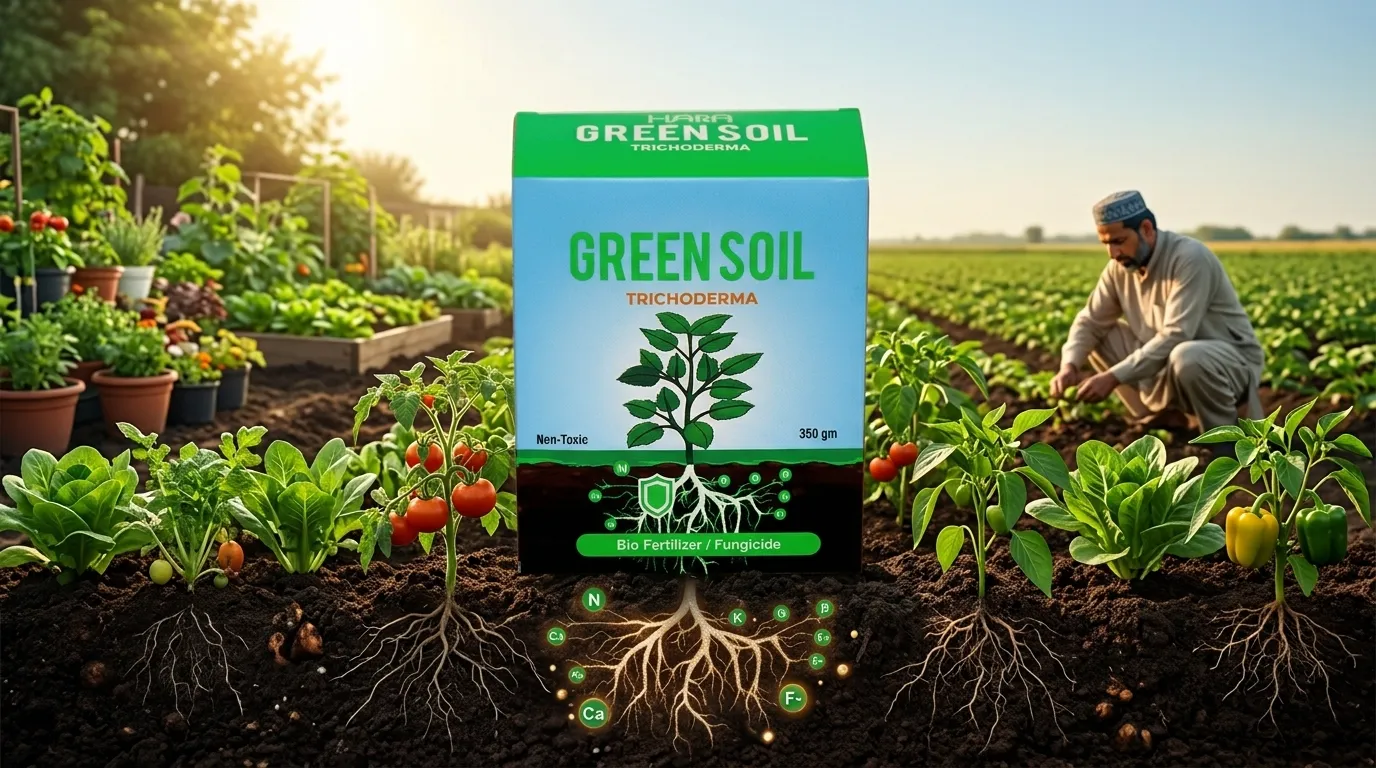
Green Soil Plant Growth: A Complete Guide to Better Soil Health and Stronger Plant Growth
Jump To Green Soil Plant Growth: A Complete Guide to

Best Neem Oil for Plants in Pakistan – Complete Guide to Hara Neem Oil
Jump To Best Neem Oil for Plants in Pakistan –
