


Healthy soil is essential for productive agriculture, and many farmers are turning to Organic Vermicompost Pakistan as a natural way to improve soil fertility.
Made through the decomposition of organic matter by earthworms, vermicompost is a nutrient-rich organic fertilizer that supports healthy plant growth, improves soil structure, and promotes sustainable farming.
As organic farming gains popularity in Pakistan, vermicompost is increasingly used by farmers, gardeners, and commercial growers to enhance crop performance while protecting soil health. This guide explains what organic vermicompost is, how it works, its key benefits, and the best ways to use it for healthier crops and long-term soil productivity.
What Is Organic Vermicompost?
Organic vermicompost is a natural fertilizer created when selected species of earthworms break down organic materials such as crop residues, farmyard manure, vegetable waste, and other biodegradable materials.
During this process, the worms convert organic waste into fine, dark, nutrient-rich castings that contain essential plant nutrients along with beneficial microorganisms.
Unlike ordinary compost, vermicompost undergoes biological processing inside the digestive system of earthworms. This natural transformation produces a more stable organic fertilizer that is easier for plants to absorb and use throughout their growth cycle.
High-quality vermicompost typically contains a balanced combination of essential nutrients, organic carbon, humic substances, enzymes, and beneficial microbes that work together to improve soil productivity naturally.
For farmers in Pakistan, vermicompost offers an environmentally responsible alternative that supports healthier crops while reducing dependence on excessive chemical fertilizer applications.
How Is Organic Vermicompost Produced?
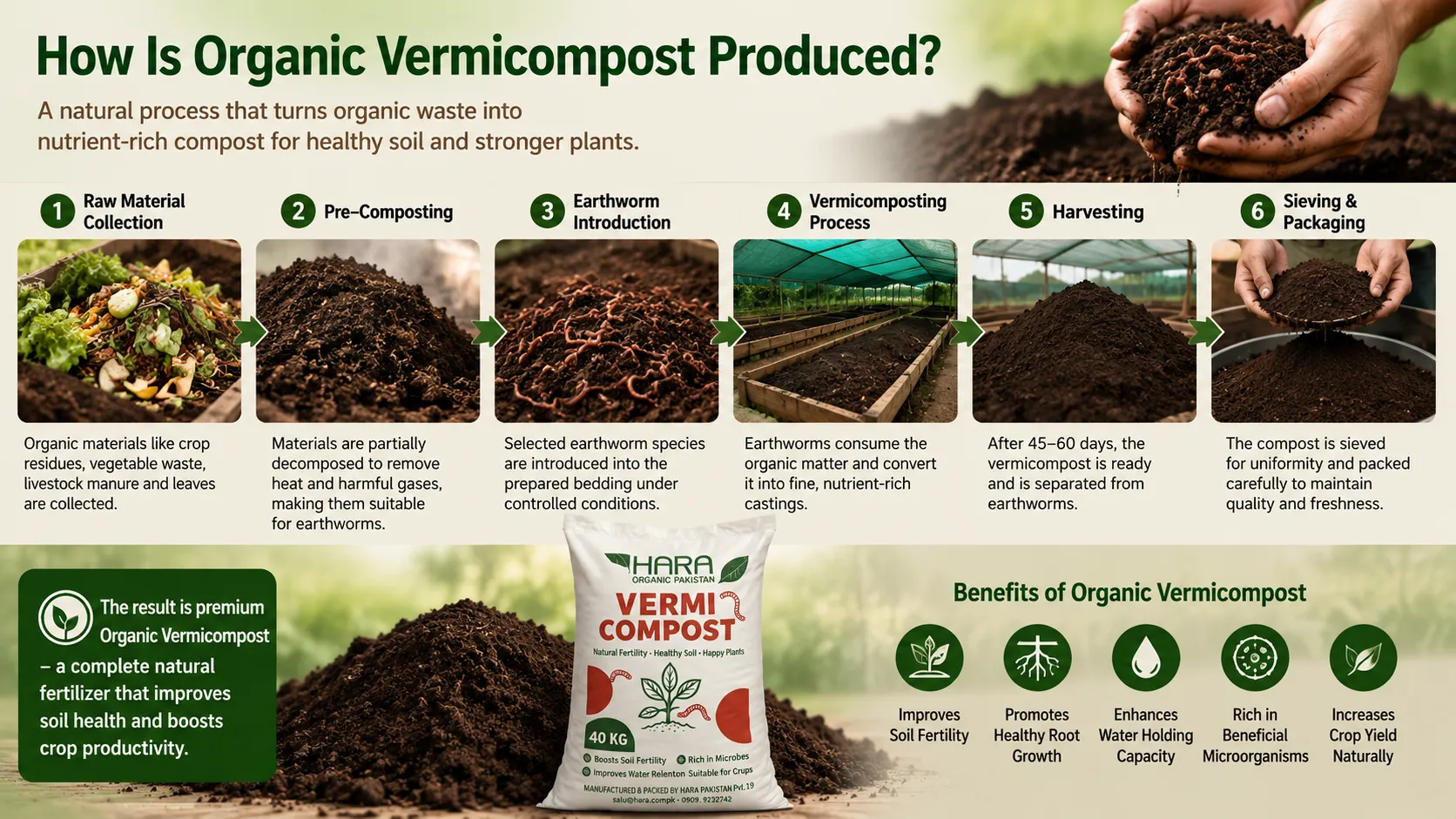
The production of vermicompost combines biological decomposition with controlled composting techniques. Organic materials are carefully prepared before earthworms begin converting them into nutrient-rich compost.
The process usually starts by collecting biodegradable agricultural waste, livestock manure, crop residues, fruit and vegetable scraps, and other organic materials. These materials are partially decomposed before suitable composting earthworms are introduced under controlled moisture, temperature, and aeration conditions.
Over several weeks, the earthworms continuously consume the organic material and release nutrient-rich castings. Once the compost reaches maturity, it is separated from the worms, screened for consistency, and prepared for agricultural use.
Proper production practices are important because they help maintain nutrient quality, microbial diversity, and product safety. Reliable manufacturers also ensure that the final product is free from harmful contaminants and suitable for different cropping systems.
Companies such as Hara Organic Pakistan focus on producing quality organic inputs that support sustainable farming by following controlled composting methods and maintaining consistent product quality for farmers across Pakistan.
Why Is Organic Vermicompost Becoming More Popular in Pakistan?
Agriculture in Pakistan depends heavily on healthy soils, yet continuous cultivation, intensive fertilizer use, and declining organic matter have reduced soil fertility in many farming regions. As a result, growers are searching for long-term solutions that improve both crop productivity and soil health.
Organic vermicompost has become increasingly popular because it addresses several agricultural challenges at the same time. Instead of supplying nutrients alone, it helps restore soil biology and improves the overall growing environment.
Several factors are contributing to its growing adoption across Pakistan:
- Farmers are placing greater emphasis on improving long-term soil fertility.
- Organic farming practices continue to gain popularity among commercial growers and home gardeners.
- Better soil moisture retention is becoming increasingly valuable in areas facing water shortages.
- Consumers are showing greater interest in food produced through environmentally responsible farming methods.
- Sustainable nutrient management helps reduce excessive dependence on synthetic fertilizers.
As awareness increases, vermicompost is now being used in vegetable farming, orchards, nurseries, landscaping projects, kitchen gardening, greenhouse production, and field crop cultivation throughout Pakistan.
How Does Organic Vermicompost Improve Soil Health?
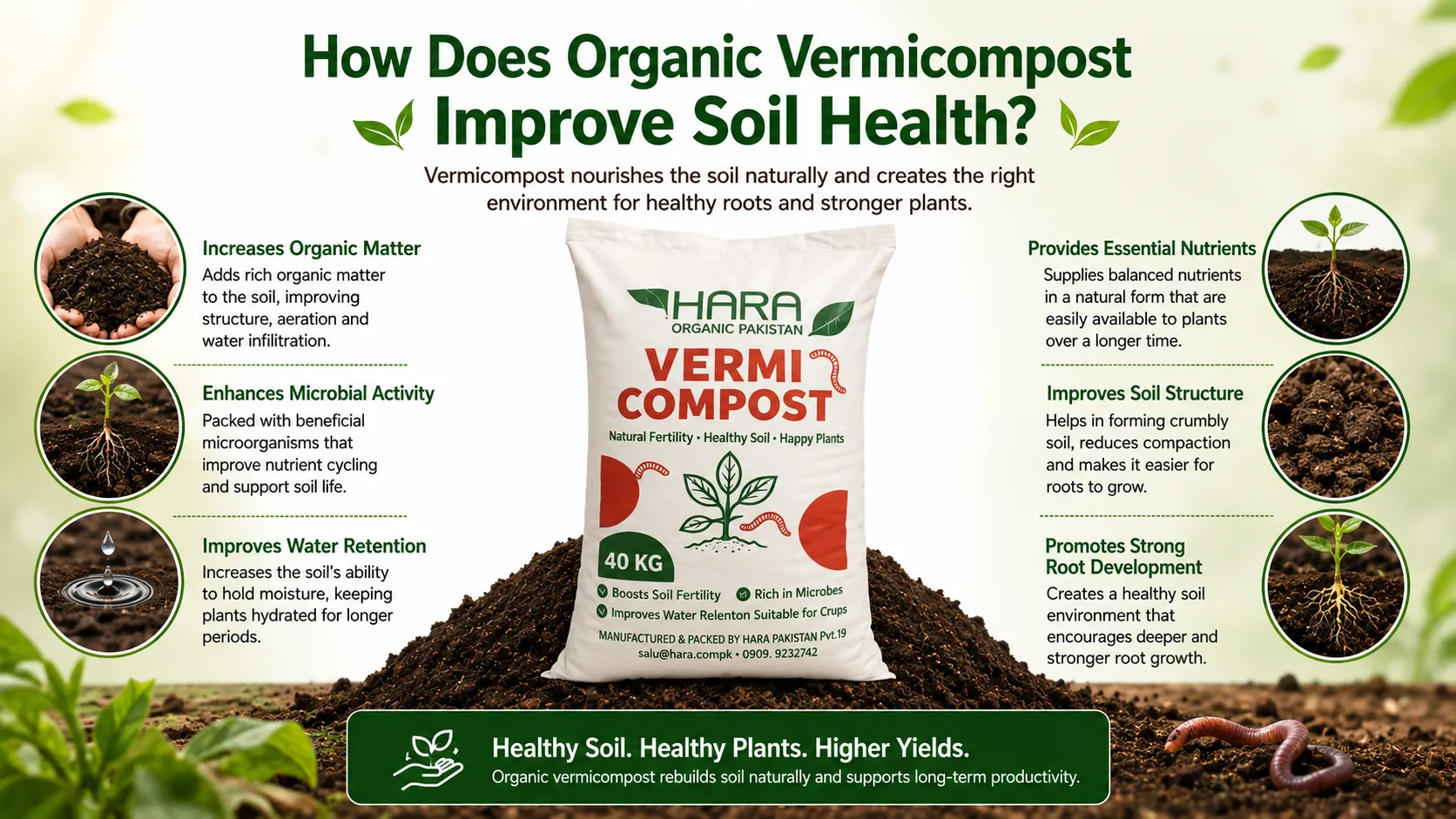
Healthy soil is much more than a source of nutrients. It is a living ecosystem where beneficial microorganisms, organic matter, moisture, and minerals work together to support plant growth.
Organic vermicompost improves this ecosystem in several important ways.
First, it increases organic matter within the soil. Organic matter improves soil structure, allowing roots to grow more freely while enhancing water infiltration and reducing compaction.
Second, vermicompost encourages beneficial microbial activity. These microorganisms assist in nutrient cycling, making essential nutrients more available for plant uptake throughout the growing season.
Third, it enhances moisture retention. Soils enriched with organic matter can hold water more efficiently, helping crops perform better during periods of limited rainfall or irrigation.
Finally, vermicompost contributes to improved nutrient availability by slowly releasing essential plant nutrients over time. This gradual release reduces nutrient losses while providing plants with a more consistent nutrient supply.
These combined improvements create healthier soils that continue supporting productive agriculture year after year rather than only providing short-term fertility.
Organic Vermicompost vs Conventional Compost
Although both products improve soil health, they differ in their production methods and overall performance.
Feature | Organic Vermicompost | Conventional Compost |
Production Process | Processed by earthworms and microorganisms | Natural decomposition by microorganisms |
Nutrient Availability | Higher and more readily available | Moderate nutrient availability |
Beneficial Microbes | Rich microbial population | Moderate microbial activity |
Soil Structure Improvement | Excellent | Good |
Moisture Retention | High | Moderate |
Plant Growth Support | Faster and more consistent | Gradual improvement |
Suitable Applications | Field crops, vegetables, fruits, nurseries, gardens | General soil conditioning |
While both compost types contribute to sustainable agriculture, high-quality vermicompost generally provides a more concentrated source of nutrients and beneficial biological activity, making it a preferred choice for growers seeking improved crop performance.
Why Do Farmers Choose Organic Vermicompost Instead of Relying Only on Chemical Fertilizers?
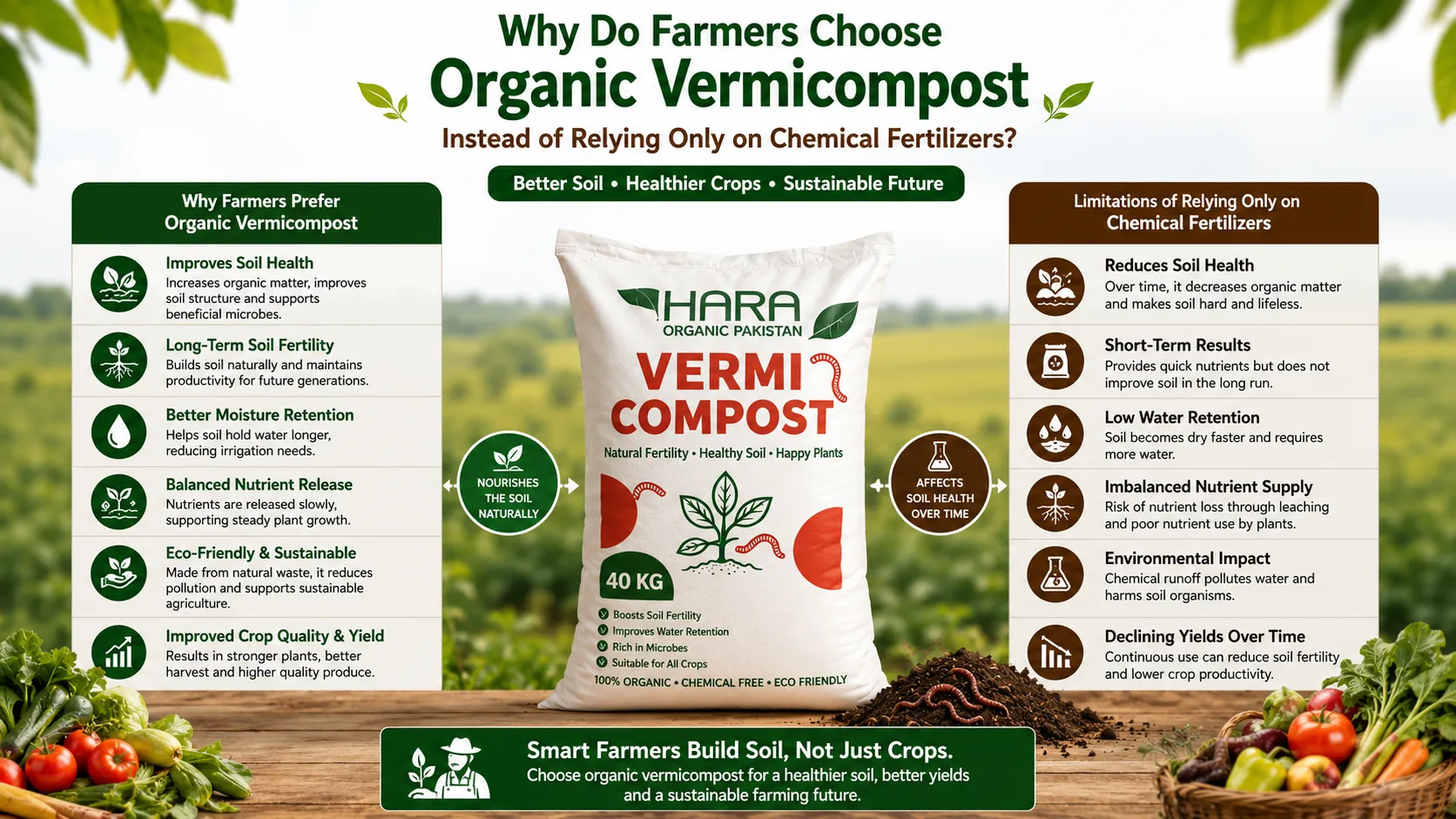
Chemical fertilizers remain an important part of modern agriculture, but they primarily supply nutrients without improving the biological condition of the soil. Over time, excessive dependence on synthetic fertilizers may contribute to declining organic matter if not balanced with organic inputs.
Organic vermicompost complements good nutrient management by improving soil health alongside nutrient availability. Instead of replacing all fertilizers in every farming system, many growers integrate vermicompost into their nutrient management programs to build healthier soils and support more sustainable crop production.
This balanced approach allows farmers to improve long-term soil productivity while maintaining consistent crop performance.
How Should Organic Vermicompost Be Used for the Best Results?
Using Organic Vermicompost Pakistan correctly helps plants absorb nutrients more efficiently while improving soil health over time. Although vermicompost is easy to apply, the right method depends on the crop, soil condition, and stage of plant growth.
Unlike fast-acting synthetic fertilizers, vermicompost releases nutrients gradually. This slow-release process supports continuous plant development and reduces the risk of nutrient loss through leaching. It also encourages healthy root growth, making plants more resilient to environmental stress.
For most crops, vermicompost is mixed into the top layer of soil before planting. It can also be applied around established plants as a top dressing or blended with potting media for nurseries and home gardens. Because it improves soil structure and microbial activity, its benefits continue even after nutrients have been utilized.
Which Crops Benefit the Most from Organic Vermicompost?
One of the greatest advantages of vermicompost is its versatility. It can be used across a wide range of agricultural and horticultural crops grown in Pakistan.
Vegetable growers often use vermicompost to support vigorous plant growth, stronger root systems, and improved flowering. Tomato, chili, cucumber, onion, potato, spinach, cabbage, cauliflower, and okra are among the crops that respond well to healthy organic soils enriched with vermicompost.
Fruit orchards also benefit from regular applications. Mango, citrus, guava, banana, pomegranate, papaya, and grapes require fertile soil with balanced nutrition, making vermicompost an excellent addition to orchard management programs.
Field crops such as wheat, maize, rice, cotton, and sugarcane can also benefit when vermicompost is incorporated into an integrated soil fertility strategy. While nutrient requirements vary among crops, improving soil organic matter supports stronger plant establishment and better nutrient utilization.
Beyond commercial farming, vermicompost is widely used in flower production, landscaping, nurseries, kitchen gardening, lawns, and ornamental plants because it promotes healthy foliage, improved flowering, and stronger root development.
How Much Organic Vermicompost Should Be Applied?
The ideal application rate depends on several factors, including crop type, soil fertility, organic matter content, and farming practices. There is no single recommendation suitable for every field.
Instead of applying excessive quantities, farmers should evaluate their soil condition and crop requirements before deciding on application rates. Soil testing provides the most reliable information for developing an effective nutrient management plan.
For commercial farming, combining vermicompost with proper irrigation, crop rotation, and balanced fertilization generally delivers better long-term results than relying on any single input alone.
If growers are uncertain about application rates, consulting agricultural experts or product-specific recommendations is always advisable.
Organic Vermicompost vs Chemical Fertilizers
Organic fertilizers and chemical fertilizers both play important roles in agriculture, but they work differently. Understanding these differences helps farmers choose the most suitable nutrient management strategy for their fields.
Feature | Organic Vermicompost | Chemical Fertilizers |
Nutrient Release | Slow and steady | Fast release |
Soil Organic Matter | Increases naturally | Does not increase organic matter |
Beneficial Microorganisms | Supports microbial life | Limited effect on soil biology |
Soil Structure | Improves texture and aeration | Minimal improvement |
Moisture Retention | Enhances water-holding capacity | Little direct impact |
Long-Term Soil Health | Supports sustainable fertility | Requires balanced management to maintain soil quality |
Environmental Impact | Produced from recycled organic materials | Depends on application practices |
Rather than viewing one option as a complete replacement for the other, many agricultural specialists recommend integrating organic matter into nutrient management programs. This balanced approach helps maintain productive soils while supporting efficient crop nutrition.
How Can You Identify High-Quality Organic Vermicompost?
Not all vermicompost products are manufactured under the same quality standards. Choosing a reliable product is essential because nutrient content and consistency directly influence field performance.
A high-quality organic vermicompost should have a dark brown to black color and a fine, crumbly texture that is easy to spread. It should feel moist without being excessively wet and should have a natural earthy smell rather than an unpleasant odor.
Quality products are typically free from plastic, stones, undecomposed organic waste, weed seeds, and other contaminants. Properly matured vermicompost also maintains stable biological activity, making it safer for crops and easier for plants to utilize.
When purchasing vermicompost, it is beneficial to choose manufacturers that emphasize quality control, proper composting techniques, and consistent production standards.
Hara Organic Pakistan produces organic agricultural inputs with a focus on quality, sustainability, and responsible farming practices, helping growers improve soil productivity through reliable organic solutions.
Can Organic Vermicompost Support Sustainable Agriculture?
Sustainable agriculture aims to produce healthy crops while protecting natural resources for future generations. Organic vermicompost aligns well with this objective because it improves soil rather than simply supplying nutrients.
By recycling biodegradable organic materials into valuable fertilizer, vermicompost reduces agricultural waste while returning organic matter to the soil. This natural cycle contributes to healthier ecosystems and promotes long-term soil productivity.
Improved soil structure also helps reduce erosion, increases water infiltration, and enhances drought resilience. As climate variability continues to affect agriculture in Pakistan, practices that improve soil health are becoming increasingly important.
Many growers are therefore incorporating vermicompost into broader soil management programs that include crop rotation, residue management, efficient irrigation, and balanced fertilization.
What Common Mistakes Should Farmers Avoid?
Even though vermicompost is easy to use, certain mistakes can reduce its effectiveness.
Some farmers apply vermicompost without considering existing soil conditions. Others purchase products solely based on price without evaluating quality or maturity. In some cases, poor storage practices expose the material to excessive moisture or direct sunlight, reducing its biological activity over time.
Another common mistake is expecting immediate results similar to those of highly soluble chemical fertilizers. Vermicompost works by gradually improving soil biology and nutrient availability, making its long-term benefits more significant than short-term visual changes.
Understanding these differences allows growers to develop realistic expectations and achieve better results over multiple growing seasons.
Best Practices for Using Organic Vermicompost
To maximize the benefits of Organic Vermicompost Pakistan, consider these practical recommendations:
- Apply vermicompost to well-prepared soil before planting whenever possible.
- Store the product in a cool, dry, and shaded location to preserve its quality.
- Combine vermicompost with balanced irrigation and good crop management practices.
- Use quality products that are fully matured and free from contaminants.
- Monitor soil health regularly and adjust nutrient management based on crop requirements.
- Include organic matter as part of a long-term soil improvement strategy rather than relying on short-term solutions alone.
These practices help farmers build healthier soils, improve nutrient efficiency, and support sustainable agricultural productivity over time.
Frequently Asked Questions About Organic Vermicompost Pakistan
Is organic vermicompost better than ordinary compost?
Yes. Organic vermicompost generally contains more plant-available nutrients and beneficial microorganisms, making it more effective for improving soil fertility and plant growth.
Can organic vermicompost replace chemical fertilizers completely?
Not always. It works best as part of an integrated nutrient management plan based on crop needs and soil conditions.
Is organic vermicompost suitable for all crops?
Yes. It is suitable for vegetables, fruits, field crops, flowers, nurseries, home gardens, and ornamental plants.
How often should vermicompost be applied?
Application depends on the crop and soil conditions. It is commonly applied before planting and during important growth stages.
Does vermicompost improve soil over time?
Yes. Regular use increases organic matter, improves soil structure, enhances moisture retention, and supports beneficial microbial activity.
Why Is Soil Health the Future of Agriculture in Pakistan?
Healthy soil is essential for sustainable farming. It improves nutrient availability, supports stronger root growth, and helps crops use water more efficiently. As Pakistan faces declining soil fertility and climate challenges, organic inputs like vermicompost are becoming increasingly important for maintaining long-term agricultural productivity.
Why Choose a Reliable Organic Vermicompost Supplier?
The quality of vermicompost directly affects crop performance and soil improvement. Choosing a trusted supplier ensures you receive a well-processed, nutrient-rich product that delivers consistent results.
Hara Organic Pakistan provides high-quality organic vermicompost produced with a strong focus on quality, sustainability, and soil health. Its organic solutions help farmers, commercial growers, and home gardeners improve soil fertility and support healthier crop growth.
Conclusion
Organic Vermicompost Pakistan is an effective way to improve soil fertility, strengthen plant growth, and support sustainable agriculture. By increasing organic matter, enhancing microbial activity, and improving soil structure, it helps create healthier growing conditions for a wide range of crops.
For farmers and gardeners looking to build long-term soil productivity, choosing quality organic inputs is a smart investment. Hara Organic Pakistan is committed to providing reliable organic vermicompost that helps improve soil health and supports sustainable farming across Pakistan.
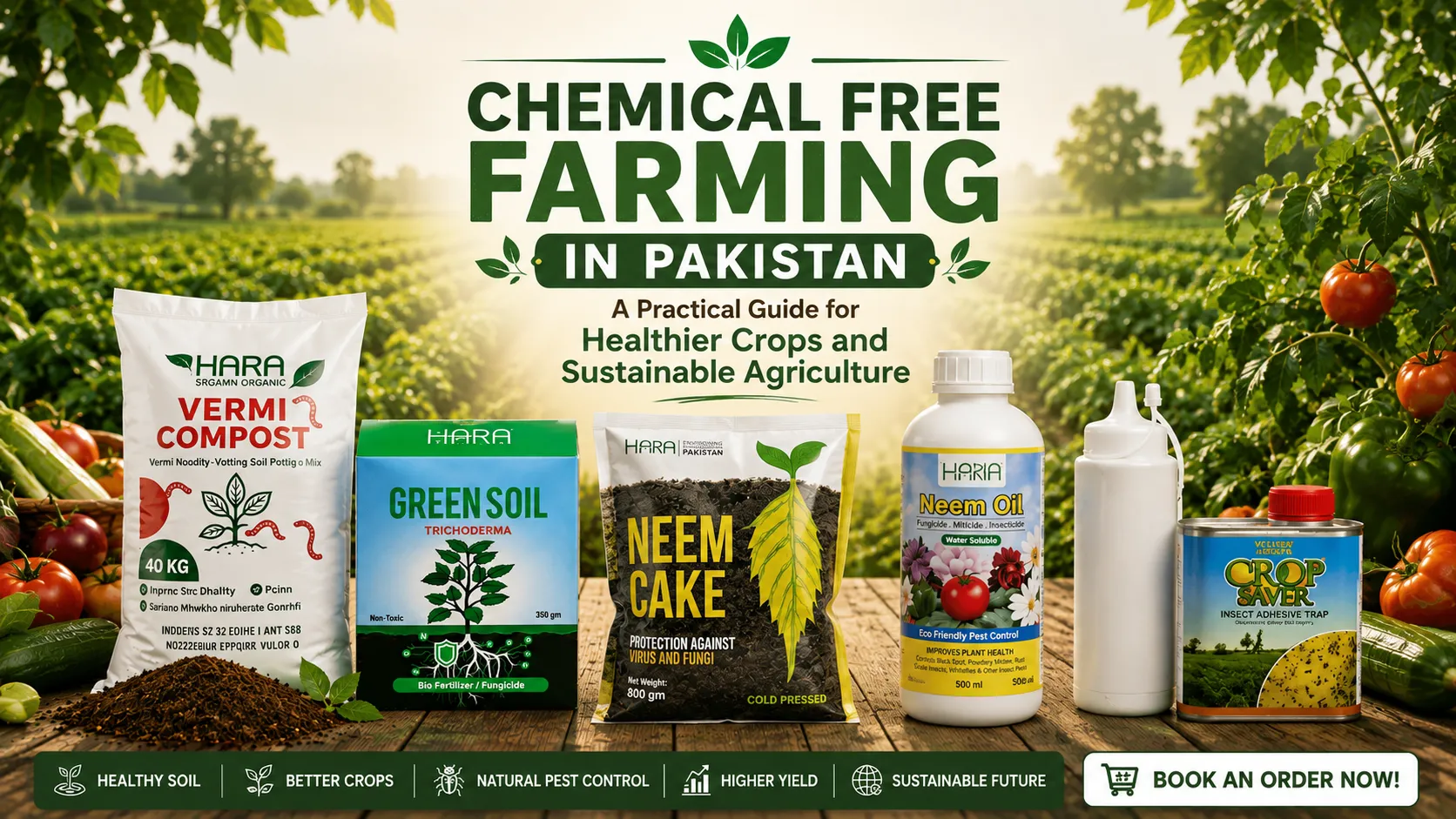
Chemical Free Farming Pakistan: A Practical Guide for Healthier Crops and Sustainable Agriculture
Jump To Chemical Free Farming Pakistan: A Practical Guide for
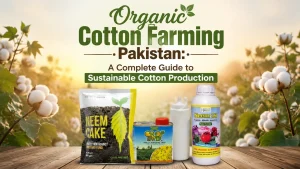
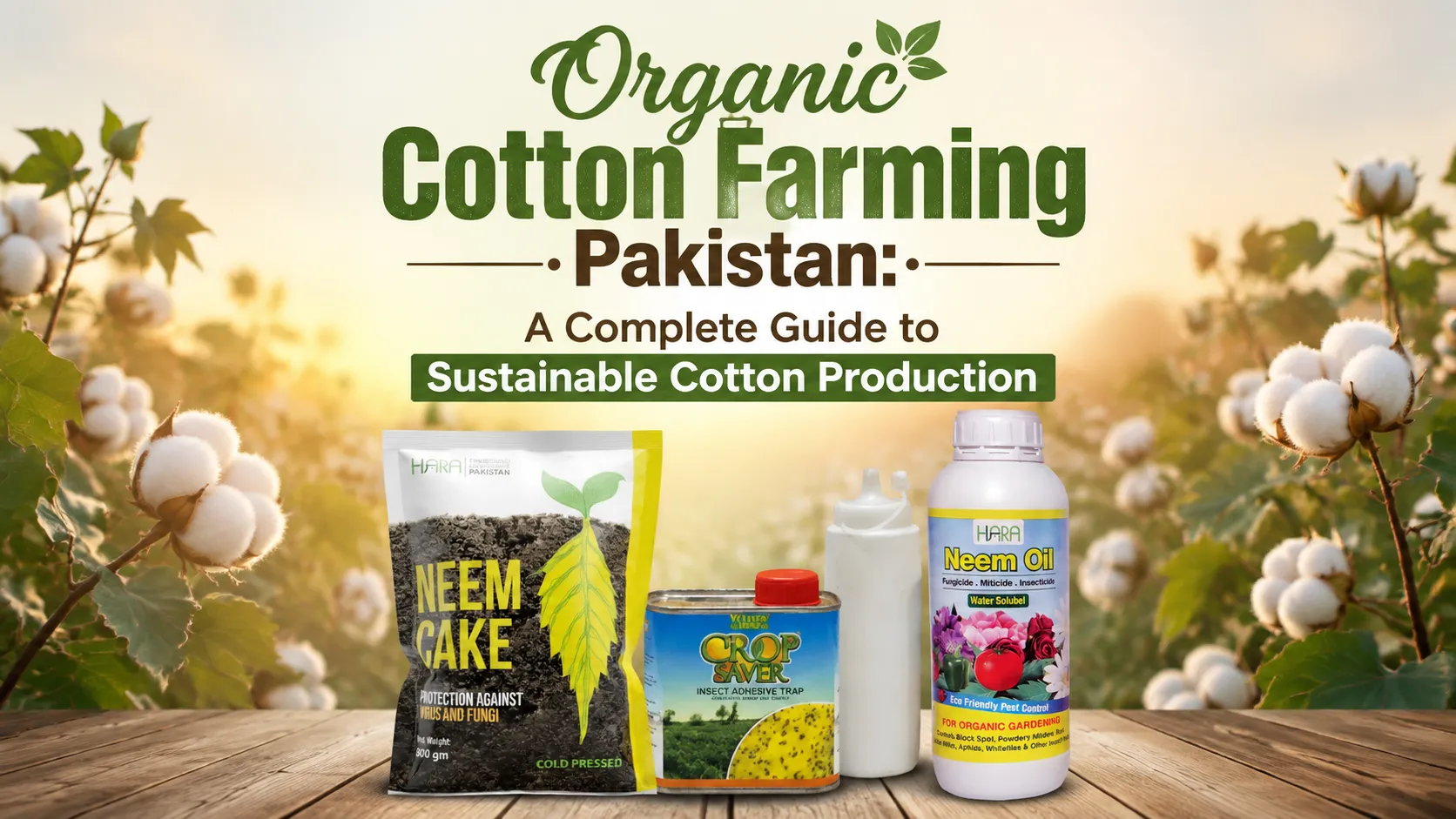
Organic Cotton Farming Pakistan: A Complete Guide to Sustainable Cotton Production
Jump To Organic Cotton Farming Pakistan: A Complete Guide to
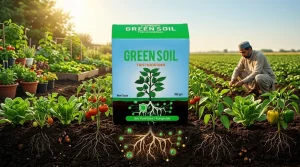
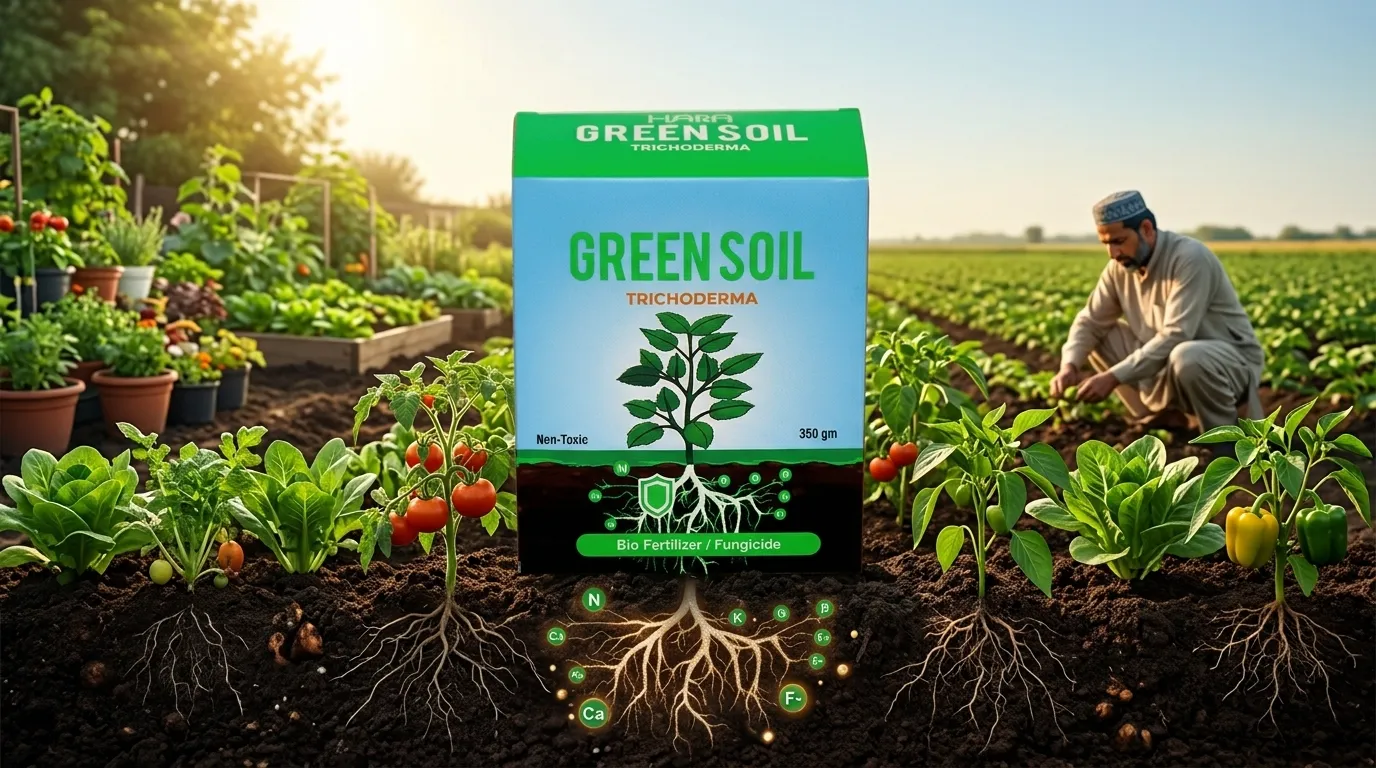
Green Soil Plant Growth: A Complete Guide to Better Soil Health and Stronger Plant Growth
Jump To Green Soil Plant Growth: A Complete Guide to
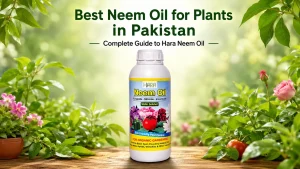
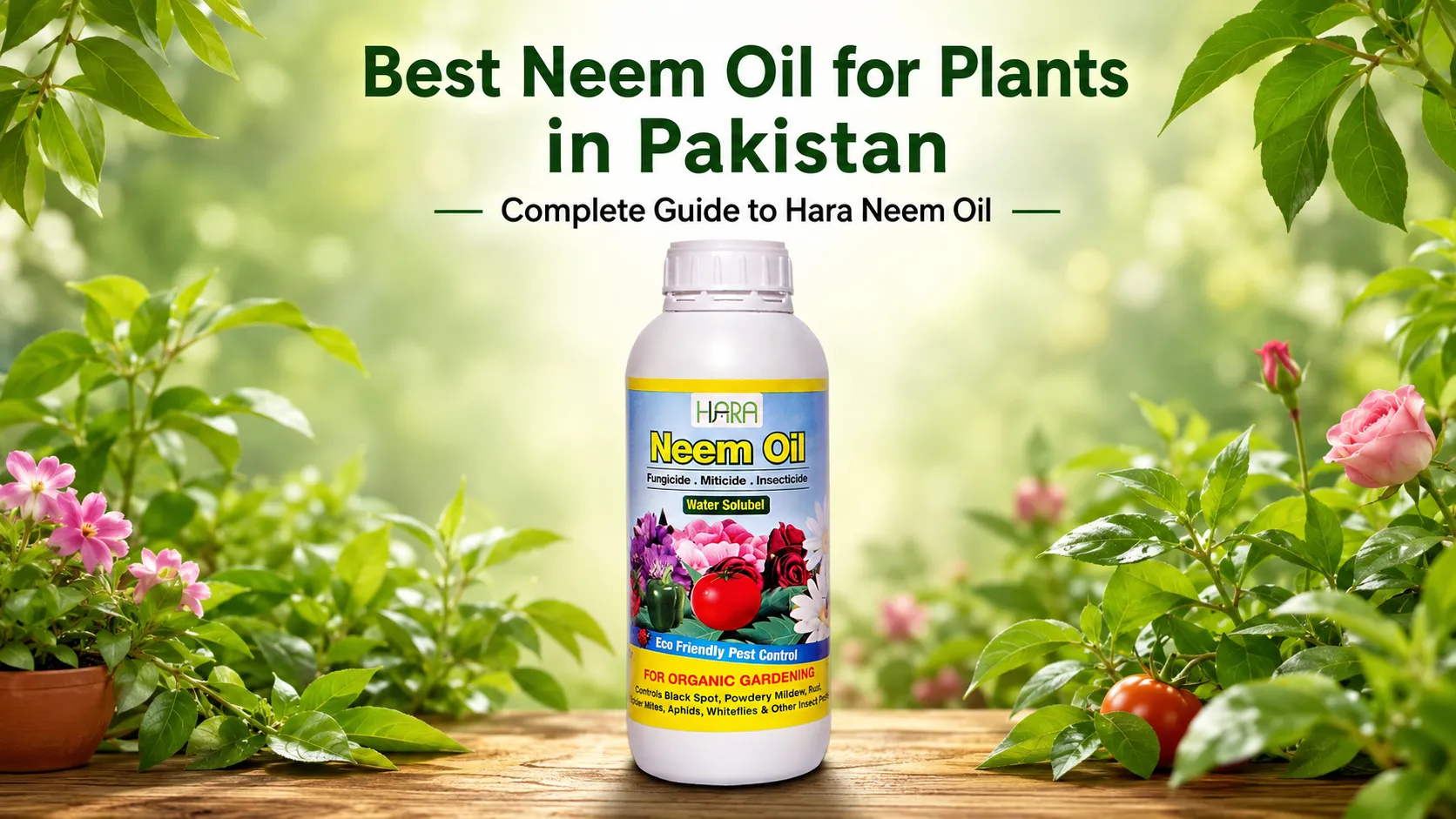
Best Neem Oil for Plants in Pakistan – Complete Guide to Hara Neem Oil
Jump To Best Neem Oil for Plants in Pakistan –
