


Modern agriculture faces major challenges from pests, insects, and plant diseases. Conventional farming relies heavily on chemical pesticides and synthetic fertilizers to manage these problems. However, excessive chemical usage damages soil health, beneficial organisms, the environment, and human health over time.
Organic farming is a sustainable agricultural system that focuses on ecological balance, healthy soil biology, strong plant immunity, and natural pest management techniques.
What is Ecological Balance in Organic Farming?
Ecological balance means maintaining harmony between:
- Soil microorganisms
- Beneficial fungi and bacteria
- Earthworms
- Beneficial insects
- Birds and pollinators
- Plants
- Water and the environment
In a balanced ecosystem, harmful pests and diseases are naturally controlled through biological interactions.
Organic farming does not aim to eliminate insects. Instead, it focuses on maintaining a natural balance where harmful pests remain below damaging levels.
How Balanced Nutrition Reduces Pest and Disease Pressure
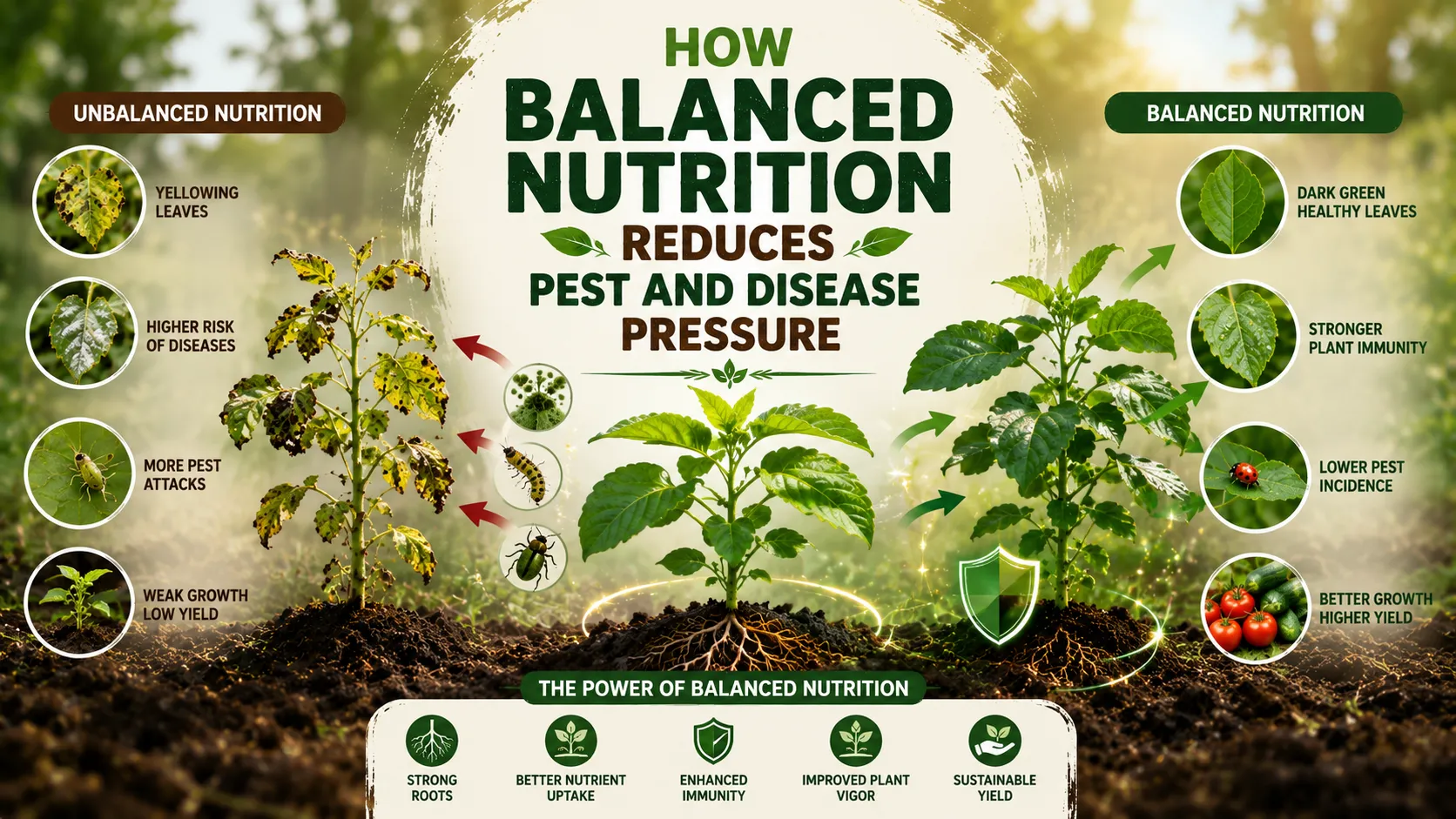
In organic farming, balanced nutrition strengthens plant immunity and resilience.
When plants receive:
- Balanced macro and micronutrients
- Healthy microbial support
- Proper root development
- Natural organic nutrition
They become naturally more resistant to insects and diseases.
Field observations and organic farming studies indicate:
- Pest pressure can be reduced by approximately 30%–60%
- Soil-borne diseases can be reduced by 40%–70%
- Plant recovery becomes faster
- Disease resistance improves significantly
Healthy plants naturally develop stronger defense systems against pests and pathogens.
What is the Soil Food Web?
Soil is not just dirt; it is a living ecosystem.
The soil food web includes:
- Bacteria
- Fungi
- Protozoa
- Nematodes
- Arthropods
- Earthworms
These organisms work together to decompose organic matter, cycle nutrients, improve soil fertility, and support plant health.
Importance of the Soil Food Web in Pest Management
A healthy soil food web:
- Improves plant immunity
- Suppresses harmful pathogens
- Reduces root diseases
- Enhances nutrient uptake
- Improves water retention
- Supports beneficial microbial activity
Healthy soil creates healthy plants, which naturally reduces pest and disease attacks.
What are Vegetarian Insects?
Vegetarian insects are harmful insects that feed on plants.
Examples include:
- Aphids
- Whiteflies
- Thrips
- Mealybugs
- Jassids
- Caterpillars
- Fruit flies
These insects damage leaves, stems, roots, flowers, and fruits.
What are Predatory (Beneficial) Insects?
Predatory insects are beneficial insects that feed on harmful pests and help maintain the natural ecological balance.
Examples include:
- Ladybird beetles
- Lacewings
- Dragonflies
- Spiders
- Praying mantis
- Parasitic wasps
Protecting beneficial insects is one of the most important principles of organic farming.
How Chemical Nutrition Attracts Pests and Diseases
Excessive use of synthetic fertilizers, especially urea and chemical nitrogen fertilizers, creates unhealthy plant growth.
Chemical nutrition often causes:
- Soft and watery plant tissues
- Weak cell walls
- Excess amino acid accumulation
- Rapid unnatural growth
This attracts sap-sucking insects and increases disease susceptibility.
As a result:
- Whitefly populations increase
- Aphid attacks become severe
- Mealybugs spread rapidly
- Fungal diseases increase
- Plant immunity weakens
How Organic Nutrition Supports Natural Plant Protection
Organic nutrition works differently. It:
- Releases nutrients slowly
- Improves soil biology
- Strengthens plant tissues
- Enhances micronutrient availability
- Supports natural immunity
Plants grown under organic nutrition become:
- More stress-resistant
- More disease-tolerant
- Less attractive to harmful insects
- Better adapted to environmental stress
Organic Nutrition vs Chemical Nutrition
Organic Nutrition | Chemical Nutrition |
Improves soil biology | Damages soil biology |
Strengthens plant immunity | Creates weak soft growth |
Slow and balanced nutrient release | Fast artificial growth |
Long-term soil fertility | Soil degradation |
Better water retention | Salt accumulation |
Supports beneficial microbes | Reduces microbial diversity |
Lower pest pressure | Higher pest pressure |
Sustainable system | Dependency-based system |
How Chemical Pesticides Damage the Ecosystem
Chemical pesticides not only kill harmful insects, but they also destroy beneficial organisms.
They can:
- Kill predatory insects
- Harm pollinators
- Damage soil microorganisms
- Create pest resistance
- Cause secondary pest outbreaks
Over time:
- Farmers need stronger sprays
- Pest resistance increases
- Natural balance collapses
- Disease pressure rises
Many insect species today have already developed resistance against chemical pesticides.
What is IPM (Integrated Pest Management)?
Integrated Pest Management (IPM) is a sustainable pest control strategy that combines:
- Pest monitoring
- Prevention techniques
- Biological control
- Mechanical traps
- Botanical sprays
- Crop rotation
- Resistant crop varieties
The goal of IPM is to minimize pest damage while reducing chemical dependency.
What is NPM (Non-Pesticide Management)? Hara Organic Pakistan’s NPM Approach
Non-Pesticide Management (NPM) is a preventive and ecological farming system that manages pests without relying on synthetic chemical pesticides.
Hara Pakistan Pvt Ltd has developed a practical field-tested NPM model based on prevention, ecological balance, and soil health improvement.
Hara Organic Pakistan NPM Strategy
Step 1: Install Yellow Sticky Traps Early
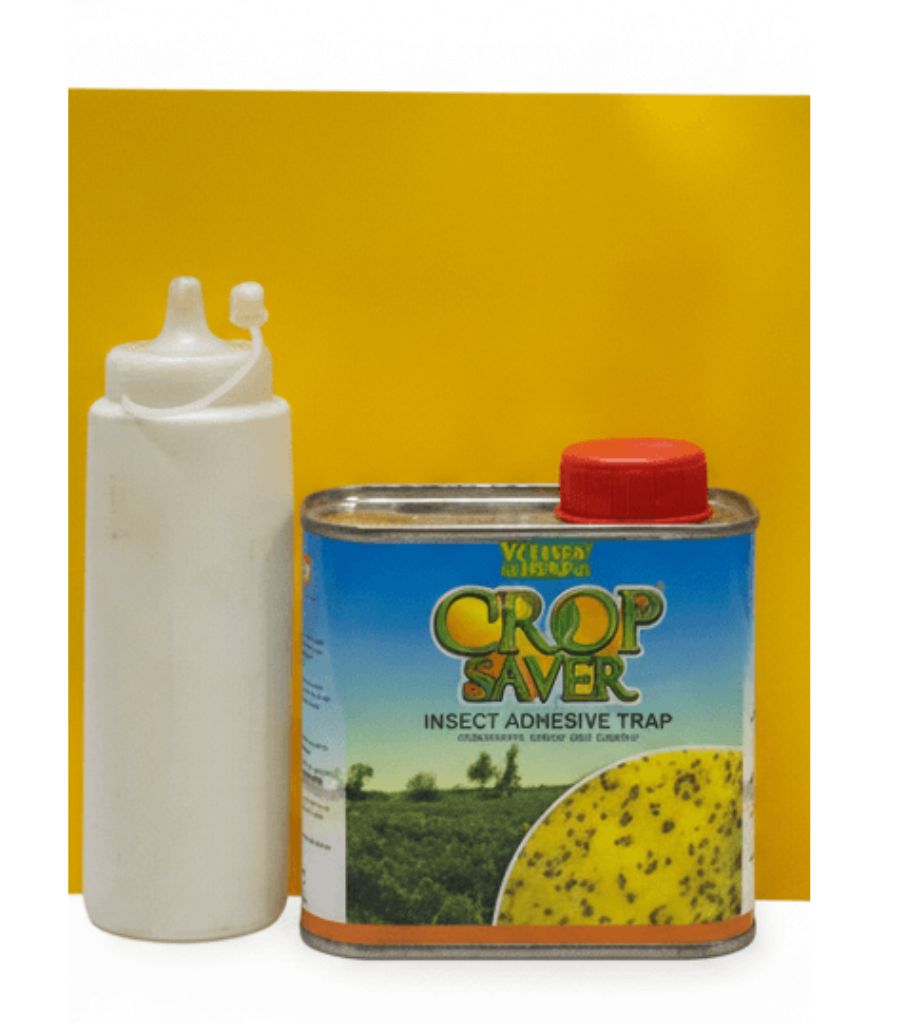
At the early crop stage:
- Yellow sticky traps are installed before heavy insect attacks begin
- Flying insect populations are monitored and reduced naturally
Step 2: Preventive Hara Neem Oil Spray

After 10–15 days:
- Preventive spray applications of Hara Neem Oil are applied
Benefits include:
- Whitefly management
- Aphid suppression
- Thrips reduction
- Mealybug control
- Reduced egg laying
- Feeding disruption
Neem works by disturbing the insect life cycle rather than instantly killing insects.
Step 3: Soil-Borne Disease Protection
With irrigation water:
- A beneficial bacterial culture is applied regularly
This helps:
- Protect root zones
- Suppress harmful fungi
- Improve soil biology
- Strengthen root systems
Step 4: Preventive Fungal Protection
For fungal disease prevention:
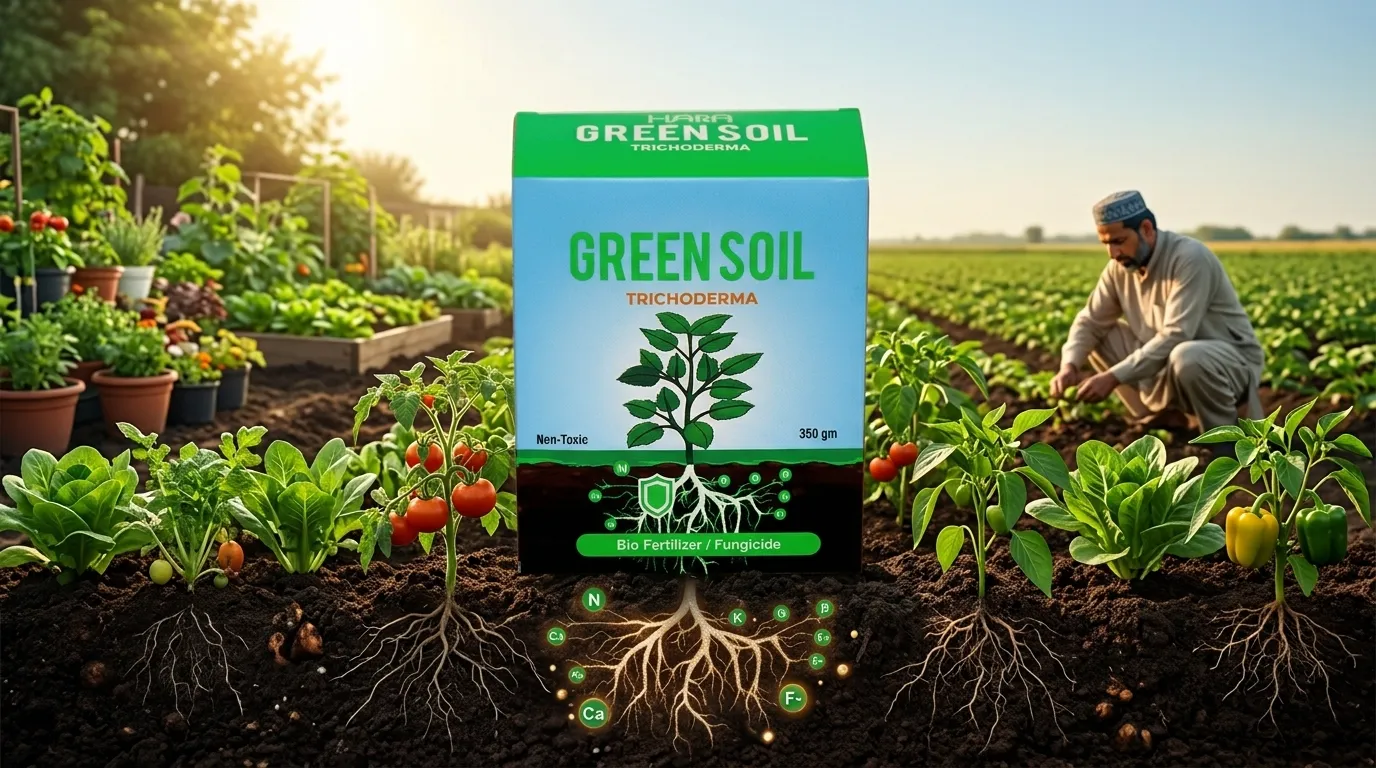
- Green Soil (Trichoderma-based product) is used preventively
Benefits include:
- Root rot suppression
- Fusarium suppression
- Damping-off reduction
- Improved fungal balance in soil
Step 5: Neem Cake Application
Neem cake helps:
- Reduce soil-borne pests
- Suppress nematodes
- Improve soil fertility
- Support microbial activity
Most Effective Organic Insecticides in Organic Farming
Among organic pest management solutions in Pakistan, neem-based products are considered among the most tested and effective botanical insecticides.
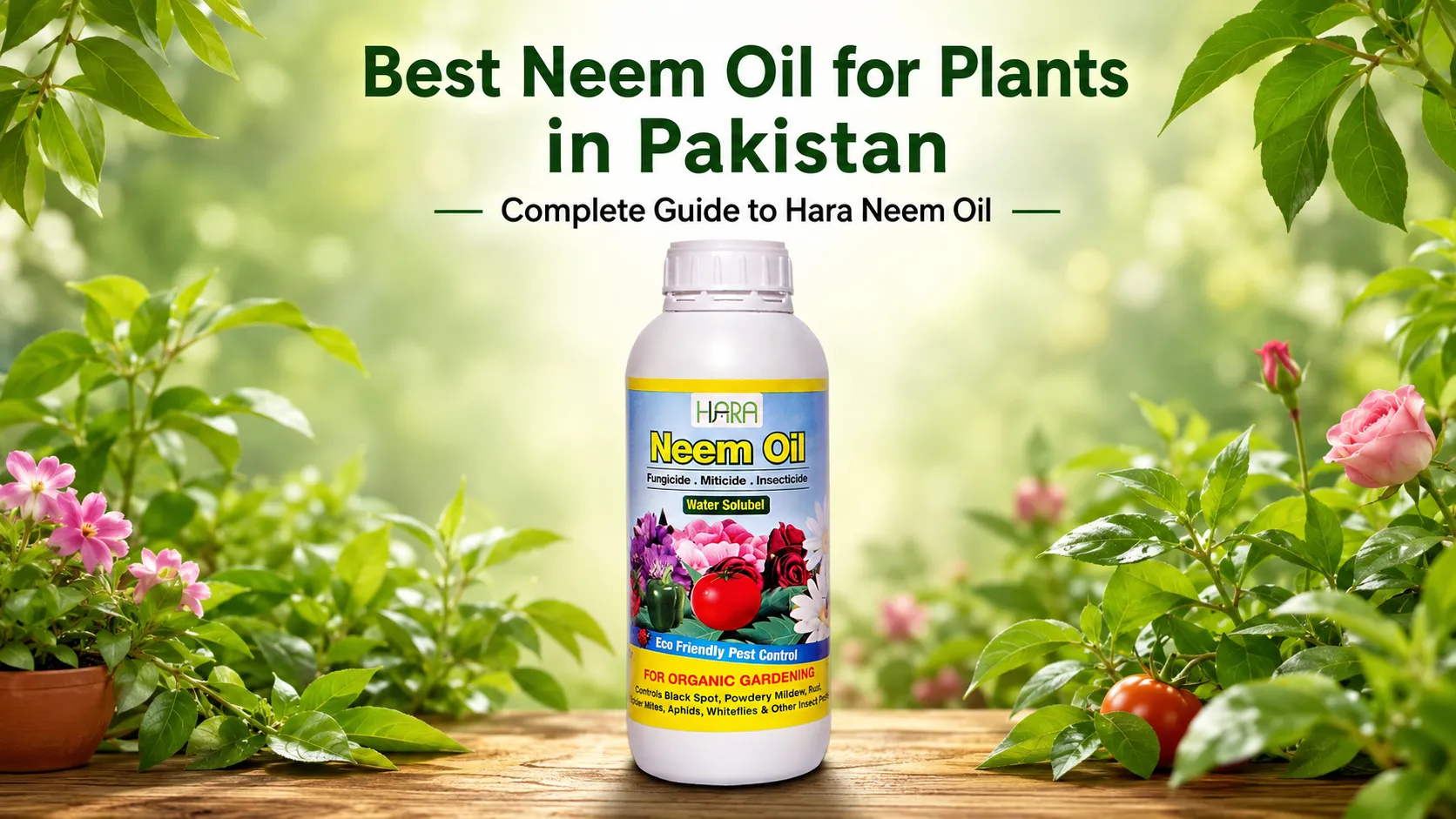
Hara Neem Oil
How Hara Neem Oil Works
Neem contains Azadirachtin, a natural compound that:
- Stops insect feeding
- Disrupts breeding
- Reduces egg laying
- Interrupts insect growth cycles
- Creates repellent effects
Effective Against
- Whiteflies
- Aphids
- Thrips
- Mealybugs
- Mites
- Leaf miners
Neem-based products are comparatively safer for beneficial insects and the environment.
What are Bio Fungicides?
Biofungicides are beneficial microorganisms used to suppress harmful fungal diseases naturally.
Common biofungicides include:
- Trichoderma
- Bacillus subtilis
- Pseudomonas fluorescens
- Beauveria bassiana
- Metarhizium anisopliae
Green Soil (Trichoderma-Based)
Green Soil improves root protection and suppresses harmful fungi by naturally competing with disease-causing pathogens.
Benefits include:
- Root protection
- Disease suppression
- Improved root growth
- Enhanced soil health
How Hara Blue Power Helps in Pest and Disease Management
Hara Blue Power helps by:
- Supporting plant immunity
- Improving plant vigor
- Reducing plant stress
- Creating a repellent environment
- Improving natural resistance against pests and diseases
Healthy plants naturally resist insect attacks more effectively.
What are Trap Crops?
Trap crops are plants grown to attract pests away from the main crop.
Examples include:
- Marigold with tomato
- Mustard with cabbage
- Castor with cotton
Benefits:
- Pest diversion
- Reduced pesticide need
- Attraction of beneficial insects
What are Yellow Sticky Traps?
Yellow sticky traps attract flying insects using bright yellow color.
They help control:
- Whiteflies
- Aphids
- Thrips
- Leaf miners
Benefits include:
- Early pest monitoring
- Reduced insect population
- Low-cost pest management
What are Light Traps?
Light traps attract night-flying insects.
Useful against:
- Moths
- Beetles
- Armyworms
- Cutworms
Benefits include:
- Pest monitoring
- Population suppression
- Reduced pesticide dependency
Organic Pesticides vs Chemical Pesticides
Organic Pesticides | Chemical Pesticides |
Eco-friendly | Toxic residues |
Safer for beneficial insects | Destroy predators |
Protect soil biology | Damage soil microbes |
Slow resistance development | Fast resistance development |
Sustainable | Dependency creating |
Environmentally safer | Water and soil pollution |
Safer for human health | Health risks |
Conclusion
Organic farming is not simply “chemical-free farming.” It is a complete ecological system focused on restoring soil health, protecting biodiversity, improving plant immunity, and producing healthier food sustainably.
Core Principle of Organic Farming
“Healthy Soil → Healthy Plant → Healthy Food → Healthy Human”
Organic and regenerative farming systems are increasingly recognized worldwide as the future of sustainable agriculture and environmental protection.
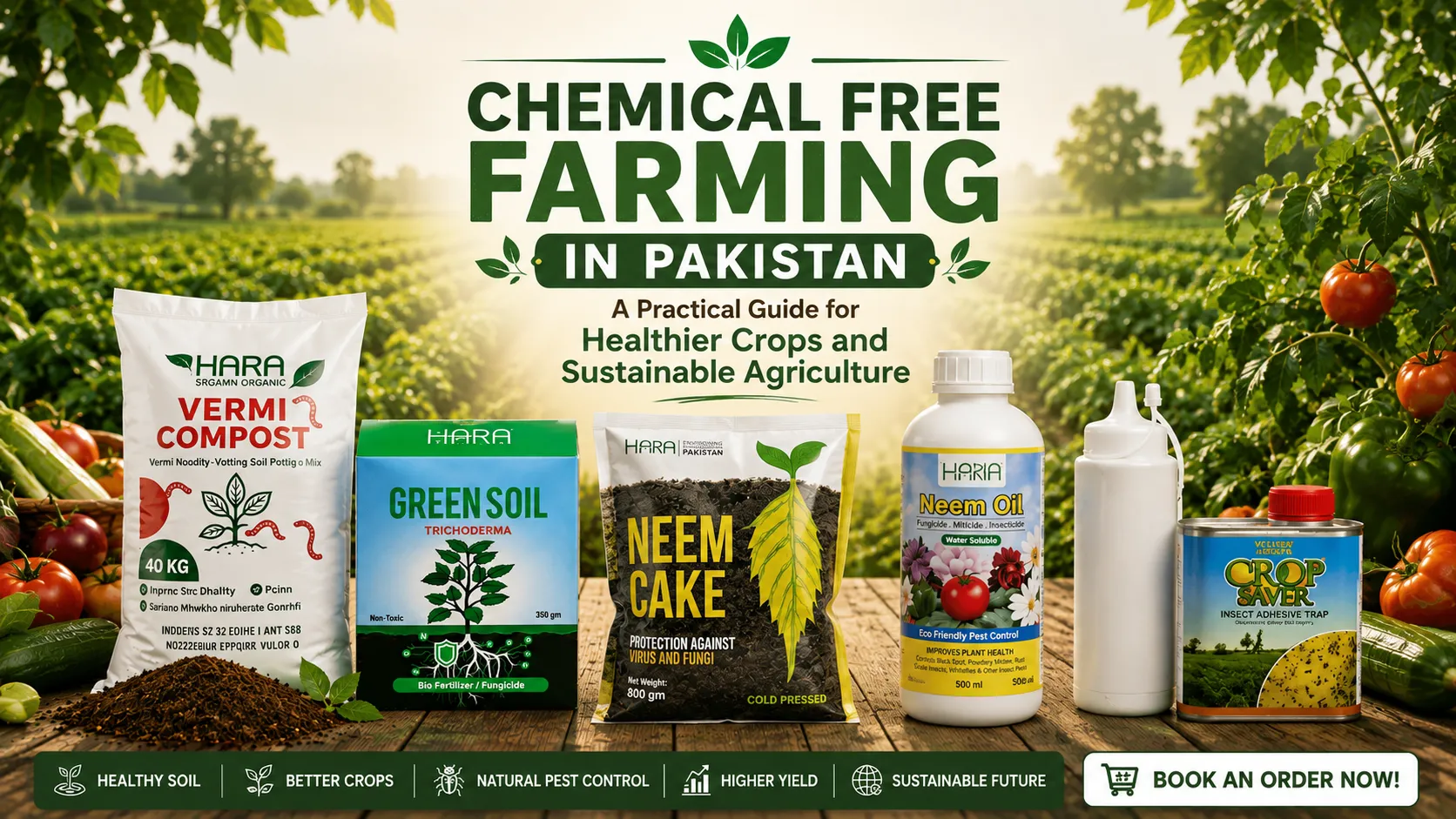
Chemical Free Farming Pakistan: A Practical Guide for Healthier Crops and Sustainable Agriculture
Jump To Chemical Free Farming Pakistan: A Practical Guide for
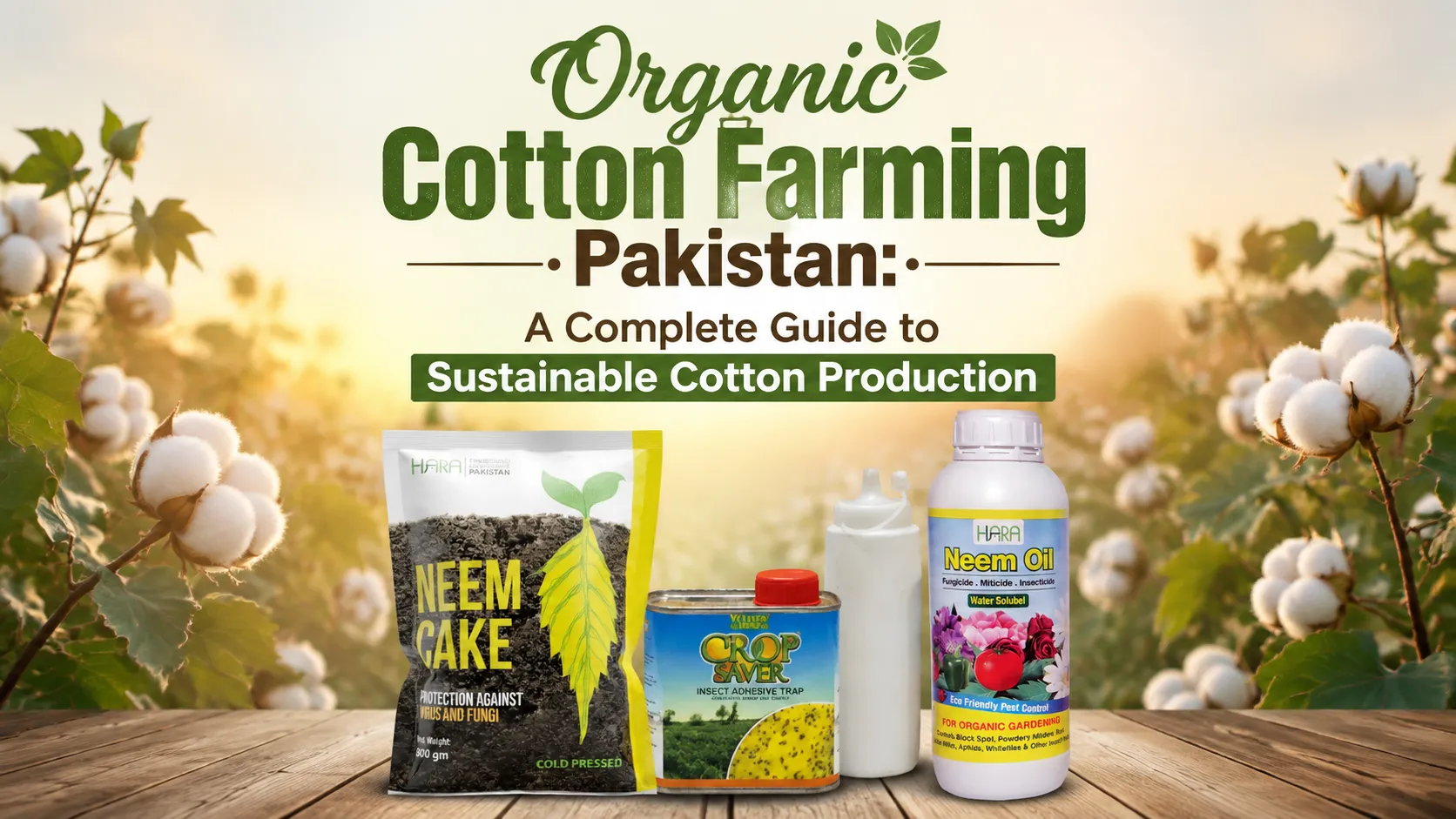
Organic Cotton Farming Pakistan: A Complete Guide to Sustainable Cotton Production
Jump To Organic Cotton Farming Pakistan: A Complete Guide to
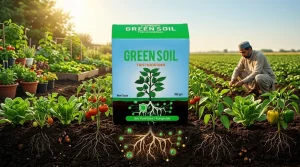
Green Soil Plant Growth: A Complete Guide to Better Soil Health and Stronger Plant Growth
Jump To Green Soil Plant Growth: A Complete Guide to
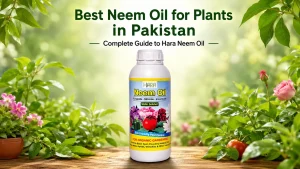
Best Neem Oil for Plants in Pakistan – Complete Guide to Hara Neem Oil
Jump To Best Neem Oil for Plants in Pakistan –
